With diminishing opportunities at home, some U.S. soybean farmers have relocated thousands of miles South. A new book considers the impact.
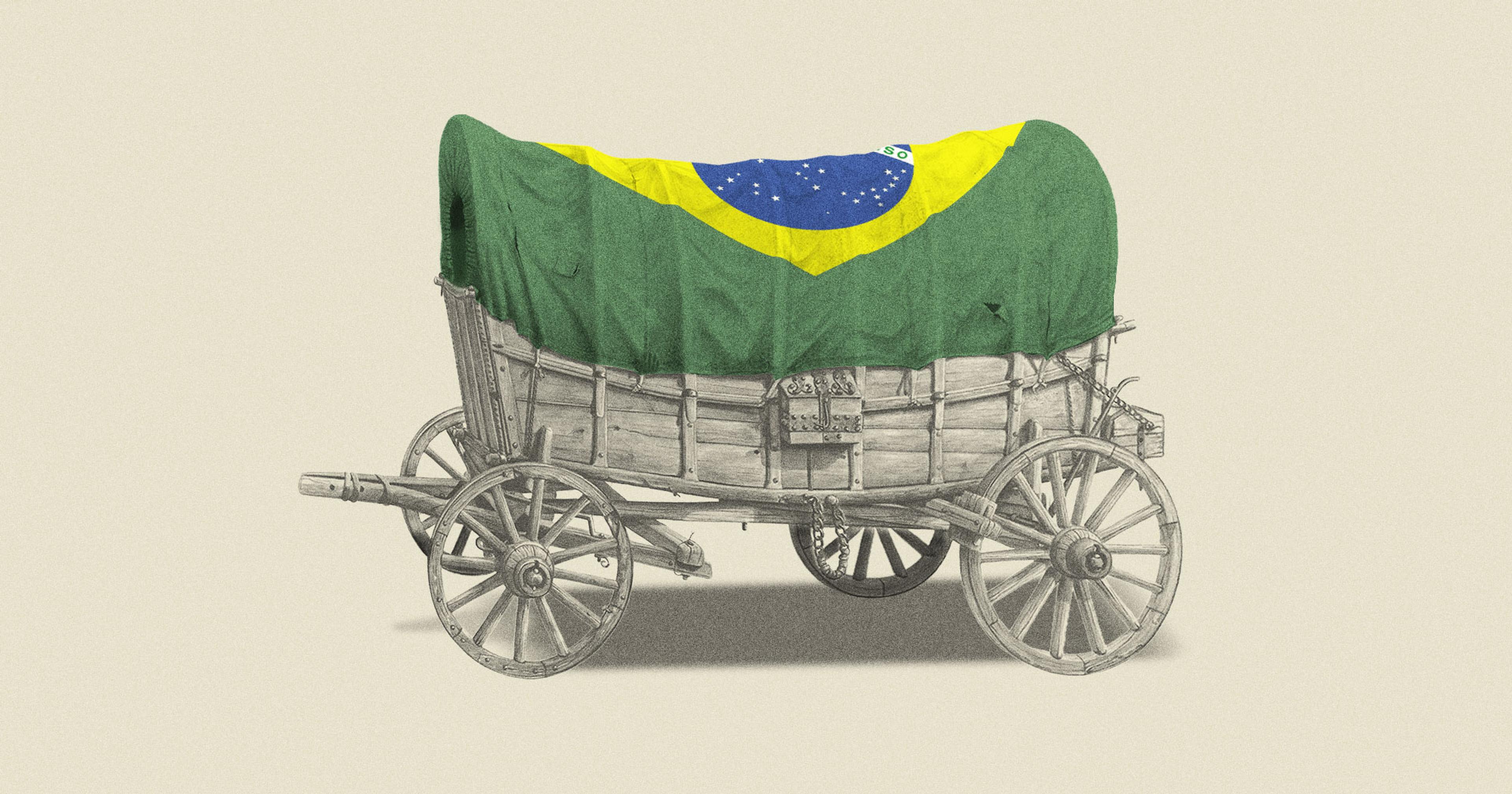
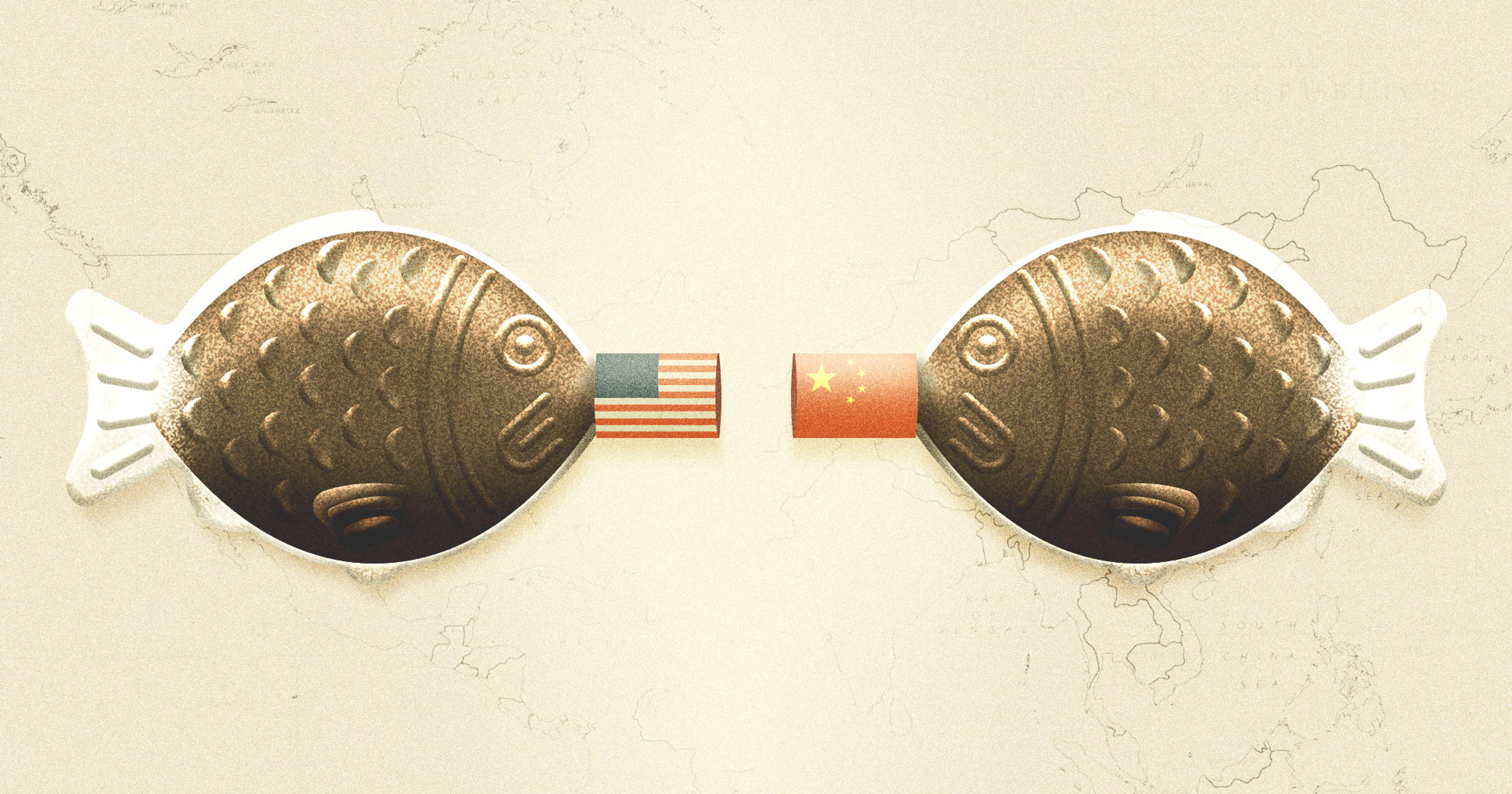
Last year, soybeans were a particularly visible measure of geopolitical rearrangements. Trump’s trade war provoked China to halt U.S. purchases until November, leaving domestic soybean farmers to bear the brunt of zero business. Meanwhile, China turned to Brazil for its soybean needs, elevating record-breaking demand to new heights. Since at least the 1980s farm crisis, U.S. soybean farmers have anxiously kept tabs on the Brazilian market. Some, deciding that the future lies in Brazil, have bought farms in the country.

Andrew Ofstehage’s first book, Welcome to Soylandia: Transnational Farmers in the Brazilian Cerrado, follows a group of U.S. soybean farmers who moved to Luís Eduardo Magalhães, in the western part of Bahia, Brazil, in search of opportunity. Many of these farmers believe they are fulfilling the legacies of their pioneer ancestors on the soy frontier, enacting a destiny foreclosed to them at home.
“It wasn’t clear if [the farmers] were expanding the frontier of Brazil or expanding the frontier of the U.S.,” Ofstehage said in an interview.
Ofstehage, an anthropologist who grew up on his family’s South Dakota farm, remembers reading about Midwestern farmers in Brazil in farmer magazines as a teenager. The book emerges from his doctoral research, which he largely conducted between 2012 and 2014. It explores the stories that U.S. soybean farmers tell themselves, and how the reality on the ground in Western Bahia challenges them. Ofstehage said he tried not to pass judgment on his interviewees, walking an occasionally uneasy balance between viewing U.S. soybean farmers as victims of circumstance and disruptors of a land far from home.
As he outlines, Soylandia is not a fixed place, but rather an expanding, transnational territory as well as an industrial approach to agriculture. First coined in a Fortune magazine article, the term is a bit of an Easter egg. There is an array of actual Brazilian cities named after the country’s commodity history, from Açailândia to Petrôlandia. The most infamous, however, might be Fordlândia, founded in 1928 by U.S. industrialist Henry Ford.
Ford sought to recreate a Midwestern suburb in the middle of the Amazon to govern a kingdom of rubber plantations supplying Ford Motors. Historian Greg Grandin wrote, “What makes Fordlandia more quintessentially American was the way frustrated idealism was built into its very conception.” This paradigm finds echoes in Ofstehage’s book, in the farmers who seek utopia but encounter — and create — its opposite. (Curiously, Grandin noted that Ford was obsessed with soy. He would host soy banquets in Fordlândia, forcing local workers to partake. Today, much of the land they cleared for rubber is used for soy cultivation. One commodity shifts into the next.)
Though both Grandin and Ofstehage are clear-eyed about their subjects’ impacts, I am unsatisfied with this explanation, so often used to characterize white, rural America. To me, the narrative of “frustrated idealism” plays into the myth of rugged individualism, an incomplete wrestling with the stakes of the story, even when the story explicitly takes this myth as its subject.
“It wasn’t clear if the farmers were expanding the frontier of Brazil or expanding the frontier of the U.S.”
According to Ofstehage, Luís Eduardo is the exemplar city of Soylandia. Here, the concept encompasses a “twinned process of destruction and creation; of death and regeneration; of rows of combines with rheas, pequi trees, and Indigenous people standing in their path.” By 2022, reports showed that over half of native Cerrado had disappeared. NASA images unshroud the startlingly concrete and growing frontier between soybean farms and Cerrado. Ofstehage writes that industrial soybean cultivation “naturalizes the transformation of Cerrado to farmland as inevitable and as progress,” treating it as a “wasteland” that needs to be made productive.
“The mountains are catching fire and the city suffers the impact,” my friend Ruan Ernandes told me in Portuguese. His family is from Barreiras, a city near Luís Eduardo that’s known as a cidade de agronegócio, or agribusiness city. In Western Bahia, deforestation driven by agriculture, and soybean cultivation in particular, has made the Cerrado ecosystem — the planet’s most biodiverse savannah, covering about a fifth of Brazil — increasingly vulnerable to fires. Although the large farms in the region have fire protection plans in place, Barreiras is left exposed to the blazes that rip quickly through the dry landscape.
“When these fires start, [the pollution] becomes unbearable. The city becomes very hot, it is difficult to breathe,” Ernandes said.
Bahian geographer Tássio Barreto Cunha, who lives in Brasília, termed soy a “protagonist — in both production and export,” on a call in Portuguese. Brazil is the world’s largest soybean cultivator. Over the last decade, the nation’s soybean production has gone up by 50%. China, the main importer of Brazilian soybeans, provides the demand that fuels the industry.
But, as Cunha warns, the current levels of demand involve significant precarity for the people and ecosystems that are implicated, not always by choice. “Economically speaking, we are also in a very vulnerable situation,” he said. He researched the consequences of deforestation due to monocropping on the Cerrado’s watershed and found that both river flow and rainfall decreased significantly.
In his book, Ofstehage proposes the concept of “flexible farming” to describe the speculative model of agriculture that U.S. farmers have developed in the Cerrado. He traces how they focus on managing their farms as investments and selling the land at a profit before returning home, instead of maintaining a long-term relationship with the local terrain. This process puts them in a previously inaccessible elite class. Ofstehage’s interviews take place in both pickup trucks and private planes.
“You just plant whatever makes the most sense, you hire whoever makes the most sense, there’s no loyalty or stewardship of the land,” Ofstehage said.
“A lot of the growth is really just farmers trying to make a living and be efficient and sustainable. It isn’t about ‘I want to farm the whole world.’”
The land gains meaning through investment pitches and LinkedIn manifestos; armed guards stand at the barbed wire fences demarcating property borders. Ofstehage warns that this system, replicable anywhere, may represent the future of farming. “They don’t know their farmworkers that well but they know their investors,” Ofstehage said.
Matthew Kruse, a sixth-generation farmer from Iowa, managed a farm in Luís Eduardo for 14 years and now runs an asset management firm geared toward Brazilian agriculture. To him, farmers are simply adapting to the compulsions of business. “When you’re spending other people’s money, they expect to have a return on their investment,” Kruse told Offrange.
In his view, the actions of these farmers are less ideological and more about making a living. “A lot of the growth is really just farmers trying to make a living and be efficient and sustainable,” he said. “It isn’t about ‘I want to farm the whole world.’”
Ofstehage differentiates flexible farming from the plantation model, but I would have liked more grounded context about transnational farming in order to situate Luís Eduardo’s soybean farmers better. In many ways, this approach seems less like a break from the past and more like a natural development of the course of industrial capitalism. “The farmworkers and farm owners alike are made into replaceable cogs,” Ofstehage writes — but this sense of personal fungibility spans industries, wherever profit is the motive.
Despite their outsized visibility, the actual numbers of U.S. farmers in Brazil is small — most farm owners there are still Brazilians with European descent from the south of the country. Like the U.S. farmers, their ancestors settled land in the Americas as pioneers, cowboys, and bandits. When the former fit themselves into the structures built by the latter, histories converge, making otherwise occulted interconnections explicit.
With U.S. farmers benefiting from the cheaper labor available to them in Brazil, they inherit a system shaped by the legacy of slavery. Most of the time, white farmers manage operations and Indigenous and Afro-descendant farmers are responsible for manual work. Ofstehage quotes from a “Commitment to Workers’ Rights and Sustainability” one farm prepared for an investor pitch, which reassures nervous outsiders, “This [commitment] is all geared towards workers AND investors — to say you don’t need to worry about slavery allegations or anything like that.”
Talking about his hometown of Barreiras, Ernandes told me, “The city is very rich in things from the Cerrado, like the Ipês, some fruits that you only find there, some animals … It’s something that agribusiness has not completely destroyed, you know? It’s something they are trying to use to reconcile the two sides there.” The Ipê, an endemic flowering tree, is a national symbol of biodiversity.
“You just plant whatever makes the most sense, you hire whoever makes the most sense, there’s no loyalty or stewardship of the land.”
In truth, the multinationals that have monopolized agriculture in the U.S., diminishing opportunities for soybean farmers here, have monopolized it in Brazil too. For instance, Cargill controls almost the entire soy production chain in Brazil and is involved in deforestation and Indigenous land dispossession. It would have been pertinent for the book to contextualize the interventions of the U.S. soybean farmers, who enter as individuals but draw on wider networks of capital, against those of the U.S. companies that control almost every layer of the agricultural business, profoundly molding the global industry. If these farmers regard one another as competition, how do they relate to these corporations that they continue to interface with in Brazil?
When it comes to U.S. foreign relations, economics and militarism are closely entwined. Under the Monroe Doctrine, which Trump has been aiming to revive, Latin America and its resources fall under the U.S. sphere of influence — earlier this year, he stated outright that he invaded Venezuela to open the market to U.S. oil companies. Given that Brazil is producing more soy than the U.S., it is not farfetched to imagine future aggression.
Welcome to Soylandia left me with, most of all, the sense that we are interdependent within an unequal global food system. This inextricability has roots in the colonial system that entrenched and profited off inequities in the trade of commodities, a history that formed Brazil and the United States alike. I want to know how we can more effectively position characters such as U.S. soybean farmers within the bigger story of agriculture, settlement, and militarism, creating fuller genealogies for interconnected American pasts — North and South.
Ofstehage says that flexible farming is one possible future of agriculture, but it is not an inevitable outcome. His conclusion urges us to seek alternative futures. It is hard to say what will come, but it is clear that the present centers around agribusiness. As Ernandes said, “The market there, like it or not, runs on this.”