More than a century ago, four Wisconsin brothers transplanted wild ginseng to finance a silver fox farm. Marathon County now grows over 90 percent of America’s commercially cultivated ginseng.
“My kids tell me every day when I come home and give them a hug that I smell like ginseng,” said Will Hsu, who manages Hsu’s Ginseng Enterprises in Wausau, Wisconsin. He describes the aroma as earthy and vegetal, like a freshly sliced turnip, radish, or parsnip.

What began with Paul Hsu buying ginseng from Wisconsin farmers in the 1970s grew into a family business cultivating, processing, and exporting the prized North American root. According to the Wisconsin Department of Agriculture, Trade and Consumer Protection, Wisconsin now produces almost 98 percent of the nation’s commercially cultivated ginseng, with Marathon County, home to Wausau, accounting for about 95 percent of the state’s harvest.
Paul Hsu, Will’s father, grew up in Taiwan as the 10th of 14 children. He became the first in his family to graduate from high school, attend college, and come to the United States. In the late 1960s, he emigrated to pursue a master’s degree in social work and later worked as a social worker for the state of Wisconsin. Although he knew about ginseng from Chinese traditions, his family could rarely afford it.
By the early 1970s, Marathon County farmers had cultivated ginseng commercially for decades, supplying roots to Asian buyers. When a colleague shared an article about the crop, Paul wrote to the Wisconsin Department of Agriculture for information and was sent the names and addresses of local growers. He drove to Marathon, west of Wausau, and knocked on farmers‘ doors; he bought a few pounds from one farmer and mailed the roots to his mother in Taiwan.
A few months later, his father wrote that the roots had helped her medically and asked him to send more. Paul hadn’t seen his parents for four or five years and wondered whether his father was simply trying to reassure him. But when he eventually visited Taiwan, he found his mother in better health and believed the ginseng had helped.
Back in Wisconsin, Paul began buying roots from local farmers, trimming them in his basement and selling them to friends and relatives. He established Hsu’s Ginseng Enterprises in 1974, moved to Wausau in 1976 and purchased his first farm in 1978, starting with half an acre.
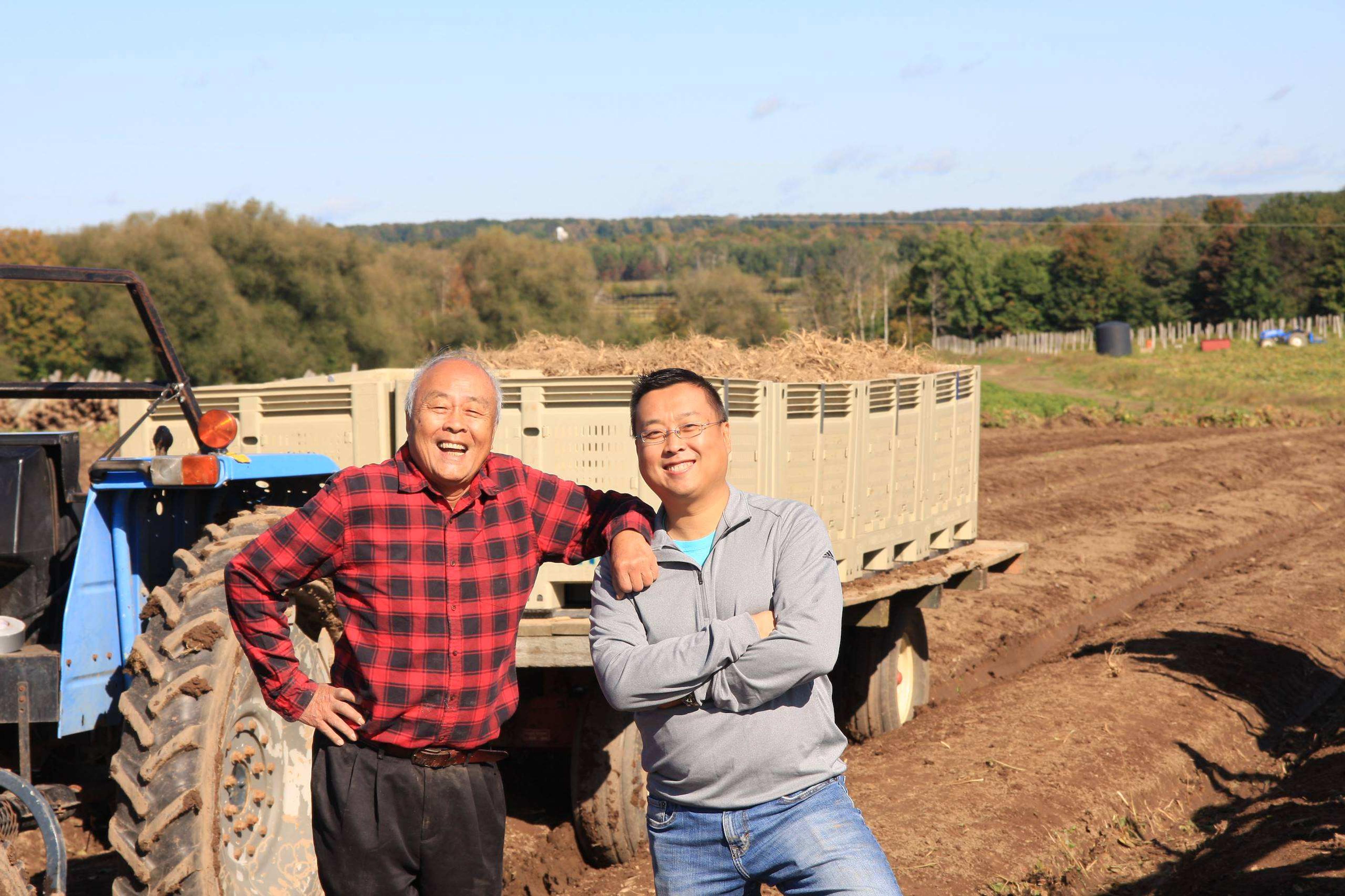
Paul and Will Hsu
·Vanessa Kurth
His son Will worked on the family farms during high school and college, helped with sales in the office and eventually created the company’s first website. Today, the Hsus cultivate their own ginseng, purchase roots from other Wisconsin farmers, and process and sell them to customers across the United States and overseas.
The Hsus operate one of Marathon County’s largest ginseng farms and export businesses, alongside other established growers such as Heil Ginseng in Edgar. According to the 2022 U.S. Census of Agriculture, 79 Marathon County farms harvested ginseng from 695 acres. The county estimates that ginseng production generates approximately $15 million annually in revenue for local farmers.
How It Started
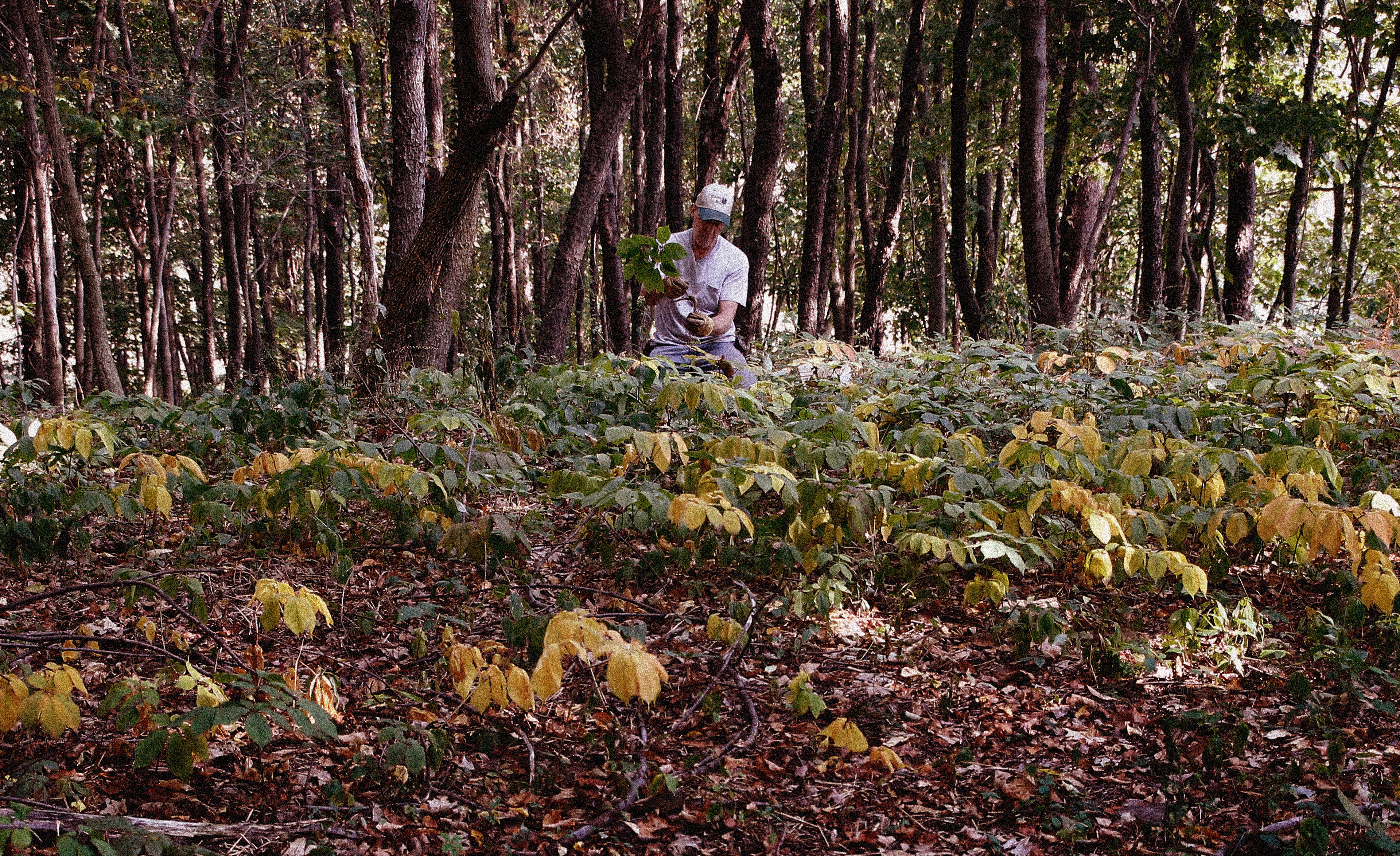
American ginseng, Panax quinquefolius, grows naturally in forests across eastern North America. Its green leaves and red berries appear above ground, while a thick, branching root develops beneath the soil.
In 1904, four brothers named Walter, Edward, John, and Henry Fromm transplanted about 100 wild ginseng plants from nearby forests into prepared beds on their family’s farm in Hamburg, northwest of Wausau. Three years earlier, 13-year-old Walter had read his brothers a magazine article about a silver fox pelt that sold in London for $1,200. The brothers hoped ginseng sales would earn them enough money to begin raising foxes.
Their first ginseng harvest earned $24 in 1909. The Fromms later sold both ginseng and fox pelts to New York City merchants, who supplied roots to Chinese buyers. As the operation expanded, the brothers prepared raised beds, applied mulch, and built wooden slat coverings to reproduce the plant’s woodland growing conditions. Blight attacked ginseng foliage, while root rot threatened the underground crop. Walter developed a horse-drawn spraying system to combat blight, along with a 13-row seed planter and a root-washing machine. The brothers also adapted a potato digger for harvesting. Other farmers adopted their cultivation methods, and by 1919 Wisconsin led the nation in ginseng production.
Local Terroir
Freshly harvested ginseng seeds generally require 18 to 22 months of stratification, a process involving moist storage and seasonal temperature changes, before they can germinate. Commercial growers often purchase seeds that have already completed this process. According to University of Wisconsin-Madison guidance, American ginseng takes three to five years to produce a marketable crop from seed. The Hsus harvest most of their ginseng after five years, Will says, because he believes the additional growing time improves the roots‘ flavor and potency.
Around Wausau, Will describes heavier soils with glacial till, gravel, and granite beneath the surface. He points to the Ice Age Trail, which crosses Marathon County and traces landforms left by glaciers. Farther south, near Stevens Point and Plover in Wisconsin’s Central Sands region, glacial meltwater deposited extensive layers of sand and gravel.
“You can taste the difference in ginseng that’s grown in central Wisconsin versus ginseng that’s grown in other parts of Wisconsin versus ginseng that’s grown in other parts of the world,” Will said. He uses the term terroir, borrowed from winemaking, to describe how growing conditions influence flavor. He also credits processing techniques developed by Wisconsin growers, comparing some of those methods to winemakers‘ trade secrets.
After harvesting, Hsu’s workers wash and inspect individual roots, trim them by hand, and prepare them for sale. Some roots are sold fresh during the autumn harvest, while others are dried for storage and export. Will says much of the trimming and packaging takes place by hand, adding to production costs.
“That’s what makes Wisconsin ginseng unique, is that bittersweet flavor, very similar to chocolate and cacao.”
In traditional Chinese medicine, some consumers associate bitterness with a medicinal plant’s potency, although bitterness alone does not establish medicinal effectiveness. Will wants the Wisconsin roots his family grows to retain the taste longtime customers recognize. “That’s what makes Wisconsin ginseng unique, is that bittersweet flavor, very similar to chocolate and cacao,” he said.
Hsu’s Ginseng supplies roots to Great Northern Distilling in nearby Stevens Point, where head distiller John Bidwell makes American Ginseng Flavored Whiskey. He infuses whiskey with smaller offshoots of fresh ginseng roots for at least two weeks, filters them out and inserts three whole roots into each bottle by hand. “Sometimes people aren’t prepared because it has a rich, earthy, bitter taste to it,” Bidwell said.
Will says some sellers falsely market American ginseng grown in Canada or China as Wisconsin-grown. “If you can sell Canadian or Chinese-grown American ginseng with a Wisconsin brand or brand image, you can command a premium,” he said. The Ginseng Board of Wisconsin licenses a certification seal that requires products bearing it to contain 100 percent Wisconsin-grown ginseng.
Three Centuries of American Ginseng Trade
Indigenous peoples gathered and used wild American ginseng long before Europeans documented it. In 1716, French Jesuit Joseph-François Lafitau found the plant near present-day Montreal and showed it to a Mohawk woman who recognized its medicinal uses. Traders soon began exporting North American ginseng through France to Chinese buyers.
The trade continued into the 20th Century. Will recalls his father joining a Wisconsin trade mission to China under Gov. Lee Dreyfus around 1981. Paul presented Wisconsin ginseng to Chinese Vice Premier Wan Li. “He immediately knew what it was,” Will recalled.
Farmers in northern China now cultivate American ginseng alongside its Asian counterparts. Will says some Chinese customers continue importing North American roots because they value the plants‘ geographic origin. He points to the Chinese pharmacopoeia, which establishes standards for medicinal substances, when explaining these preferences. “You want to get American ginseng from its native regions,” he said.
International demand continues to drive the ginseng trade. In 2024, the United States exported nearly $39 million worth of ginseng roots, including approximately $32.6 million shipped to mainland China and Hong Kong, according to international trade data compiled by the World Bank. According to CEPII’s BACI international trade database, worldwide exports of ginseng roots totaled approximately $305 million in 2024.
Older customers often begin using ginseng when they notice declining energy levels.
Many customers purchase American ginseng for its traditional associations with vitality, stamina, and recovery. “The core consumer of ginseng tends to be 50 years and older,” Will said. He explains that older customers often begin using ginseng when they notice declining energy levels and hope to regain some of their former stamina. He also hears from endurance athletes who take ginseng to support recovery after strenuous exercise. Some clinical research has found evidence that American ginseng may help alleviate cancer-related fatigue, although many purported health benefits remain unproven.
During the autumn harvest, Hsu’s Ginseng Enterprises distributes fresh roots to Asian grocery stores across the United States and ships orders directly to customers by air freight. Some customers cook with ginseng or steep the roots in hot water to make tea. Will says many older customers prefer hot tea, while others take capsules or tablets. Some tuck dried ginseng slices into their mouths and let saliva gradually soften them. Will says customers can store dried roots for three to five years in airtight containers away from sunlight.
“When I was a kid, my parents made me drink ginseng tea,” Will recalled. “They cooked with ginseng, and so you acquire the taste for it no different than coffee.” He recalls how American diets once included more bitter greens and herbs. Farmers and plant breeders have since developed sweeter varieties of vegetables, including beets, but ginseng growers have not pursued the same extensive efforts to sweeten their crops, Will says.
Despite—or maybe due to—this consistency of product, Marathon County farmers have cultivated American ginseng for more than 120 years, and Will says Chinese customers recognize Wisconsin ginseng by name. “Wisconsin is known for ginseng,” he said.