Tomatoes are as loved by scientists as they are by consumers. But why?
Inside a greenhouse at UC Davis, researchers are bringing old tomato seeds from South America back to life. The seeds, which were collected from wild species in the mid-1900s, failed to germinate decades ago and have been sitting in the freezer ever since. Now, researchers are trying again.

“We’re kind of resurrecting the dead,” said Vincent Colantonio, director of the Tomato Genetics Resource Center (TGRC), which houses a seed collection of around 4,500 different types of tomatoes.
Regenerating these old seeds is one way for the center to grow its collection of viable seeds, which are in constant demand from researchers. In 2025, TGRC sent out roughly 4,700 seeds to 163 researchers in 24 different countries. And TGRC isn’t the only seed bank providing tomato seed to scientists.
Tomatoes are the subject of hundreds of research studies each year, on topics ranging from fruit-ripening to pest resistance to how microplastics affect crops. One analysis found that there’s been an exponential increase in the number of tomato studies over the past decade, due to both the fruit’s popularity and the lowered cost of gene sequencing.
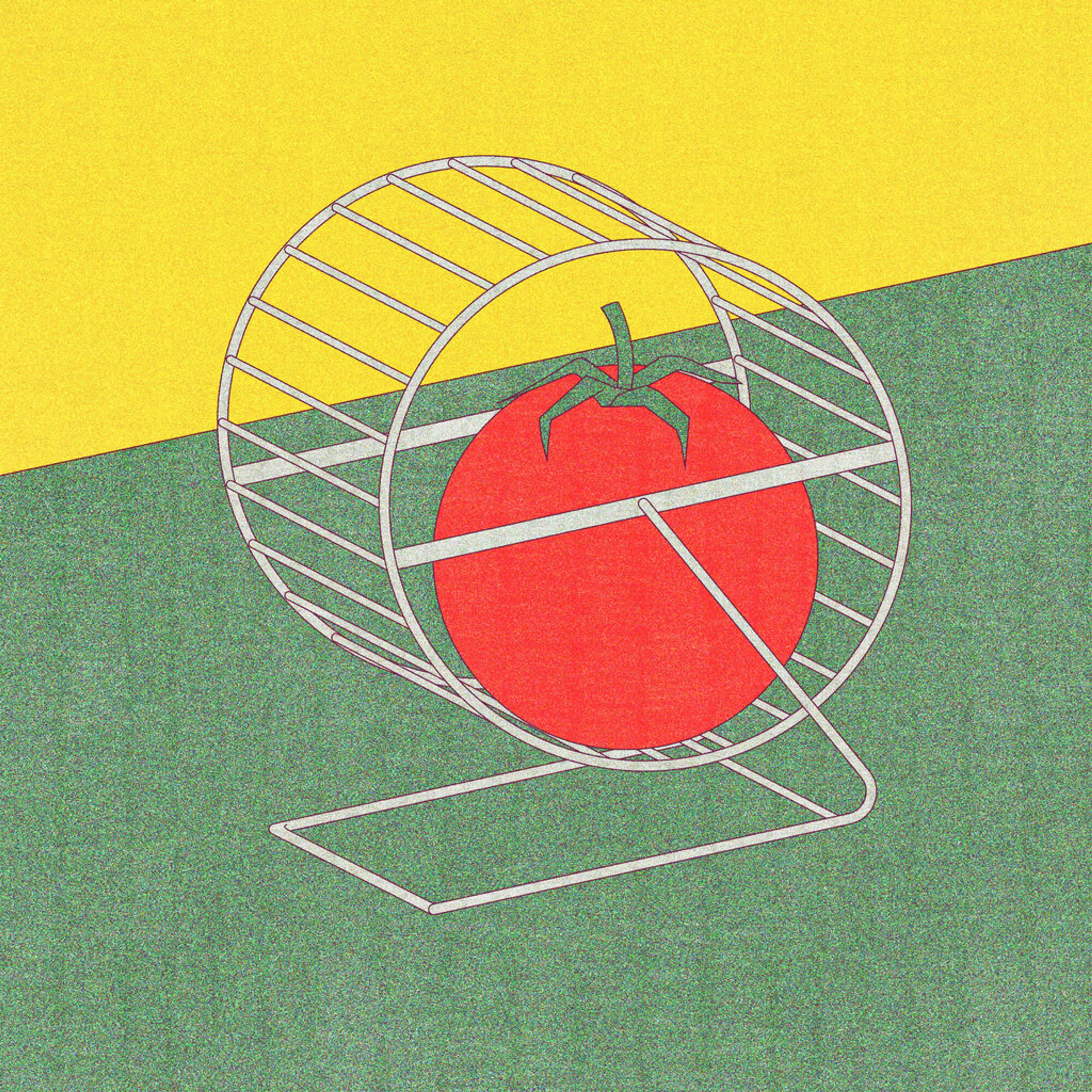
Just like chefs can’t seem to keep tomatoes out of the kitchen, plant researchers can’t seem to keep tomatoes out of the lab.
“Tomatoes were always a good lab rat,” said Diane Beckles, a professor of Postharvest Integrative Biology at UC Davis, who studies how to improve the shelf life and quality of tomatoes. “They’re easy to grow. They’re easy to work with, and from a molecular perspective, they’re easy to make crosses with.”
Tomatoes also have a fast life cycle compared to other fruits and a relatively small genome, which means it’s easier for researchers to sequence and analyze for studies. For example, while a strawberry has eight sets of chromosomes in its cells, a tomato has just two.
“If you have to sequence a strawberry, it’s a lot harder than with a tomato,” Beckles said.
Tomatoes also have lots of naturally occurring mutations, which help provide researchers with insight into how their genes work. For example, some tomato mutants naturally have a longer shelf life because they ripen really slowly, according to Beckles.
“Tomatoes were always a good lab rat. They’re easy to grow. They’re easy to work with, and from a molecular perspective, they’re easy to make crosses with.”
“You can take those natural mutants and say, ‘What is the difference? What genes were altered to give this new trait?’” she said.
Because tomatoes provide such a good baseline for study, they’re considered the “model species for fleshy fruit.” Tomatoes often serve as a good launch pad for studying processes like ripening in other similar fruits, just like scientists may first study the effect of a new drug on lab rats before testing it in humans.
“They act as a really good starting point,” said Beckles. “A tomato may not operate 100% in the same way as a plum or a peach, but we have something for comparison. We have a gene or a pathway, and we can ask, ‘Does this pathway occur in plums?’”
We All Love Tomatoes
Tomatoes may be a model species for lab work, but they also have such a hold on researchers because of their importance in society. Tomatoes are a billion-dollar industry in the U.S., and the second most consumed vegetable. The average person eats 31.4 pounds of tomatoes per year, much of it through sauces and foods like pizza and ketchup.
That’s why, in addition to studying how to protect tomatoes from pests or lengthen their shelf life, some scientists are trying to make tomatoes more flavorful. Another whole area of research aims to improve their health benefits.
“They’re a really interesting system for understanding how our food can affect our health,” said Jessica Cooperstone, an associate professor at Ohio State University who studies tomatoes and nutrition.
Cooperstone said that, from a health perspective, interest in tomatoes accelerated in the 1990s after several epidemiological studies linked tomato consumption with lower rates of diseases, including one punchy headline study that found men who eat pizza were less likely to develop prostate cancer.
Interest in tomatoes accelerated in the 1990s after several epidemiological studies linked tomato consumption with lower rates of diseases.
“This was a study that sparked a lot more studies,” she said.
She said tomatoes’ naturally occurring diversity makes them useful for health studies, too. Just walk into a grocery store, and you get a snapshot of how many variations of tomatoes there are in terms of shape, color, and size.
“You can imagine that this diversity also leads to some chemical diversity in the tomato that would affect the health of the people who are eating them,” she said.
She studies these various compounds in tomatoes and how they affect health, with the ultimate goal of improving the nutritional quality of tomatoes. “A healthier tomato would be a benefit across the whole supply chain,” Cooperstone said.
Tomatoes Of The Future
One of the biggest research areas in years to come is learning how to protect tomatoes from the stressors of climate change.
“The challenges facing not just tomatoes, but all agronomic crops, is just tremendous,” said Beckles with UC Davis. “We have increasing drought, high temperatures, and reduced resources — figuring out how to maintain yields and deliver something to the consumer that they want to eat is pretty challenging.”
One study estimates that yields of tomatoes grown for processing could decrease by six percent by 2050 due to stressors from climate change. But efforts are already underway to make tomatoes more resilient to factors like heat, floods, drought, and disease.
At the University of Illinois, Urbana-Champaign, researchers are waterlogging tomatoes to gain insights into how to better protect them from floods, while at Brown University, they’re looking at ways to help tomatoes withstand a heat wave.
Vincent Colantonio, with TGRC, said he thinks some of the wild tomatoes they have from decades ago may provide key insights for developing climate-resilient tomatoes. Some of them were found growing in obscure locations, like the middle of the Atacama desert in Chile and on the rim of a volcano in the Galapagos.
“They have adapted to really stressful conditions like high heat stress or salt or drought stress,” he said. “They may have genes and traits that can be used to improve heat or drought tolerance in modern tomatoes.”
It seems our tomatoes of the future may depend on taking clues from some of their wild ancestors of the past.