New research shows promise in engineering bees that aren’t as susceptible to chemical harms. Critics argue it reduces incentives to reduce pesticide use.
The U.S. honeybee season of 2024-’25 was one of doom, with the highest colony losses ever recorded and honey production plummeting. The last season was slightly better, but that’s still comparing bad with bad. Among other factors, pesticide exposure looms large, with USDA research from earlier this year finding high levels of agrochemicals in declining colonies in Florida and California, with much of the risk coming from neonicotinoids.

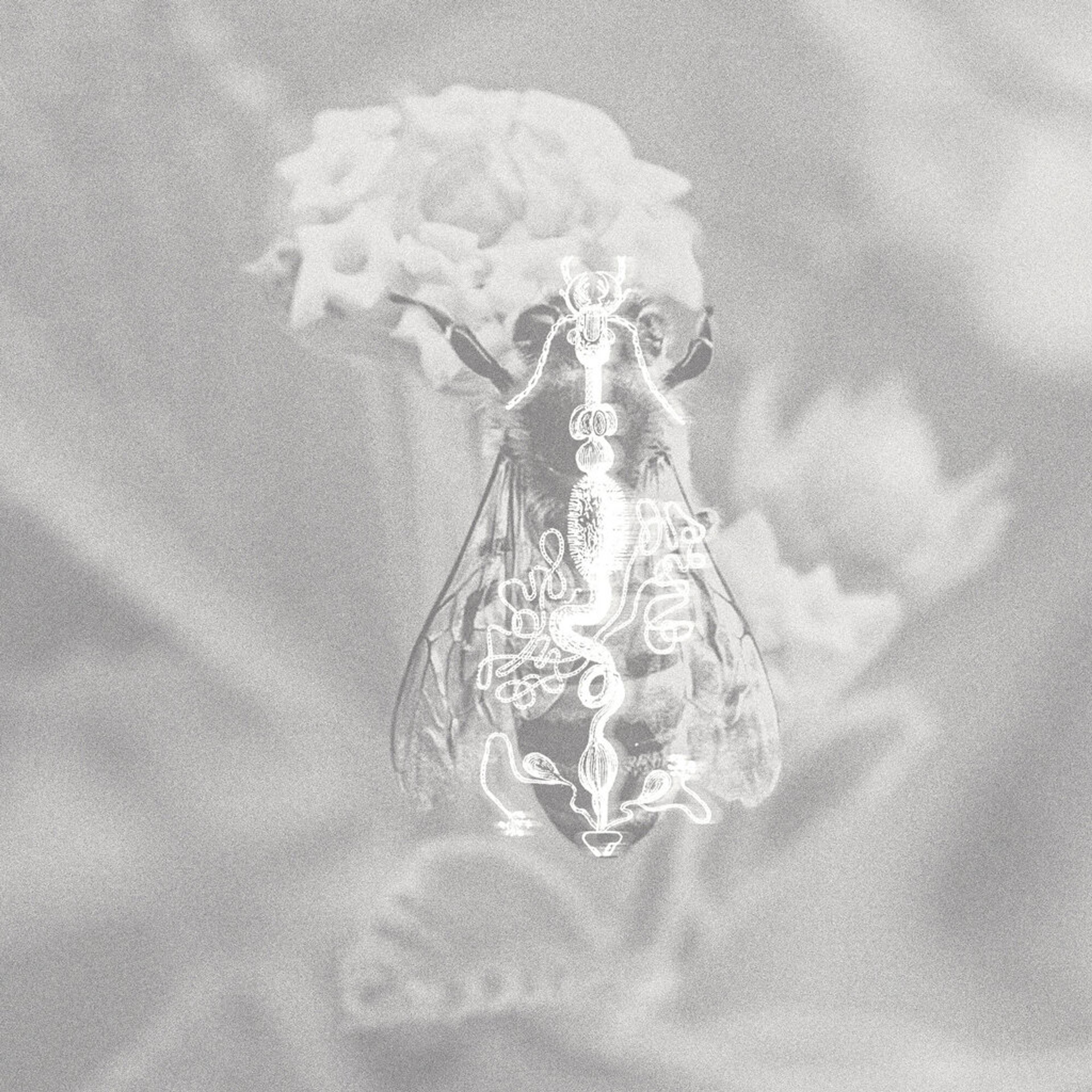
But if pesticides ingested by bees whilst foraging are a problem, a simple solution could be feeding the bees something to make them go away. A team of Chinese researchers have developed a microparticle that commercial bees will happily lap up with sugar water. They say it passes harmlessly through the insects’ guts, but not before it has soaked up insecticides from any of three major product classes.
The “bee detox” concept came to life at Cornell University in the early 2020s, with a team, including one member of the group behind the latest breakthrough, coming up with—and patenting—a pollen-like microparticle that could detoxify organophosphates, one of the most widely used pesticide classes in the U.S.
The new proof of concept study, which used bumblebees as a proxy for all commercial bees, again takes inspiration from nature. But this time it’s not from pollen, but locusts, whose cell membranes act as smart coating for the particles, selectively catching toxins.. The data shows dose-dependent removal of up to 95% of selected organophosphates and 77% of neonicotinoids, plus survival improvements of up to 95 percentage points compared to pesticide-exposed, untreated controls.
Born in the U.S., then tweaked in China, this innovation could in theory be applicable almost everywhere, given only around 2% of global farms explicitly prohibit pesticide use.
“Should field trials validate the efficacy of our biomimetic detoxification system, we foresee its global deployment,” said Jing Chen, from Nanjing University of Chinese Medicine. “The threat of insecticide poisoning is not confined to any single nation but afflicts managed pollinators worldwide, though our near-term commercial focus will naturally centre on regions with intensive beekeeping operations, such as North America and Europe.”
“The idea is novel and clever, but it’s a solution to an already corrupt biosphere. It’s not a way out of the modern problems of agriculture, pesticides, and pollinators.“
But as potentially major breakthroughs go, the wider reception is not necessarily so rapturous. Speaking to pollinator experts, an issue returned to repeatedly was that while the idea of a “quick fix” is seductive, the issues faced by bees and other beneficial insects in agricultural environments are far more complicated—with ingrained practices and commercial relationships looming large.
“The idea is novel and clever, but it’s a solution to an already corrupt biosphere. It’s not a way out of the modern problems of agriculture, pesticides, and pollinators—it’s making your side bulletproof, but everyone else dies,” said bee biologist Sam Droege.
Noa Simon Delso, who works with European beekeepers as scientific director of the advocacy organization BeeLife, is similarly skeptical. “We are definitely not working for this kind of techno-solution that does not solve the problem on the ground,” said Delso, pointing instead to successes in implementing integrated pest management measures that allow farmers to avoid the use of pesticides altogether.
Perhaps most telling of all is that James Webb, part of the Cornell team behind the original microparticle R&D, isn’t convinced that the idea needed to be taken much further. An attempted spin-out company, Beemunity, attracted initial venture capital, but fell away after Webb realized that A) most U.S. beekeepers couldn’t pay for the product, and B) farmers would be likely to spray more liberally if they realized beekeepers were using it.
“In the right setting, it could be a useful tool. But how widespread that could be, I don’t know,” said Webb, who now leads a start-up using AI-assisted breeding of beneficial insects to help horticulture reduce its need to spray. “It encourages a mode of farming which is reliant less on ecosystem benefits and more on playing God in artificial environments that we’re creating.”
“It encourages a mode of farming which is reliant less on ecosystem benefits and more on playing God in artificial environments that we’re creating.”
The Chinese research team remain confident that they could make the idea work, not seeing profitability questions as an insurmountable obstacle. More broadly, bee therapeutics seem to be gaining traction, at least in the scientific community. Beyond micro particle-based options, other works-in-progress include edible “bee medicine” derived from familiar herbs like rosemary and turmeric which stimulate the insects’ natural detoxification capacities; mixtures of organic compounds usually found in human food supplements and preservatives have shown similar promise. Meanwhile a brand-new study suggests that finding ways to increase commercial bees’ polyunsaturated fatty acids might also be a good idea in the race to help the insects heal themselves.
A crucial caveat is that it’s not pesticides alone that are killing off commercial bees—the accepted science is that they are working in spiraling synergy with parasites, pests, poor nutrition, and a changing climate. Then there’s the fact that 35% of native bees are at risk, and over one in five of all pollinators. But could there be ways of detoxing wild bees, too?
Unlikely, said Droege. He pointed out that because managed honeybees and bumblebees repeatedly return to a box, it’s relatively easy to get them to pick up medicinal particles using sugar solution. For wild pollinators, there’s little evidence of attraction to sugar traps. And Droege said spraying a solution onto fields would likely prove inefficient due to the complexity of crops and their flowers.
For their part, the scientists behind the microparticle breakthrough also acknowledge its limited potential to aid wild pollinators, as well as the broader moral and political tightrope inherent in their approach.
“The risk that a therapeutic detoxification product could weaken legislative action is genuine and should not be dismissed,” said Chen. “However, the risk is not inevitable. The technology can be framed explicitly as an emergency measure and a transitional tool, not as a permanent substitute for policy reform.
Chen is also realistic about the work that still needs to be done to make the team’s bee detox product mainstream, pointing to the need for large-scale field trials, an industrial scaling-up of production capacity, full environmental risk assessment, and economic analysis that shows costs per colony are justified.
“Personally, I believe pesticides are completely necessary and useful, but a huge portion of the problem for beekeepers is their misuse and abuse.”
It could be that an “If you can’t beat them, delete them” approach to pesticides is an idea for the times we live in. Nuance is not in vogue, and the U.S. government is shuttering the Beltsville Bee Research Lab, one of the world’s leading research establishments focused on bee health. A longer-term issue, said Steven Coy, a second-generation commercial beekeeper from Mississippi who lost over 60% of his colonies in that fateful 2024-’25 season, is funding cuts to state extension, with chemical companies increasingly filling an information void, pushing what he terms “cheap insurance.”
“Let’s just go way down the road and assume that this becomes some sort of product that beekeepers can feed to their bees. Why would we want to encourage the use of more bee-killing pesticides?” Coy said. “Personally, I believe pesticides are completely necessary and useful, but a huge portion of the problem for beekeepers is their misuse and abuse.”
For Coy, it’s also far from clear how a microparticle product fed to bees would fit practically with annual crop and colony cycles. “In the summertime, when farmers are applying pesticides, these beehives are stacked up four or five boxes tall, and those boxes weigh anywhere from 40 to 80 pounds,” he said. Additionally, “If you put it out there for bees to go collect voluntarily, if they do collect it, then you run the risk of adulterating or polluting the honey that they make.“
Politics rumbles on, bees remain at risk, and the sprays aren’t stopping any time soon. While former Beltsville research leader and current head of the International Federation of Beekeepers‘ Associations, Jeff Pettis, thinks the best way ahead is to find alternatives to synthetic insecticides, he’s open to a “real world solution” in the meantime.
“The data using bumblebees is encouraging. If this translates into being able to feed honeybees on pollination contracts and lower pesticide impacts, then this is a good thing,” Pettis said. “Crops need to be pollinated, pesticides are used on crops, so means to reduce their impact are welcome.”