
Hybrid honeybees could be a jackpot when it comes to resisting varroa mites — but only if they’re sweet enough to handle safely.
In 2017, Boris Baer was searching for ways to keep honeybees alive. The entomologist had recently moved his lab from Australia to the University of California, Riverside, just outside of Los Angeles. The state of U.S. honeybee health was in a bad way. Beekeepers were reporting upwards of 40% colony losses each winter, a rate that was beginning to put considerable strain on crops that rely on commercial pollination services. Things have only gotten worse since — 2025 saw an unprecedented honeybee die-off.
Then Baer caught wind of a semi-feral honeybee population that seemed tougher than normal. Southern California beekeepers were maintaining the insects in their backyards; locals swore they thrived even through heatwaves or infestation by parasites. “I’ve learned to really listen to beekeepers, because they very often know what they’re talking about,” Baer said.
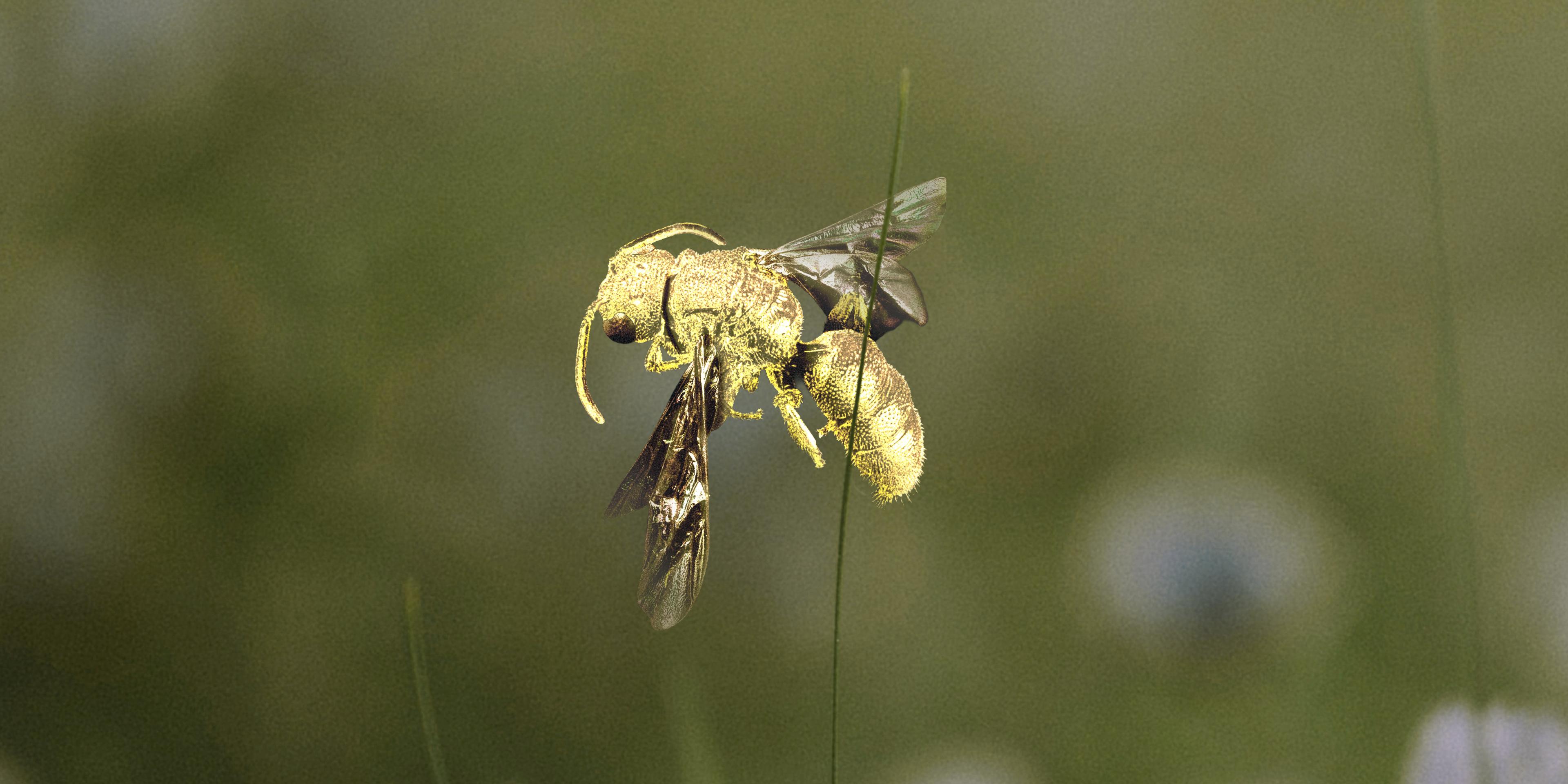
Intrigued, Baer’s lab started studying the colonies. Genetic analysis soon revealed them as a unique hybrid between European, Mediterranean, Middle Eastern, and African honeybee subspecies. Now, Baer’s research has shown that they have a remarkable trait: natural resistance to one of the honeybee’s biggest foes, the varroa mite (Varroa destructor). The discovery could have huge implications for U.S. beekeeping — but only if the hybrid bees prove manageable.
Mighty and Mite-Free
Honeybees are not native to North America — they’ve been continuously imported from various regions of Europe, Asia, and Africa over the last 400 years.
“Beekeepers in this country have historically experimented with the different subspecies,” said Brock Harpur, an entomologist at Purdue University who specializes in honeybee genetics. Over many years, U.S. beekeepers tested and bred different bees for their cold tolerance, their honey production, their temperament. Eventually, they ended up with what Harpur calls a “strong preference” for Italian honeybees, a docile variety that produces loads of honey.
The problem is that Italian honeybees are very susceptible to varroa mites. “They die if you so much as look at them cross-eyed,” joked Keith Roberts, founder of The Valley Hive, a beekeeping supplier and honey purveyor in Chatsworth, California. It’s hyperbolic, but not by much.
In 2025, beekeepers across the U.S. experienced the largest honeybee die-off on record: 62% of all colonies in the country perished over the winter. Most of those colonies were of Italian (or other European) stock; lab analysis later revealed that the majority had been infested by pesticide-resistant varroa mites.
Over the last two decades, varroa mites have emerged as one of the primary threats to honeybees in the United States. These tiny arachnids infest bee colonies and latch onto the larvae, sucking their fat reserves like ticks. And like ticks, they can spread a host of diseases, from deformed wing virus to sacbrood to acute bee paralysis virus (which does exactly what it says on the tin).
By the end of the study, the hybrid colonies had 68% fewer mites on average compared to their commercial counterparts.
Beekeepers have means of controlling varroa mite outbreaks, including quarantines, thoroughly cleaning their equipment, and deploying a range of natural and synthetic miticides. But as these chemical treatments have become more common, the mites have begun to develop widespread resistance to them.
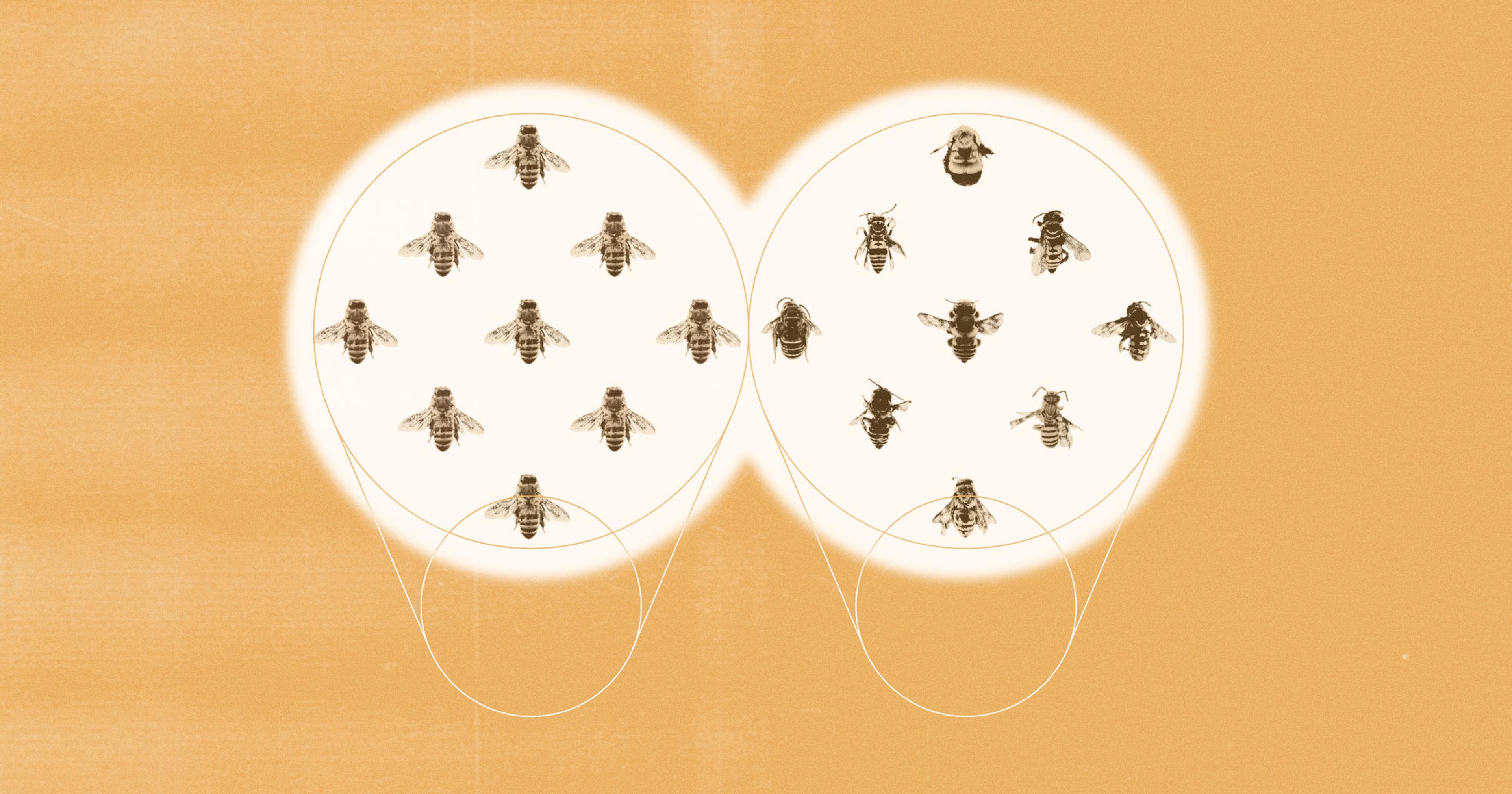
That’s where the Californian hybrid bees could hold an important secret. In their most recent paper, Baer’s lab showed that hybrid bee larvae are significantly less appetizing to varroa mites compared to European honeybees. The researchers tracked 101 hybrid colonies and 135 commercial colonies over a four-year span. By the end of the study, the hybrid colonies had 68% fewer mites on average compared to their commercial counterparts. They also showed resilience after being infested, staying below the treatment threshold more often.
Baer’s lab is still working out the underlying mechanism for this resistance. It seems to be an innate form of immunity rather than an adaptive behavior. “There are some indications that they change some of the smells that they emit, and that basically messes up the reproductive cycle of the mites,” Baer said. That’s good news, because it means the researchers might be able to pinpoint an anti-mite gene in the bees’ genomes. Additionally, the bees have shown tolerance to heatwaves and certain fungal infections. And unlike other strains of mite-resistant bees, their honey production seems to be on par with commercial stock.
“That is really good information,” said Roberts.
There’s just one issue: In terms of temperament, “these colonies can be a lottery,” said Genesis Chong-Echavez, a graduate researcher at UC Riverside and lead author of the new paper. Some hybrid colonies are sweet, but others are extra spicy. The reason stems from an incident some 70 years ago, when bee breeding went horribly wrong.
Playing Defense
In the 1950s, a researcher named Warwick Kerr was working with honeybees in Brazil. His ultimate goal was to increase honey production, and to that end he began crossbreeding European bees with ones imported from southern Africa. The resulting bees were hardy — but also excessively defensive, swarming with what seemed to be little provocation.
And then, somehow, they escaped. These “Africanized” (or “scutellized”, after their latin name Apis mellifera scutellata) bees started making their way through South America and north into Central America. By the mid-1980s, they had arrived in Texas and Southern California, where they began mating with local bee populations. This kicked off a yearslong panic in the United States about “killer bees” spreading through the country, inspiring everything from legislation to bad horror movies.
While some of the fears around scutellized bees are wildly overblown, the underlying concern is valid. Their venom is no more potent, but swarming Africanized colonies will deliver up to 10 times as many stings as European hives. They will also pursue their target relentlessly for over a quarter-mile. “You have no idea how nasty these bees are,” said Charlene Potter, president of the Los Angeles County Beekeepers Association.
About one-third of the Californian hybrid genome comes from African honeybees. This is far less than typical scutellized bees, which have upwards of 80%, but it’s enough to concern some beekeepers and lawmakers. “The government would classify it as an Africanized honeybee,” said Harpur.
“If the bees are so defensive they’re a liability, it does not solve our problem.”
The Californian hybrids are less defensive than your stereotypical “killer bees” — but they’re pricklier than commercially available bees. Still, about two-thirds of hobbyist beekeepers in Southern California knowingly keep hybrids at some point. Roberts kept them for several years, but switched over to Italian bees after launching his commercial venture; it was one thing for him to risk getting swarmed, but another to ask his employees to do the same. He is all for using fewer miticides and managing hardier bees, he said. But the alternative can’t endanger folks raising bees for honey or pollination services. “If the bees are so defensive they’re a liability, it does not solve our problem.”
Baer and Chong-Echavez say they would never recommend people keep dangerously defensive bees. Their long-term goal is to develop a line of honeybees that are both resistant to varroa mites and docile enough to be kept safely. They might achieve this by selective breeding, or, potentially, genetic engineering. But either way, getting to that point will require more research and funding.
With miticide resistance on the rise, a naturally tolerant honeybee could be a game-changer from both an economic and ecological perspective. “I think it’s incredibly important that these traits and this genetics be explored,” said Matthew Mulica, a project director at the Keystone Policy Center, which leads a program on honeybee health. Roberts and Potter agree, so long as the research produces tangible results.
“I respect what Boris does,” said Potter. “I just want to know what’s next.”