Recent legal challenges to the home distilling ban are the latest in America’s long, fraught history with spirits production.
In 2009, Colin Spoelman decided to apply for a distilling permit. He had to interview with a federal Alcohol and Tobacco Tax and Trade Bureau agent, and the agent asked him how he had learned to distill. “It’s a loaded question so I said I had read a lot of books—which was true,” he said. He didn’t want to admit that he had learned by distilling in his New York apartment. Distilling spirits at home has been illegal since 1868.

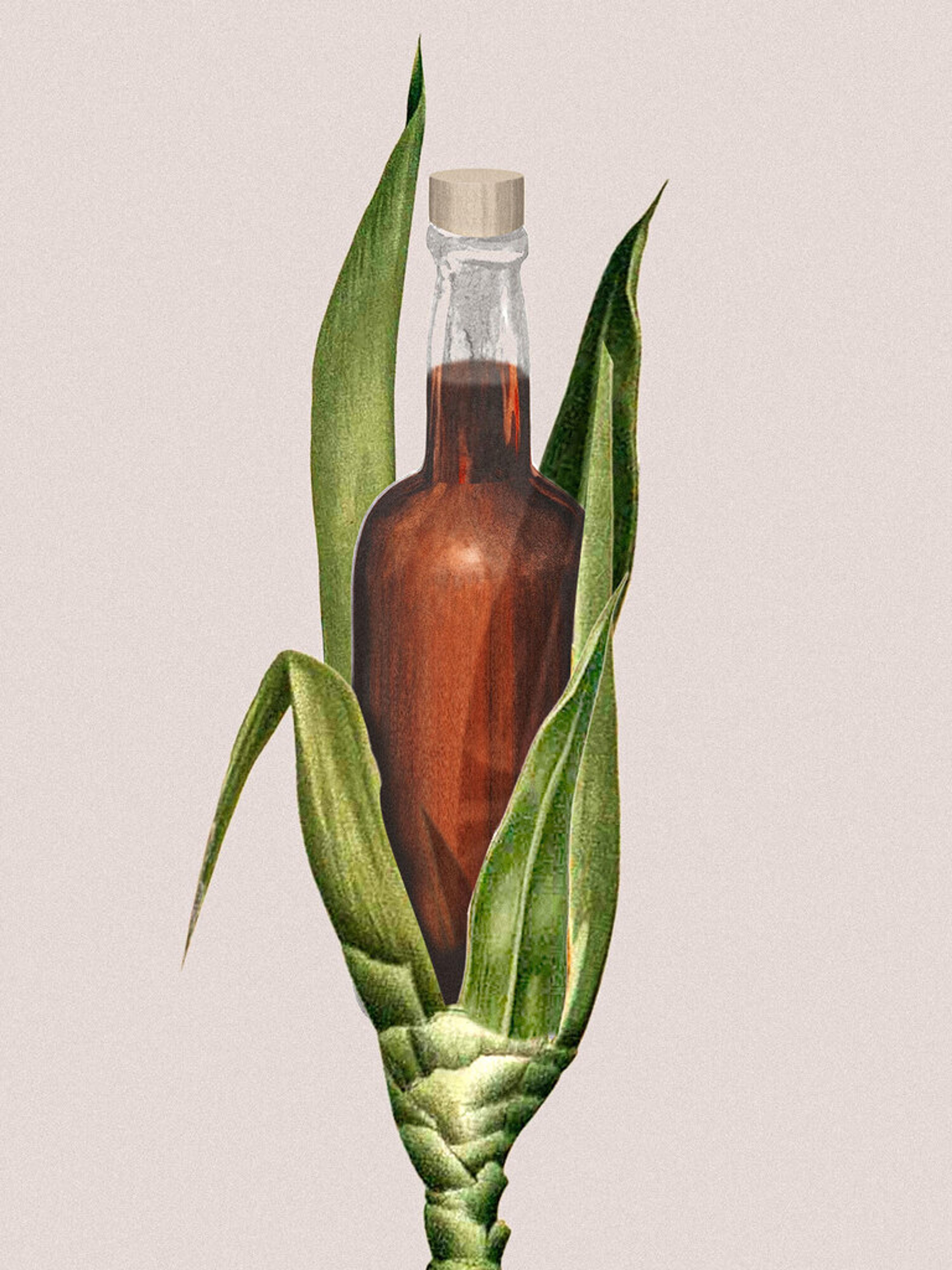
Originally from Kentucky, Spoelman had brought moonshine back to New York after visiting his home state. Eventually, he decided to learn how to make it himself and experimented with ingredients, equipment, and his process. He even began selling his product to family and friends. If he had been caught, he could’ve been convicted of a felony and sentenced to five years in prison and/or ordered to pay up to $10,000.
When the success of his venture began to draw too much attention, a friend suggested they legitimize the business.After obtaining the permit, Spoelman and his friend co-founded Kings County Distilling in Brooklyn, and they produced their first legal batch of alcohol on April 15, 2010—ironically, tax day in America.
It’s unclear how many people are distilling at home today despite the federal prohibition. (Brewing beer or making wine at home is permitted for non-commercial use.) On October 19, 2026, the United States Supreme Court announced that it will consider whether the ban is constitutional. Its decision will resolve contradictory opinions from two federal appeals courts. In April 2026, the Fifth Circuit Court of Appeals ruled that Congress did not have constitutional authority to enact the ban while the Sixth Circuit Court of Appeals found it did.
The U.S. Supreme Court has agreed to review the Fifth Circuit case which began in 2023 when the Hobby Distillers Association, an advocacy group with about 1,300 members as of 2024, and individuals interested in home distilling sued government entities. Because the home distilling ban originated from Congressional efforts to stop tax evasion, the debate centers on Congress’s power to enact legislation “necessary and proper” to its authority to tax.
These cases are the most recent examples of a long tradition of challenging home distilling regulations. In 1791, George Washington’s administration began taxing spirits to pay Revolutionary War debts and raise capital. Distilling was a widespread practice, and Americans violently resisted this tax collection for years, a reaction now known as the Whiskey Rebellion.
“Moonshine became a negative stereotype about people from the mountains—you know, the hillbilly drinking moonshine.”
President Lincoln taxed whiskey to fund his government during the Civil War. In the years immediately after the war, a U.S. House of Representatives committee reported “the most stupendous frauds” after examining the evasion of this tax. “Indeed, it is believed that at least seven-eighths of the entire amount of spirits manufactured under the present law have escaped taxation,” it wrote. In 1868, Congress passed an act addressing this problem and included the home distilling ban that survives today, reasoning that it was easier for those distillers to avoid paying taxes on their products.
While home distilling has never completely ceased, its role has changed over time. In the colonial era, whiskey was an integral part of the economy. Farmers distilled their extra grain and sold the alcohol because the liquid was easier to transport, and whiskey was even used as currency. During Prohibition from 1920 to 1933, home distilling was a major source of illicit alcohol for consumers and a financial opportunity for producers. Today, Spoelman, who also wrote The Kings County Distillery Guide to Urban Moonshining: How to Make and Drink Whiskey, has observed home distillers are often motivated by an epicurean curiosity.
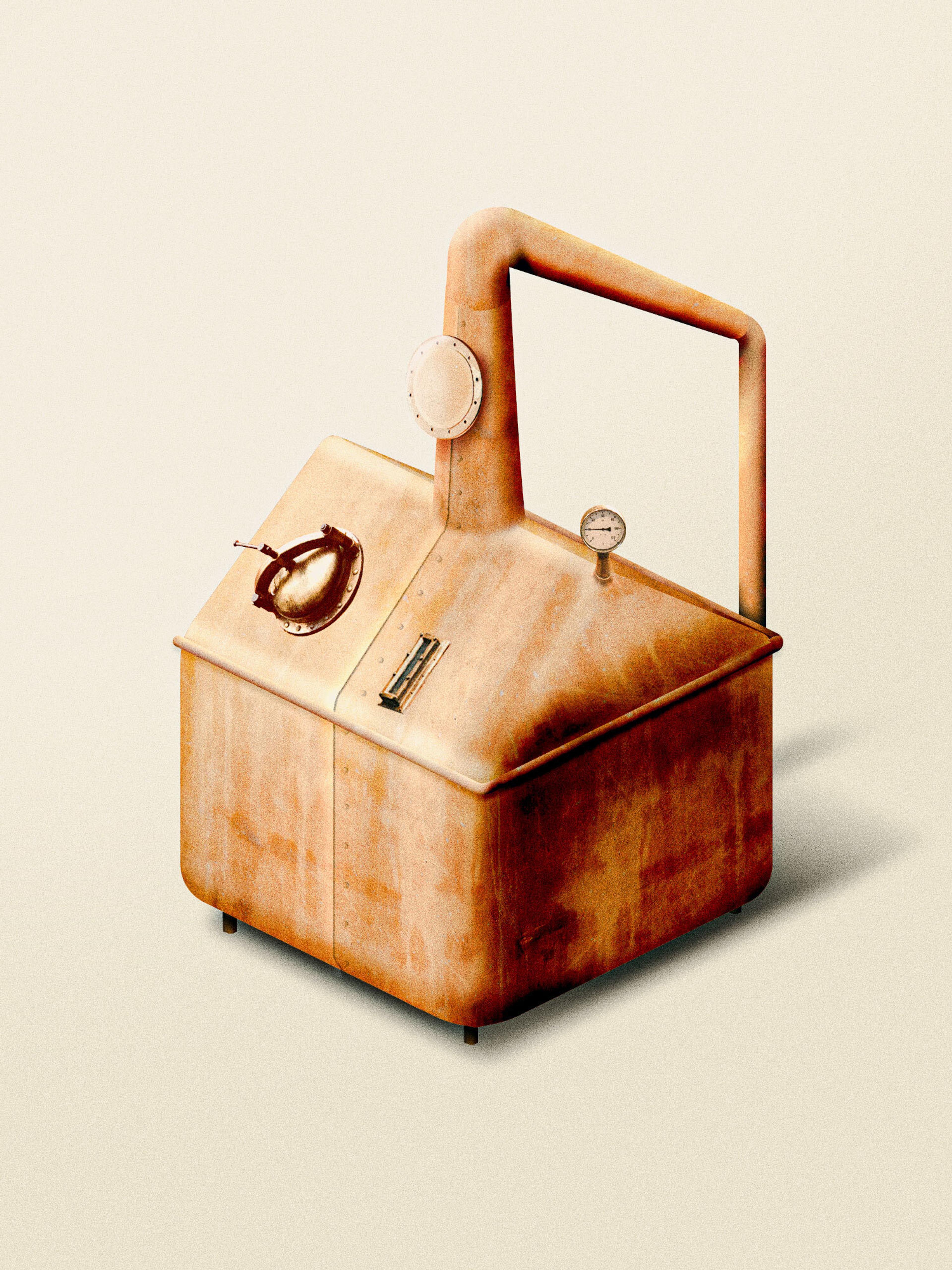
Home distilling also led to the creation of a new enterprise: NASCAR. According to the NASCAR Hall of Fame in Charlotte, North Carolina, drivers who transported these illegal spirits adjusted their cars to make them faster, helping them escape pursuing law enforcement. They began racing against each other and founded NASCAR in the middle of the twentieth-century. To this day, the NASCAR Hall of Fame displays a moonshine still constructed by Junior Johnson, a famous competitor and former moonshine driver.
The public’s perception of home distillers has evolved as well. Ron Roach, chair of the Department of Appalachian Studies at East Tennessee State University, teaches his region’s history of brewing and distilling and believes that Prohibition contributed to the popular image of a moonshiner. For some, a moonshiner is “a folk hero” and a “Robin Hood-type legend” who isn’t submitting to government control. But also, “moonshine became a negative stereotype about people from the mountains—you know, the hillbilly drinking moonshine,” he said. But Roach believes that more people today see home distilling as an “art form” especially with the rise of legal commercial distilling in his area.
“I would argue that the enthusiasts finding home distilling will improve the general palates of the American public for whiskey.”
Reid Mitenbuler, author of Bourbon Empire: The Past and Future of America’s Whiskey, noted that Appalachia’s moonshining heritage can sometimes dominate the public’s image of home distillers. “Moonshine has always had way more of an urban flavor than it’s given credit for, and that goes back a long time,” he said.
If the U.S. Supreme Court upholds the home distilling ban, some worry about the implications for individual freedoms. The plaintiff in the Sixth Circuit case, a home brewer turned brewery owner who now wants to distill in his home, compared this ban to a hypothetical situation where the government taxes bread and then forbids baking bread at home to prevent tax fraud.
If the Court reverses the ban, Mitenbuler suspects the change may not have much of an effect. “You’ll get people who are curious, but the nature of the product—whiskey—I don’t think will invite hordes of people into making it,” he said. Anyone interested in distilling must dedicate a lot of time to learning. If they want to age their product, they must be patient as it can take years before their liquor is ready to taste, and they will need a space where they can store it long-term as it ages. Mitenbuler also wonders if there will be enough interest, pointing to the decline in drinking among Americans.
While he acknowledges that a reversal of the ban might not have a huge overall impact, Spoelman believes it might boost interest in the distilling industry and educate consumers. “I would even argue that the enthusiasts finding home distilling will actually improve the general palates of the American public for whiskey,” he said.
Because most spirits today are produced by large corporations at scale, he believes that consumers are unfamiliar with many nuances. He compares this situation to someone who has only eaten fast food and doesn’t recognize gourmet dishes. “There are some craft distilleries that are coming up that are, I think, hoping to change that, but it really has to start with the consumer and a deeper level of engagement with the craft,” he said.