
Vermont and New York are banning neonic-coated seeds. Some farmers are worried about the risks.
The last time Offrange checked in on neonicotinoids, states were beginning to legislate against them as a stream of research identified their harms to pollinators, songbirds and fish, and humans. Four years later, at least 13 states have passed some sort of ban on this most widely used class of insecticides. The bulk of these have targeted non-farming, residential uses but New York and Vermont are taking it one step further.
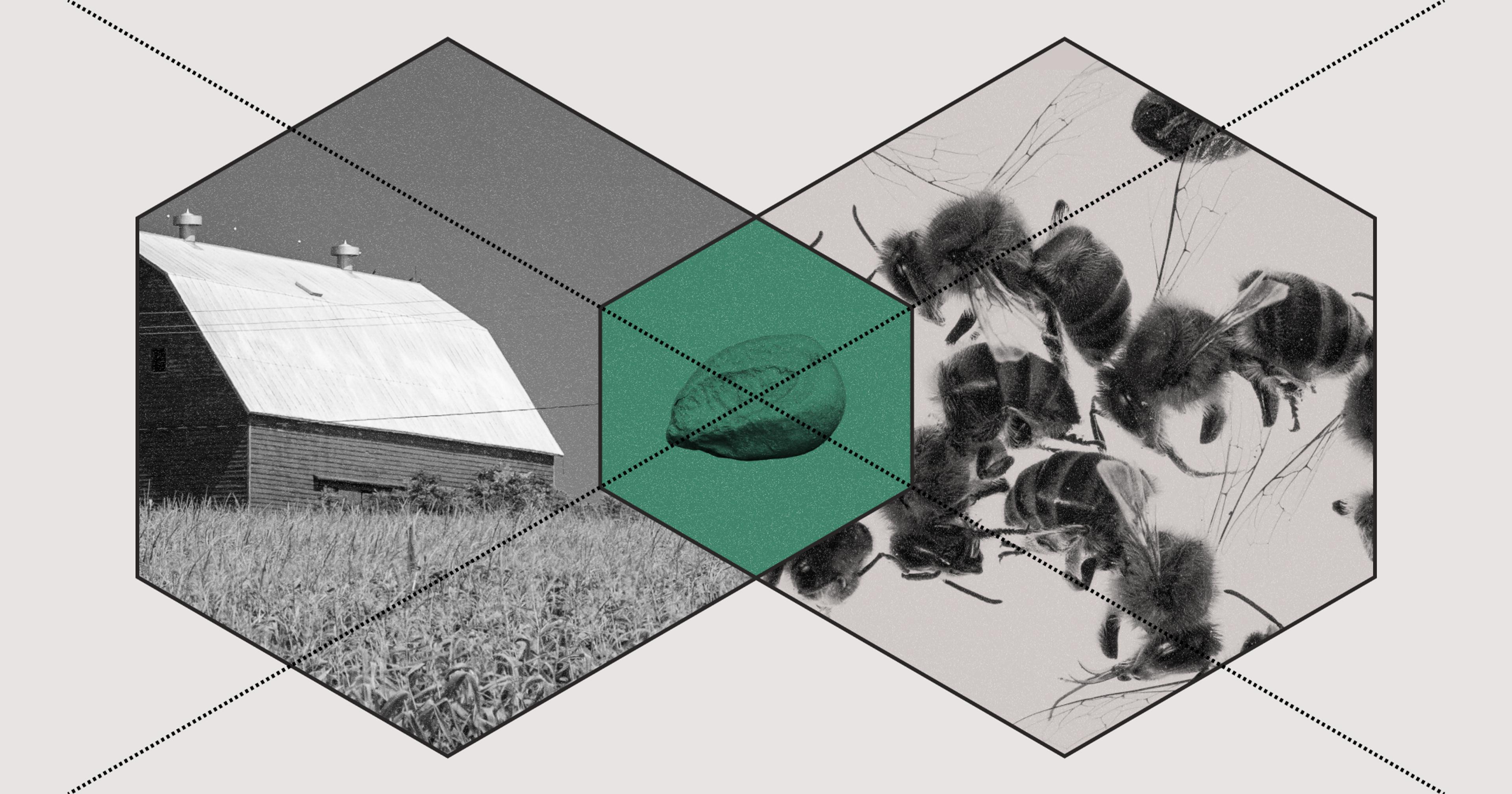


Like the Canadian province of Québec, starting in 2029 both states will also prohibit the use of seeds treated with neonics—a process that became popular 40 years ago as an alternative to pesticide sprays and DIY seed treatments. Needless to say, this has caused a slight freak-out among farmers worried that they’ll get hit with big yield losses on their field crops due to pests like the seedcorn maggot. As a prophylactic against this and other insect scourges, in the U.S., 90 percent of conventional corn, 60 percent of conventional soybean, and 50 percent of conventional wheat seeds are coated in bright shells of neonics like imidacloprid and clothianidin.
The practice has continued even though studies show that eschewing these chemicals, except in places with mild winters, doesn’t generally result in pest-driven yield drops. Also 90 percent of the insecticide on coated seeds is not actually taken up by the plant but gets released as dust, lingers in soil, and leaches into waterways. (Birds eat the seeds, too, to their peril.)
Still, “If it was our choice, we wouldn’t have had [the ban] pass,” said George Foster, a third-generation dairy farmer in Middlebury, Vermont, who grows corn and soybeans for his cattle. “We don’t always get what we want.” He echoes a common sentiment.
Foster, however, recognizes the moment to (perhaps grudgingly) adapt when he sees it. That’s why he’s been trialing neonic-less corn seeds on a few of his 2,500 acres for the last four years, as part of a University of Vermont Extension study. “I want to know what’s going to happen, if there is any knowing what’s going to happen,” he explained. After three years, he said he has seen “virtually no difference on yield.”
This doesn’t mean he’s changed his mind about the neonic ban; the good corn yield from non-treated seed was a lower-yielding variety and was planted later in the season than usual, when pressure from pests might have been lower. “Everybody says, plant late. Well, no, no, no, no, no, we’re not gonna wait till June to plant all of our crops!” Foster said. In Vermont, the earlier that corn is planted the higher the yield, which means Foster would likely see yields tank across his full acreage.
“If it was our choice, we wouldn’t have had [the ban] pass. We don’t always get what we want.”
There are certainly farms in that state that are more susceptible to pests and the lower yields they usher in, said Heather Darby, an agronomic and soils specialist who’s been running the UVM trials. “But when you average the data across 800 farms it looks like there’s no difference,” she said. To understand the risk means knowing where any anomalous farm might be “and what were the circumstances that led to that crop failure.” It’s worth noting that Vermont—like Québec but unlike New York—will offer waivers to farmers with proven pest problems; they’ll be able to get a prescription from an agronomist.
Tillage combined with manure applications and turned-in cover crops are all closely aligned with planting in the chilly, damp month of May on Vermont farms. “That’s when we have seen most substantial levels of damage to seed and also yield losses,” said Darby. Get rid of tillage, which Foster did about 14 years ago, “and the risk goes way down,” Darby said.
One Québec farmer, Renaud Péloquin, who was interviewed for a documentary produced by pollinator health nonprofit One Hive Foundation, has made a variety of changes to how he grows his row crops. Since he stopped using neonics, he has pivoted to a cover crop mix that includes oil seed radish, which seems to repel pests from seedlings. And he’s decided to invest heavily in biodiversity on his farm, adding riparian buffer strips and wildflowers to help pollinators. After making the switch, “I couldn’t imagine using an insecticide on the farm,” he said.
Vegetable growers, some of whom also use treated seeds, may have fewer options. According to Brian Nault, a Cornell University researcher who’s been conducting vegetable seed trials, insecticide seed treatments provide important protection from pests for snap beans and onions. He said some effective non-neonic alternative applications had been identified but in the case of snap beans, “If a non-neonic is chosen, an additional application (or two) will be needed. This will increase time, labor, and costs.”
“If a non-neonic is chosen, an additional application (or two) will be needed. This will increase time, labor, and costs.”
On the other hand, for sweet corn, “We have not seen an advantage of using insecticide seed treatments for early-season protection against insect pests.” Farmers could choose to use cyantraniliprole as an alternative, but like neonics that has adverse effects on bees and beneficial insects.
Beyond the potential need to change some farming practices, Darby hears lots of concerns about the basic act of ordering seed. Back when Québec first banned neonics in 2019, farmers found it virtually impossible to purchase the genetics they wanted in un-coated form.
“When we started it was really, really hard. It was like one variety,” said Doug McColm, a grassfed beef and commodity crop producer with a 203-year-old family property near Montréal. “I bet you the [seed companies] were trying to make it difficult, just so that the ban wouldn’t go through, but now they’ve allowed us access to most of the varieties.” (Any hope that a bag of untreated seed would cost less than a treated one was quickly dispelled, however.) But even now, farmers might have to pre-order in August or September to secure the seeds they want. “You have to be more organized, and it takes work,” McColm said.
Pre-ordering also means that a farmer needs ample financial resources at a time of year when bank accounts might be drained, said Darby. Additionally, it can be economically perilous to order one type of seed many months in advance in anticipation of a warm, dry planting season—only to be confronted with an unexpectedly cold and wet spring, for which a farmer would want to plant hybrid seeds that are cold stress-tolerant. That’s because a seed company’s return policy may disallow a farmer from swapping out one untreated seed varietal for another, which is an expensive error to swallow.
“Just because we don’t see the devastation that we saw in the past doesn’t mean that we won’t again. The insects are still there.”
Unlike Québec farmers in the first experimental years before that province’s neonic ban, farmers in New York and Vermont are not eligible for government subsidies to encourage the use of non-treated seed. That only heightens the anxiety many producers feel about making the switch. “I remember seeing crop losses to those insects,” Paul Fourts, a dairy farmer in Courtland, New York, told documentary interviewers. “Just because we don’t see the devastation that we saw in the past doesn’t mean that we won’t again. The insects are still there.”
Fourts also remembers that before 1985, when coated seeds became the norm, farmers had to dose their own seeds by dumping them into vats of toxic pesticides like Lorsban. Pre-treated seeds seemed a miraculous improvement, both safer and more convenient for the farmers using them.
Seven years after their ban took effect, farmers in Québec have not only managed to move away the treated seeds, but those interviewed for the documentary, at least, seem to have shed much of the fear that came with the anticipation of ditching them. Still, Péloquin said there are rumors circulating that untreated seeds will lead to crop losses. He finds the continued paranoia perplexing and attributes its proliferation to sales reps sharing “horror stories” on social media. As he told documentary interviewers, “We are farmers after all … We are constantly managing risk, dealing with the weather and all the other variables involved.”