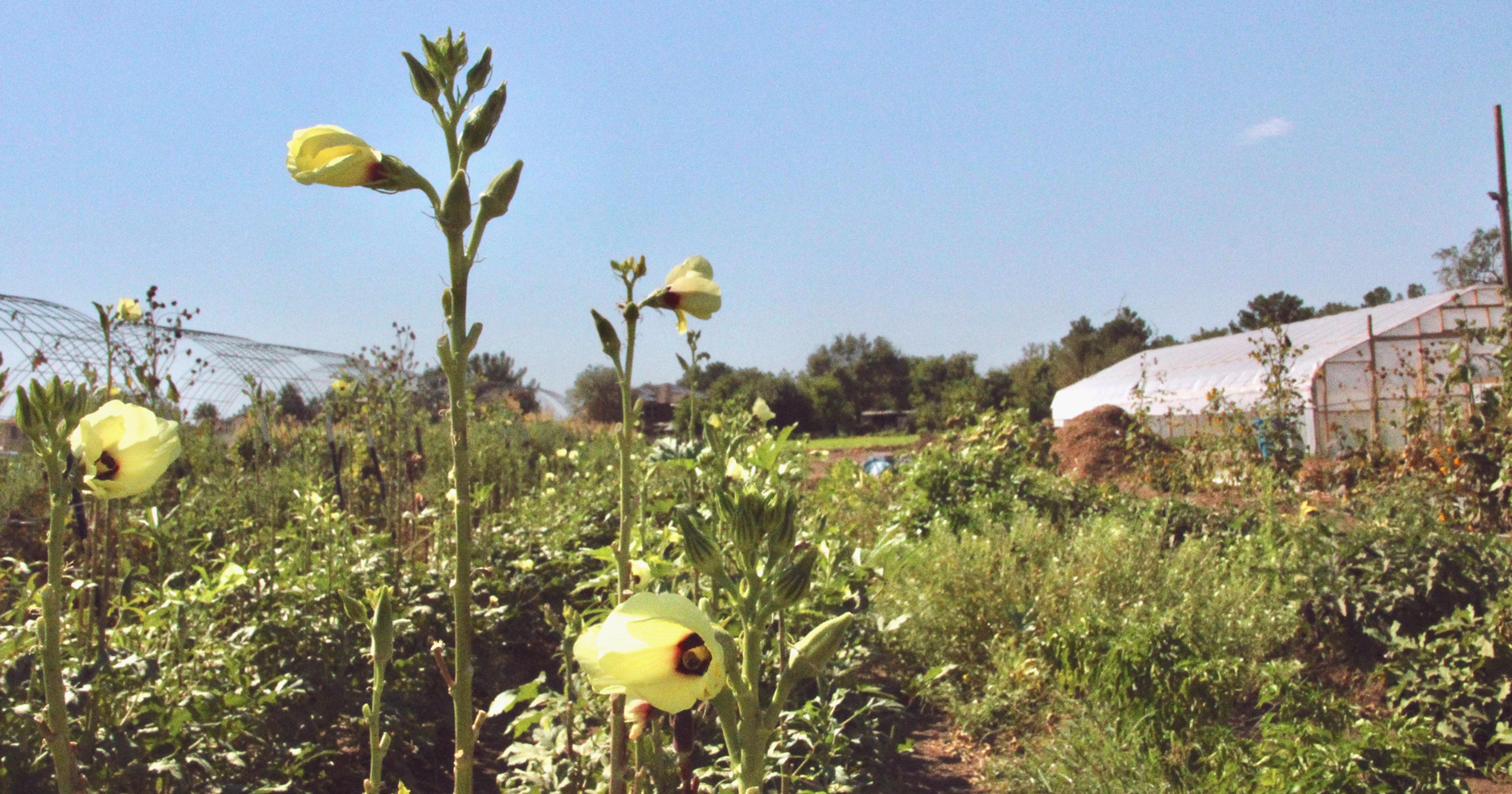

There’s a generous new credit called 45Z that is largely dependent on farmers’ regenerative practices.
Farmers in the know are eagerly awaiting final U.S. Department of Agriculture (USDA) rules tied to the Clean Fuel Production Credit known as 45Z. It’s been a slow and somewhat agonizing process that has taken years; on February 3, the Department of Treasury finally released its official rules.



Now there are only two holdups to putting 45Z into action: when the USDA will release its final rules and when they’ll release their official carbon calculator. Once these are out, for farmers who’ve already adopted regenerative agriculture practices, it could mean major rewards — though it’s likely not going to be ready in time for this year’s tax filings.
The 411 on 45Z
45Z is a part of a broader effort to lower greenhouse gas emissions through cleaner fuels, according to Faith Parum, an economist with the American Farm Bureau Federation. It’s a method-neutral program that “means as long as they’re lowering emissions, the type of fuel they make and how they make it is not necessarily questioned,” explained Parum.
Previous tax credits for producing biodiesel and renewable diesel as well as sustainable aviation fuel required the use of specific feedstocks and technologies. 45Z will replace these preceding technology-specific credits and reward all fuels with lower lifecycle greenhouse gas emissions — calculated using the Department of Energy’s (DOE) GREET model — rather than only the fuel type. GREET is a lifecycle analysis tool that calculates the carbon intensity of fuels by accounting for emissions from production through end use. Basically, it determines how “clean” a fuel is based on its full supply chain.
“That’s why the program was created,” said Parum. “It’s to create a tax credit for companies that make fuels with lower emissions.”
By incentivizing producers to source feedstocks from farms using sustainable practices, the credit has the potential to reshape demand for certain crops, which is why farmers like Mitchell Hora, a seventh-generation row crop farmer in Washington, Iowa, are eagerly anticipating the final rules.
According to Hora, those already growing these feedstocks regeneratively may find new opportunities emerging as biofuel companies bolster their climate-smart supply chains. 45Z ties a direct financial value to a biofuel’s carbon intensity (CI) score, opening the door for producers to turn farm data into meaningful tax credits. By adopting regenerative practices that reduce the carbon footprint of grain production, farmers may be able to capture significant new revenue.
The IRS rule clarifies which fuels and producers qualify and defines a qualified sale. It also explains how producers register and participate while spelling out how emissions are calculated and converted into tax credit value.
45Z provides a major incentive to source feedstock from farmers already using lower-carbon practices like cover crops, no-till, nutrient management, and rotational grazing.
“Once it passes, it could change a farmer’s relationship with current suppliers or producers,” noted Hora. Biofuel plants that want to gain the credit are likely going to work with farmers already adopting carbon-neutral practices to increase their access to lower-carbon corn, soy, and other feedstocks.
“Some biofuel plants are really going to be quite aggressive to compensate the farmers,” Hora added. “While others won’t be as willing to share a large portion.”
Regardless of how 45Z is rolled out, Hora believes that “the market will work itself out so that farmers, fuel producers, and other key stakeholders all get their equitable share.”
However, in order to get a seat at that table, Hora said there’s one thing all farmers should be doing right now: getting their data in order and signing up for a carbon intensity (CI) audit.
A Farmer’s (Potential) Reward
CI scores have been part of the fuel industry for decades. Basically, these scores are tallied based upon the fuel’s lifecycle emissions (greenhouse gases) — not just by the emissions released when the fuel is being used — and the current estimated score for, say, the average bushel of corn.
A farm’s CI score is currently calculated by completing an independent data audit using a third-party accredited in ISO 14065 standards. The data collected includes all agricultural inputs like fertilizer and seed, farming practices like tillage and cover crops, energy use like fuel and electricity, and transportation; the final CI score is calculated using the GREET model. A CI score of zero is considered carbon neutral and the higher the score, the worse it is for the environment.
Because farming practices directly influence a crop’s CI score, producers who adopt more sustainable methods can help drive that score down, which then results in a larger tax credit. This provides a major incentive for biofuel producers to source feedstock from farmers already using lower-carbon practices like cover crops, no-till, nutrient management, and rotational grazing — and who have already completed a CI audit and know their score.
45Z is different from other biofuels tax provisions in that it measures actual grain, assigning every bushel (not acre) a CI score. Any score under 50 points will receive a tax credit to the biofuels’ producer. For reference, Hora’s farm’s CI score for corn is currently 2.6.
Eligible 45Z feedstocks include corn, soybeans, grain sorghum, canola/rapeseed, sugarcane and sugar beets, and switchgrass/miscanthus/energy grass. Under the current administration, only feedstocks from North American sources can be used in the 45Z program, which, in turn, has the potential to drive up demand — and create an economic advantage — for American farmers who have these practices in place.
The Big Unknowns
Fifth-generation Nebraska corn and soybean farmer Bob Bettger adopted sustainable agriculture practices on approximately 240 acres five years ago, as part of a natural resource district project aimed at water quality. It was also an experiment to see if cover crops would affect the farm’s profitability. Bettger has seen the conservation and economic benefits of a three-crop rotation, planting winter wheat to help with spring bird cover for pheasants and quail as well as different pollinator species. But with the passage of the Big Beautiful Bill and the potential for 45Z, he’s been hoping to see some additional payoff.
“45Z is designed to promote cover crops, crop rotations, to produce final grain products, corn and soybeans, that had a low carbon intensity number,” said Bettger, who reached out to Continuum Ag, an agriculture consulting company founded by Hora, to obtain a certified CI score for his crops.
He thought it was just a matter of time before he’d also be able to cash in on the potential credit. But then a multibillion-dollar, multi-state carbon capture pipeline became a success, carrying CO2 away from the ethanol plants in Nebraska. While it might be considered positive when it comes to greenhouse gas emissions, that lower carbon footprint may mean these ethanol plants need less credits from hopeful farmers.
“The Big Beautiful Bill paid $180 per metric ton of CO2 as a tax credit for ethanol plants that buried it,” said Bettger, who acknowledges that it’s a good thing, in theory. “I’m hoping they still need my corn, but I don’t know if they do now.”
Most farmers only change their management practices if the financial return for the change exceeds the transition costs.
There are other worries that Hora says need to be clarified as well for all farmers to benefit. For example, Hora wonders how farmers will connect to the biofuel supply chain as there are only two main options: a mass balance system, which requires physically delivering grain into a participating supply chain, and a book-and-claim approach, which allows farmers to sell grain as usual while separately selling verified CI attributes.
The current IRS rule doesn’t resolve this, and farmers are waiting for the USDA to make the final decision. Hora believes that the book-and-claim model is the best one because it offers more flexibility, avoids disrupting markets, and allows more farmers the ability to participate in 45Z.
Further, smaller farmers may not be able to compete with bigger ones who are able to track data and leverage that information into a certified CI score when ethanol plants seek out lower-carbon corn or soy.
“Some of the data restrictions may end up being too burdensome for some farmers to be able to participate in 45Z,” said Hora, noting that there’s also the possibility that the yet-to-be-released carbon calculator may not “be very farmer-friendly,” resulting in fewer farmer rewards.
And there are other potential compromises, too.
“Economic theory would suggest that if the financial returns to producing renewable fuel increase — either through higher market demand, production subsidies or utilization mandates — that more fuel will be produced and, in turn, increase demand for the feedstocks,” said Benjamin Brown, senior research associate and extension agricultural economist at the University of Missouri.
But there’s another side to that, too. “Maybe the fuel produced under 45Z offsets fuel in other parts of the supply chain,” said Brown. “Producers might also have a higher cost to implement practices compared to other feedstocks and, therefore, the production credits to not favor row crops.”
“We need to reward farmers in a way that truly drives regenerative agriculture adoption at a scale this country hasn’t seen before.”
Brown points out that most farmers only change their management practices if the financial return for the change exceeds the transition costs plus some margin, which is something he’s not seeing right now with regard to 45Z.
“As of now, there is no indication it will be large enough to influence management practices,” said Brown.
While the USDA hasn’t provided a timeframe for the final regulations and feedstock calculator, the IRS did note that the calculator is “undergoing testing, peer review and public comment,” and Hora said he heard they hoped to have everything finalized by the time spring planting season arrived.
Regardless of the unknowns, Hora remains optimistic the credit will push farmers to scale up and adopt regenerative ag practices — and that doing so will ultimately pay off economically.
“We need to reward farmers in a way that truly drives regenerative agriculture adoption at a scale this country hasn’t seen before,” said Hora. “The tool is already there. Now it’s just a matter of saying, ‘Let’s rock it.’”