
A startup is buying corn residue from commodity farmers to turn into bio-oil. Is injecting this sludge deep underground a viable way to store carbon?
Every fall after the corn harvest, leaves, stalks, cobs and husks are left behind on fields across the country. Farmers then have to decide what to do with it all. Corn stover, as this detritus is known, provides a vital source of nutrients when it’s folded back into the soil and acts as a protective layer that prevents erosion. It can also be gathered and sold to dairies for cattle feed. Whatever remains after that is typically left to rot or burn, which releases carbon into the atmosphere.
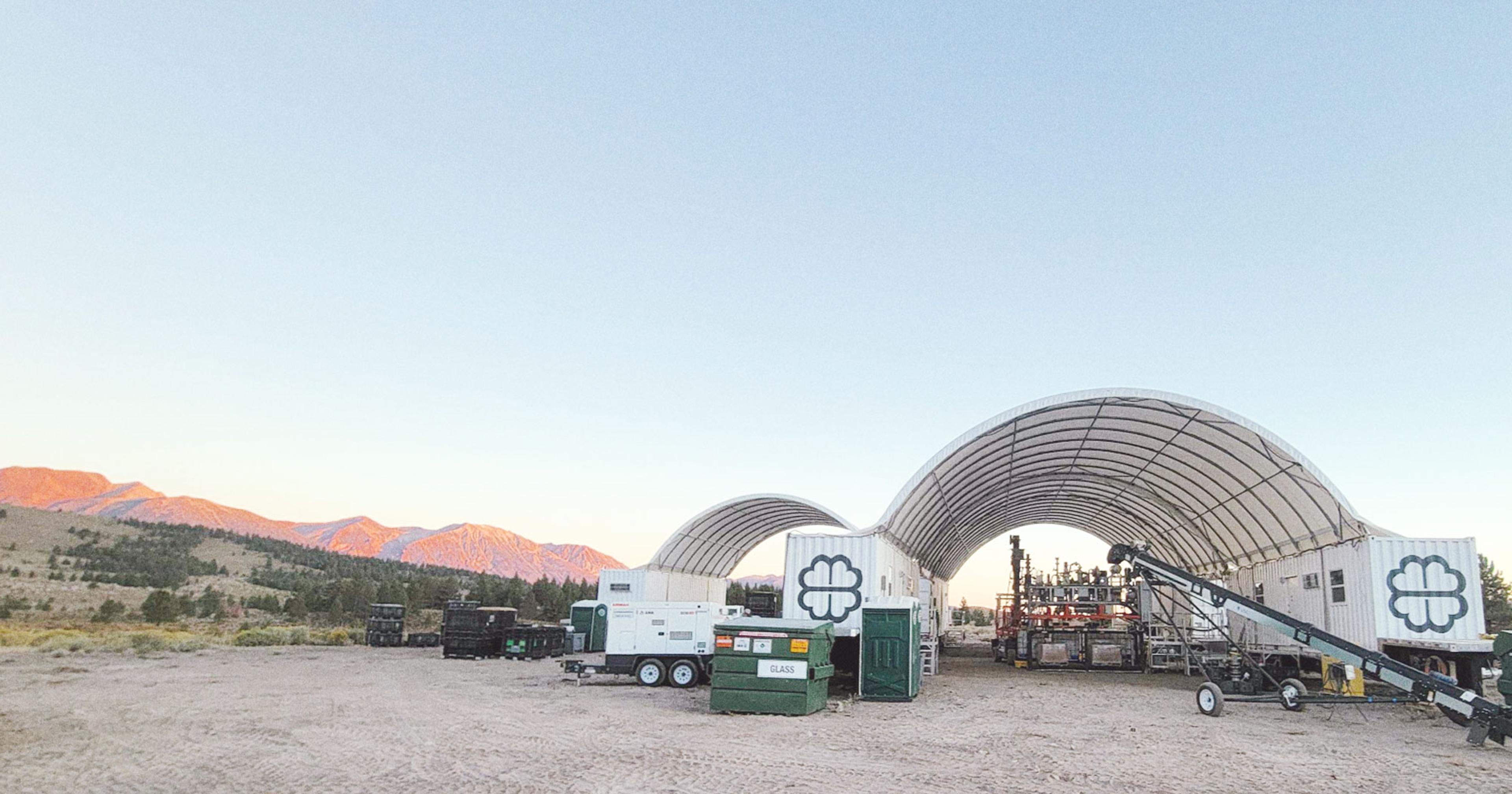
A mobile deployment in Inyo National Forest in the Eastern Sierra Nevada where Charm turned leftover trees and other debris from forest-thinning operations into bio-oil.
·Photo provided by Charm Industrial
However, in recent years, a new opportunity for corn farmers has emerged: selling a portion of their stover to Charm Industrial, a California-based startup. Charm specializes in carbon capture, a controversial climate mitigation strategy that’s been criticized for its high cost and low feasibility and, more provocatively, for acting as a tool that allows the fossil fuel industry to extend the life of coal and gas manufacturing. On the other hand, advocates, including the International Panel on Climate Change, see carbon capture as a necessary step to meet climate mitigation targets and avert the worst impacts of climate change.
As a result, where there’s agricultural residue, Charm sees opportunity. They convert corn stover as well as wheat straw — what’s left of the plant once the grain and chaff have been removed — into a syrup-like golden brown liquid. They sequester this so-called bio-oil deep underground through abandoned oil wells, allowing corporate customers to claim progress toward meeting their net-zero carbon emission goals.
where there’s agricultural residue, Charm sees opportunity.
“It’s a promising option,” said Lauren Gifford, senior advisor of climate philanthropy and investing at climate solution nonprofit Project Drawdown. Compared with other carbon capture technologies, she pointed out that Charm’s operations are relatively scrappy and low-tech, an advantage given that traditional carbon capture technologies such as direct air capture (DAC) require extensive infrastructure and large amounts of energy. The challenge, Gifford noted, is ensuring the process doesn’t emit more carbon than it captures.
By contrast, Charm’s methods are “almost primitive,” Gifford said. Pyrolizers — industrial devices that use high heat to break down biomass — are set up under large tents. That heat and absence of oxygen causes the organic material to decompose and turn into bio-oil that is injected into those oil wells for permanent storage.



By using bio-oil in this way, instead of burning it for energy at a power plant, the carbon in its biomass doesn’t return to the atmosphere (also the fate of stover left in a field or sent to a landfill) but rather, is locked away, said Daniel L. Sanchez, who runs the Carbon Removal Lab at University of California, Berkeley. “That actually leads to a net removal of carbon,” he said.
Turning crop residue into bio-oil
Charm’s field operations are focused on the Midwest and Great Plains regions, stretching from its headquarters in Fort Lupton, Colorado, east into central Kansas, with well-injection operations in central Louisiana. Working primarily with small-scale farmers and landowners, most of Charm’s connections are made through personal introductions, through company employees or friends. A lot of farmers already harvest some portion of their corn residue; someone who harvests 20,000 acres worth of stover, for example, might send 5,000 acres worth to dairies and feedlots. “For the folks that we’ve worked with to date, [bio-oil] is an additional income stream,” said Katie Holligan, Charm’s head of operations.
Even so, “It’s not a simple transaction. It’s a very multifaceted decision to take corn stover off the field,” said Kevin Shinners, emeritus professor of agricultural engineering at the University of Wisconsin-Madison. Despite the possible financial benefit of selling stover for bio-oil, its vital soil nutrients aren’t easily replaced; this is a key part of the calculation a farmer must make in determining how to apportion residue. “What’s the value of the nutrients removed, plus what is the cost of replacing those nutrients by some fertilization?” Shinners said. Timing is also an important consideration. Said Shinners, “There’s all kinds of things that need to be done in the fall and harvesting corn stover might be a pretty low priority compared to harvesting their corn and their beans.”
A farmer who strikes a deal with Charm has their agricultural residue chopped by a windrower, a vehicle that cuts, separates and compresses it into bales. It’s then stacked at the edge of a field. From there, Charm transports bales by truck, usually to their pyrolysis facility in Colorado. Distance is a critical factor, since any emissions generated from transport are factored out of what the company can sell to customers as a carbon credit. “It’s our objective to keep that [biomass] as close as possible to pyrolysis, so that we’re not moving biomass more than 20 miles, and we’re not moving bio-oil more than 100 miles,” said Holligan.
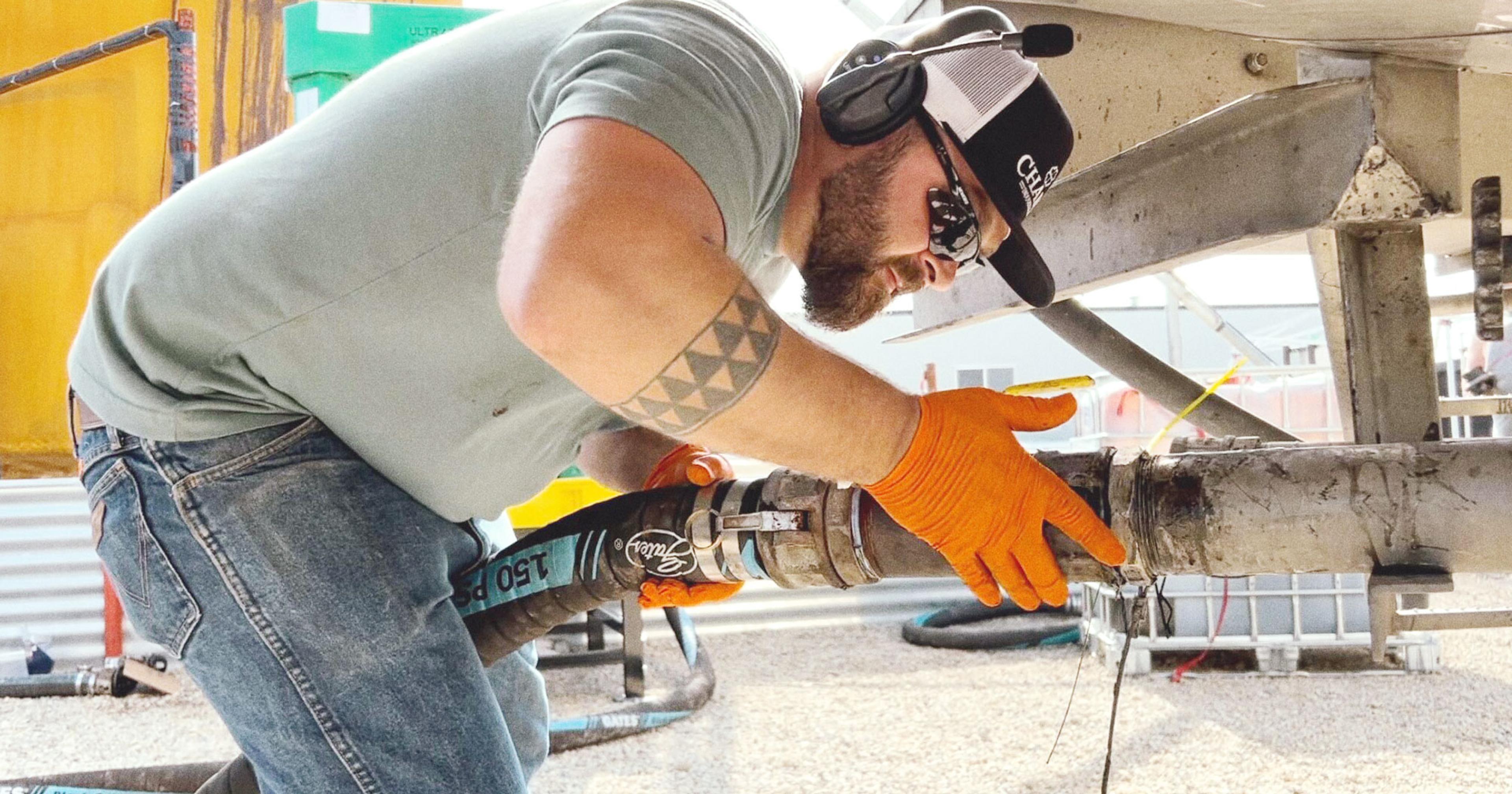
Charm injection operator. Charm injects bio-oil deep underground through abandoned oil wells, allowing corporate customers to claim progress toward meeting their net-zero carbon emission goals.
·Photo provided by Charm Industrial
Where there’s a well, there’s a way
To sequester bio-oil, Charm injects it into abandoned or orphaned oil wells before plugging them with a material like cement. Since even wells that are plugged appropriately have the potential to keep emitting methane, bio-oil injections further seal off any leaks.
Injecting the thick and viscous liquid deep underground has its risks — chief among them that the bio-oil could contaminate deep aquifers used for drinking water in some regions, making vigilant water testing essential. On the plus side, according to Sanchez, bio-oil can’t migrate back to the surface on its own. “It’s heavier than water, so at the depths where it’s injected, it’s not buoyant,” he said. Eventually, the oil polymerizes and turns into a stickier goo, making migration to the surface even less likely. “At that point, we’re pretty sure it’s going to stay right in place,” Sanchez said.
For now, Charm’s process is expensive and not yet competitive with other carbon removal methods, mostly because it’s only operating a handful of pyrolizers. But that high cost hasn’t stopped tech companies from signing multimillion-dollar deals. Boeing, Google, and JPMorgan Chase have all invested heavily in the company. Frontier, a coalition made up of Stripe, Alphabet, Meta and other tech giants, signed a $53 million deal with Charm in 2023 to remove 112,000 tons of CO₂ between 2024 and 2030. Most recently, TD Bank purchased 44,000 tonnes of carbon removal credits from Charm.
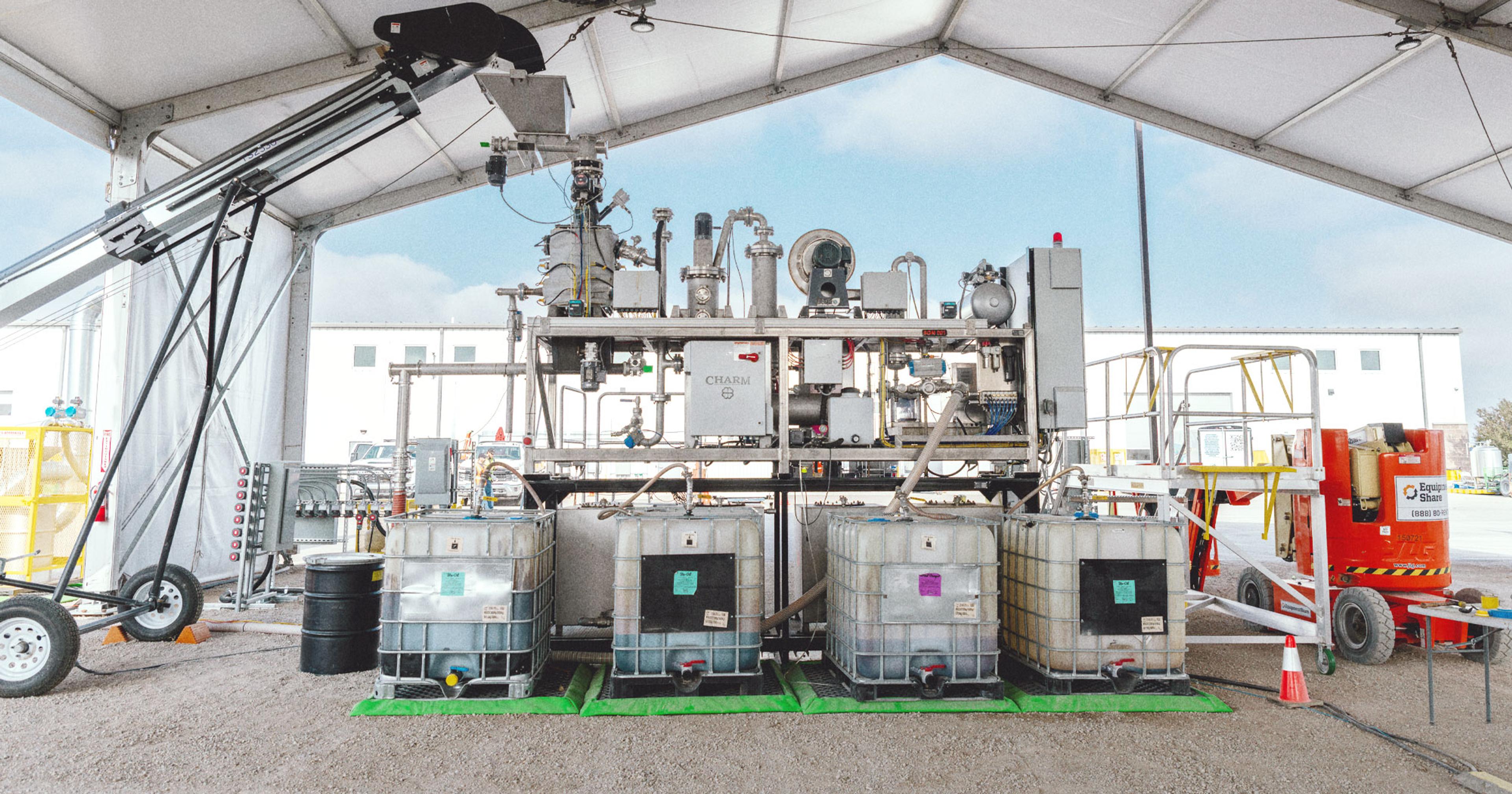
Pyrolizers use high heat to decompose organic material like corn stover and turn it into bio-oil.
·Photo provided by Charm Industrial
Skeptics question whether bio-oil production will ever be inexpensive enough to expand. “I’d be very surprised if it made sense as a large-scale thing,” said David Keith, a geophysicist at the University of Chicago who has done pioneering work on solar geoengineering. Other experts caution against relying on any single climate intervention. “Today’s climate solutions need to be varied,” said Gifford. “We can’t put all our eggs in one carbon-removal basket.” Still, she said, “The climate crisis requires all hands on deck, and this is a viable tool. But we need all the tools.”
As the next harvest season approaches, farmers will have to decide if they want to cash in their stover, and at what cost. “Almost everything in agriculture should be a complex decision from the standpoint of sustainability and profitability,” said Shinners.