
As agtech venture dollars dry up, a new study suggests tech companies focus on tools that are affordable and easy for farmers to use.
Back in 2023, California-based startup FarmWise released a product that promised to upend modern agriculture: a next-generation, AI-enabled weeding robot called Vulcan, able to distinguish weeds from crops and then kill the interlopers, using computer-controlled blades. FarmWise’s MIT- and Stanford-trained founders had more than “a solution in search of a problem” — by virtually all accounts, this was an effective solution to the weeds that cost American farmers billions each year. Particularly given the rise of “superweeds” that had evolved immunity to common herbicide formulations —not to mention more than 100,000 lawsuits alleging that Bayer’s Roundup caused cancer. Both Time magazine and the World Ag Expo named FarmWise weeders to their “best of” lists.

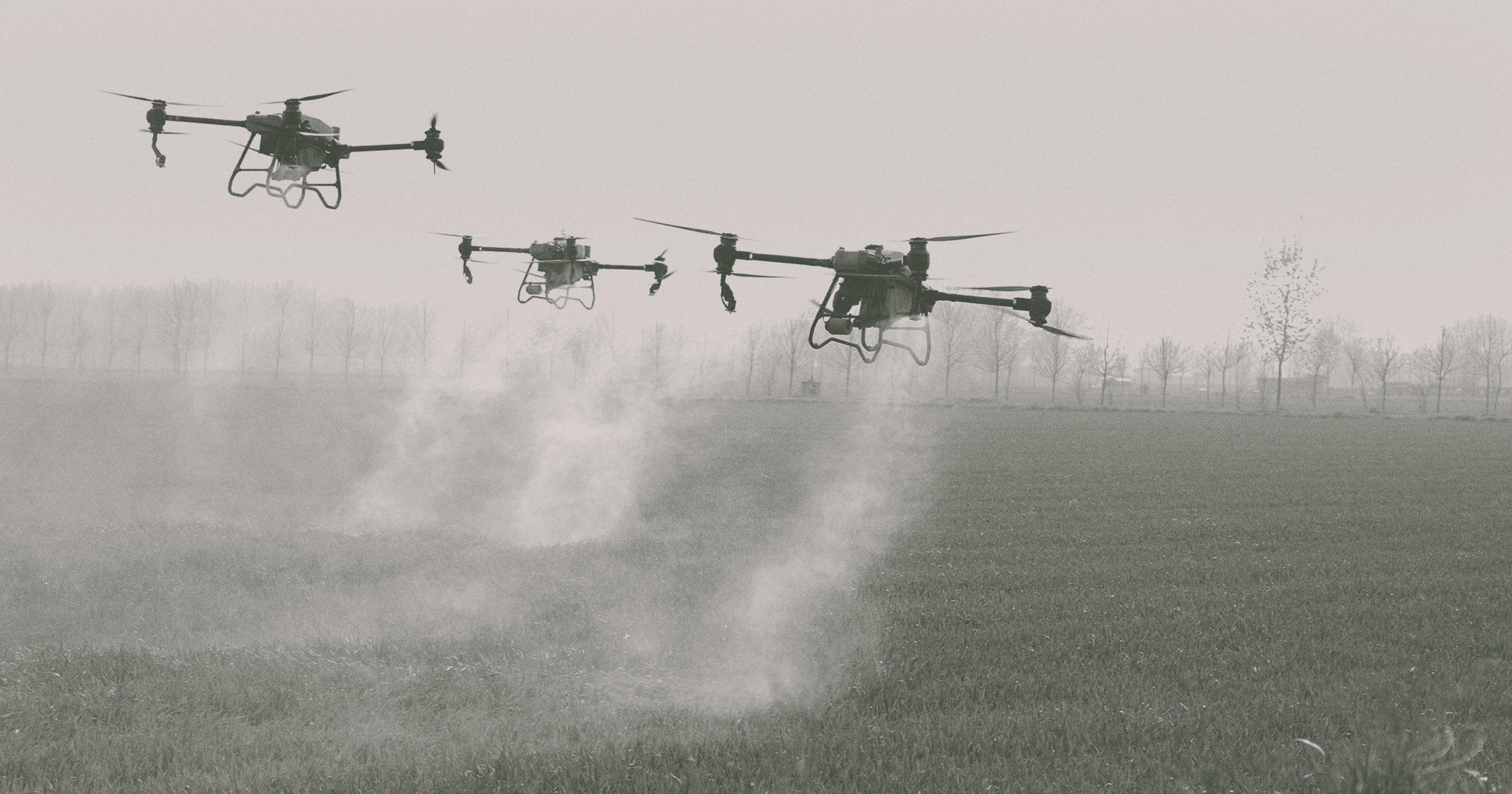
And yet, FarmWise’s Vulcan proved too capital-intensive for most farmers and wound down operations last year — in spite of raising $65 million in venture funding. The company sold its assets to an investor, the produce giant Taylor Farms.
FarmWise is one of nearly 20 agtech startups around the world forced to cease operations in 2025, according to a new University of Nebraska-Lincoln white paper. Authors Ankit Chandra and Ishani Lal blamed a “cost adoption mismatch” between expensive and complex agricultural tech and what farmers can reasonably afford and incorporate into daily operations. Chandra estimates that given low prices and high input costs, producers of row crops like corn or soy can afford to invest only about $4 per acre before new tech starts to become too pricey.
That said, the news is not all bad for high-tech on the farm. The authors found continued resilience in agtech startups whose products required low capital expenditure by farmers and were easy to use.
A Tough Row to Hoe
Four dollars an acre might sound like a low limit, given that a competent farmer can produce 200 bushels of corn on that land, which would fetch over $800 at today’s prices. But Chandra said that the costs of farm inputs and labor all can add up to make farmers feel strapped at the prospect of incorporating another high-tech gadget.
“The farmer doesn’t have that amount to invest into new technologies, even if there [is] beneficial impact around saving inputs or conserving the ecosystem,” he said. “So there is a cost adoption mismatch.”
Andy Jobman is a Nebraska corn and soybean farmer who spoke with Offrange while taking a break from strip tilling his fields. He thinks less of a particular dollar limit on new tech than in terms of return on investment. But the savings have to be obvious.
“The farmer doesn’t have that amount to invest into new technologies, even if there [is] beneficial impact around saving inputs or conserving the ecosystem.“
“If I’m investing $4 an acre, if I’m getting back $20, then it’s a no-brainer to invest in it, right? [But] where is that generating my increased profitability? Is it through higher yields? Can I actually yield the same with less inputs, or actually do more with less inputs?”
Chandra said the $4 figure for 2025 comes in part from talking to farmers themselves — and that the situation may be even worse this year. “Just in the last couple of weeks, a few of them [said], ‘We are forecasting our next year yields, the net returns look negative to us. So how do we invest into new technologies?”
Jobman said that during difficult times, farmers tend to tighten their spending and reduce any excess spending to a bare minimum. “When things are really tough, that really doesn’t make you want to open your pocketbook to try too many new things,” he said. “That’s not a bad thing either. It really makes you take an even harder look at what you’re doing and say, ‘Okay, is what I’m doing really sustainable?’”
Hard Times
Chandra and Lal published their paper in January, analyzing 18 agtech shutdowns that occurred in 2025. Ag and food tech venture investment worldwide peaked in 2021 at almost $11 billion, before falling to $6 billion last year, largely fueled by concerns about paths to profitability and the long period for agtech investments to pay off in the face of higher interest rates. The most hard-hit category was indoor vertical farms — six of these companies failed around the world. Vertical farms require a lot of energy and generally yield products that have to compete with inexpensive, conventionally produced crops like lettuce. Three different makers of insect protein — as a low-carbon-footprint source of livestock feed, pet food, or fertilizer — also failed. And in addition to the FarmWise weeder in the ag robotics category, the drone chemical spray company Guardian Agriculture also went under.
After the paper was published, autonomous tractor company Monarch Tractor burned through more than $240 million in venture investment, laid off all employees, and announced its shutdown was imminent. Monarch’s self-driving tractor was also on Time’s top inventions list, while Forbes magazine predicted the company would be a billion-dollar startup. But between a price tag of upwards of $100,000 and persistent reports of inconsistent performance, the company couldn’t make the math work.
Meanwhile, in a recent blog post, an Iowa popcorn producer railed against the way that AI and robotics companies can take away decision-making from farmers and fieldworkers — while seeking to hoover up data using opaque terms of service agreements. “Not every robot is a shiny solution,” the post concluded.
“The average row crop farm is at least 1,000 acres in size. So that’s just not necessarily scalable, you know, unless you had an army of those machines.“
Chandra said it’s not that advanced robotics tech doesn’t work, but that there is a mismatch between the high upfront hardware costs of bleeding-edge tech and the tight margins under which farmers operate.
Eight months ago, as part of its acquisition publicity, Taylor Farms announced that it had deployed FarmWise autonomous weeders in rows of lettuce, vegetables, and melons in Salinas, and managed to weed 100 acres in a week, using two of the machines.
For the corn and soy farmer Andy Jobman, each autonomous weeder doing 50 acres/week is too slow for the vast row crop fields of the Midwest. “That’s not even close to the scalability that Midwest row croppers need,” Jobman said. “The average row crop farm is at least 1,000 acres in size. So that’s just not necessarily scalable, you know, unless you had an army of those machines out there, right? Yeah, at that point, it’s probably cost-prohibitive.”
Green Shoots for Affordable Agtech
Chandra and Lal did find agtech companies to be optimistic about. They saw success for inexpensive AI analytics and sensing; financial software targeted toward the ways that farm operations already borrow and spend; and certain biological additives. In general, these agtech winners don’t require heavy capital expenditure, or “capex,” in contrast with leasing or buying a robot or vertical farming infrastructure. They also have less of what the authors call “adoption friction,” meaning that they don’t require learning complex new tech skills or dramatically changing the way a farmer works. (Disclosure: The owner of Offrange is Ambrook, which offers ag-focused accounting software. Ambrook was not mentioned in the report).
Sarah Evanega, a former Cornell ag scientist who has gone to work for a tech-oriented apple producer called Okanagan Specialty Fruits in Washington state, has had success with a relatively low capex sensor that offers AI analysis and guidance. A “smart” camera attached to a farm vehicle has been a game-changer for the spring process of culling unpromising fruit, Evanega said.
“Their cameras aren’t just snapping pictures; they’re running full-blown AI, right there mounted on our ATV or tractor, while our guys drive through the orchard,” Evanega said. “They’re processing every tree on 500 football fields’ worth of trees, and we get instant detailed information about our apples — from bud to harvest. It feels more sci-fi than farming.”
In a process called “thinning,” farmers use a chemical agent to kill off less promising fruit in the spring and early summer, causing the tree to direct its energy to the most promising apples for the harvest. (Growers will also thin trees by hand too, though that is even more time-consuming). The tool, called the XV3 and made by a company called Vivid Machines, provides a map about the current state of an apple crop — including recommendations on which of the nascent apples called “fruitlets” should be culled. This resulted in a 40-50% savings on the chemical spray used for the thinning, while producing fruit and yield of the same quality as conventional thinning, according to a Penn State study.
“You’re not paying overtime because you’re sending people only to the places that they need to go.”
Vivid Machines charged $5,000+ per acre for this data last year, according to Lancaster Farming News. CEO Jenny Lemieux echoed the point from Andy Jobman that farmers care less about the cost if the savings on materials or labor are demonstrably higher, whether for the thinning process, for predicting yields, or other actionable data provided by the device. “Maybe it saves you on the amount of nitrogen you’re going to spread, or it helps you be more efficient with your crews,” she said. “Maybe you’re not paying overtime because you’re sending people only to the places that they need to go.”
Chandra said that specialty crops are a better bet for high-tech capital investment because higher prices give farmers more leeway to experiment.
But Jon Clements, an extension tree fruit specialist at UMass Amherst, who favorably reviewed the XV3 in analyzing his crop load in 2024, said that apple growers have become more price-sensitive too.
“It is not all roses with apples these days either as over-production and increased costs have made margins very thin,” Clements said, in an email. “Five or six years ago there was more willingness to invest in this kind of tech but that has waned somewhat here at the moment.”
In the meantime, not all of the investment into the shuttered agtech startups was money wasted. FarmWise may be no more, but Vulcan weeders continue to roll through the fields of Salinas. The problem for FarmWise was financial, not technical. There’s still interest in an autonomous machines that eliminates the need for herbicide or tedious fieldwork – just not at an MSRP of $645,000.