
Take a trip to Faison, the sweetpotato capital of the world, and you just might learn a few things.
You can pass through Faison, North Carolina, in less time than it takes to finish a song on the radio. Picture less than a handful of restaurants downtown, a few brick storefronts, a water tower, and historic homes leading to streets that seem to fold back into fields. Leaving downtown, you’re surrounded by vast agricultural fields. Here and there, the fields are interrupted by buildings that serve as warehouses, distributor operations, and main offices for the farms. It’s a quiet place. But for a few months each year, the town swells. Workers arrive. Dirt roads turn to corridors of motion. Beneath its quiet surface, something vast is moving in Faison.
“Our town and our economy depends on that,” says Faison Mayor Billy Ward, who has lived here his entire life. During harvest season, “Our town almost doubles in size. We go from about 800 people to probably 1,500 people in a short period of time.” This area produces several crops, but one stands out.
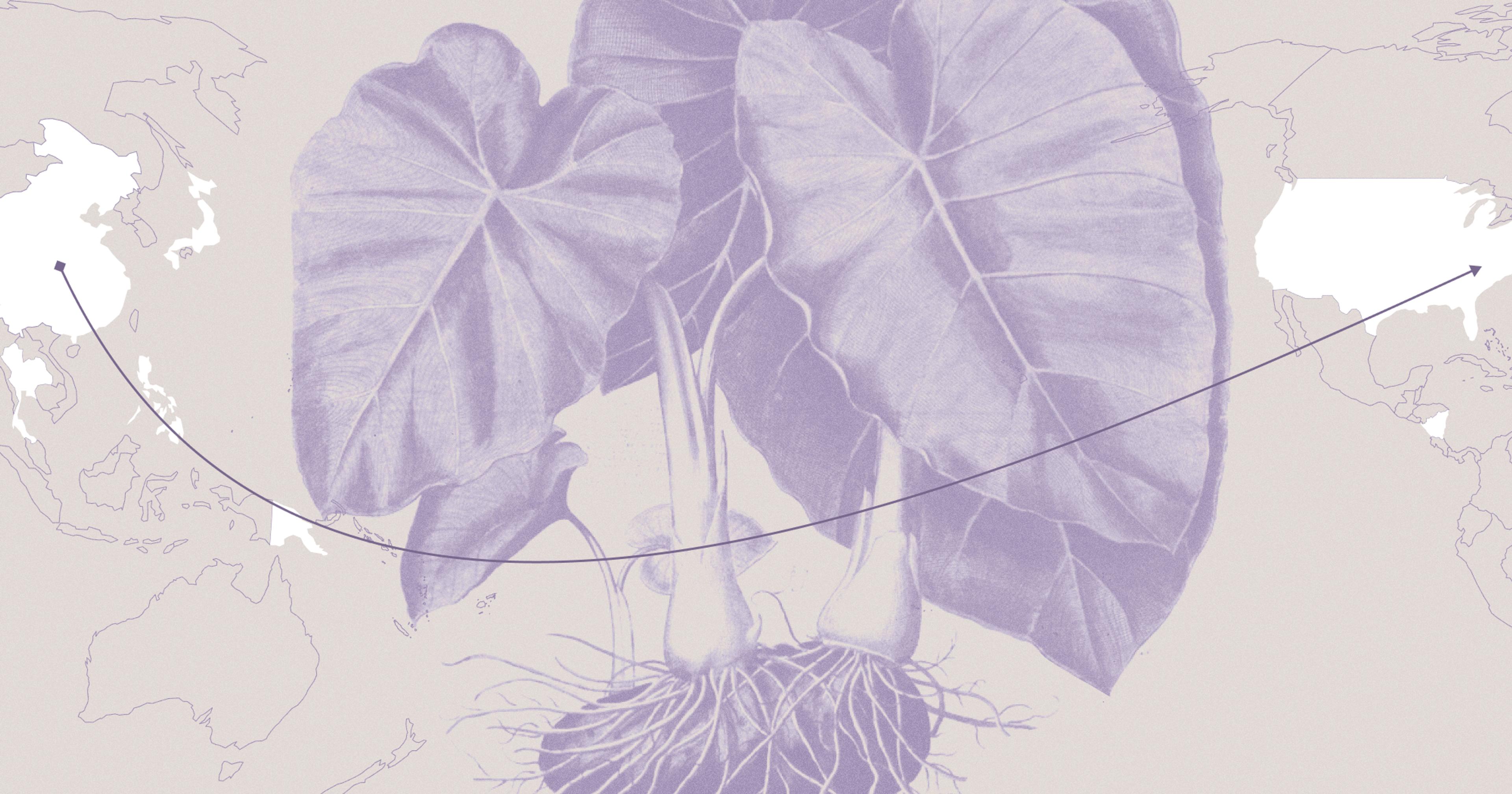
North Carolina grows nearly two-thirds of the country’s supply of sweetpotatoes. And no, that’s not a misspelling. In North Carolina, there is an insistent campaign to change how the word is written, printed, and standardized. The argument is simple: It should be “sweetpotato,” one word, because it is not a potato at all. It is a different plant with an altogether different lineage and history.
North Carolina’s sweetpotato dominance runs largely through the eastern part of the state, and Faison sits in the middle of it. But how did this small town become the sweetpotato capital of America? Well, the reasons are part geology, part history, and part reinvention.
Where it Began
“Sweet potatoes are a tropical vegetable. They love a hot, humid climate, and they love sandy soil,” says Michelle Grainger, executive director of the North Carolina Sweetpotato Commission. “We have a lot of both of that.” But the soil alone did not build an industry. Tobacco did.
Any story about agriculture in Eastern North Carolina sits on ground older than the crops themselves. And even a point of pride as seemingly wholesome as “sweetpotato capital” carries traces of a darker history. Long before sweetpotatoes became a global commodity, the region’s agricultural wealth was built on the labor of enslaved people. The systems changed over time, from slavery to sharecropping to today’s seasonal farmworker programs, but large-scale farming has consistently relied on people performing grueling physical labor in the fields. The landscape around Faison reflects not only agricultural success, but generations of work that made that success possible.
Pre-Civil War, cotton was North Carolina’s top commercial cash crop. The plantation system shaped the land, infrastructure, and expectations of production that still echo today. By the early 1900s, tobacco had surpassed cotton as North Carolina’s leading cash crop.
But in the mid-1960s, tobacco consumption declined. Farmers across the state needed something else to plant, something that could use the same land, labor, and even the same equipment as tobacco. Sweetpotatoes fit the bill, wharing both climate preferences and structural compatibility with tobacco. So, the story of North Carolina’s sweetpotato takeover started as substitution.
Raised By Hand
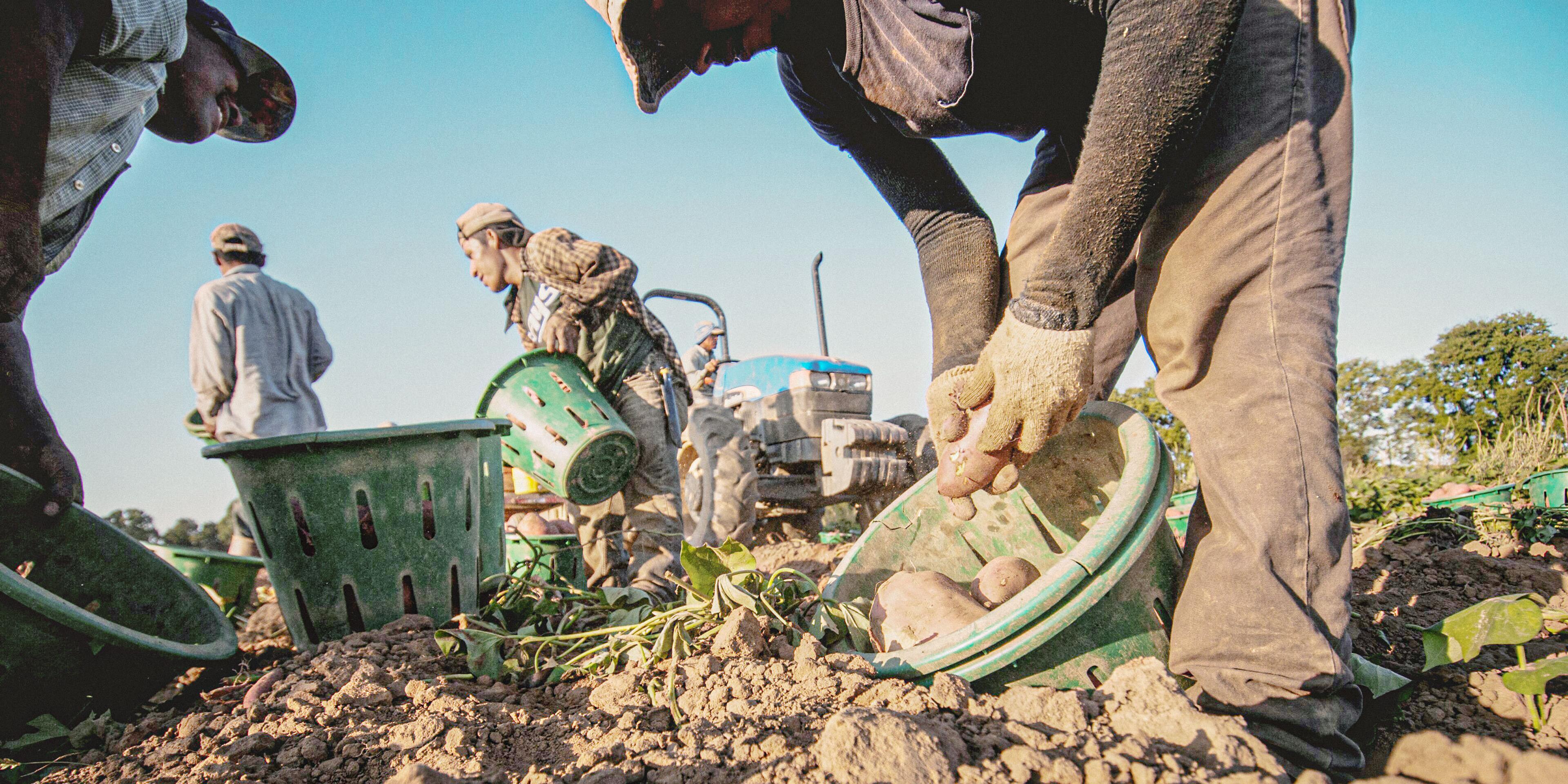
North Carolina allocates about 90,000 acres of land per year to sweetpotatoes. “We typically grow about 4,000 ourselves,” says Kenny Lee, an accountant at Burch Farms in Faison. “Other outside growers do probably 2,000 or so more acres.” Unlike crops that can be seeded, harvested, and stored with relative ease, sweetpotatoes demand attention at nearly every stage. They are grown from slips rather than seed, bruise easily during harvest, require curing after they’re dug from the ground, and must be carefully sorted and stored before reaching grocery shelves. “It’s an extremely labor-intensive crop,” Lee says.
For all the technological advancement in agriculture, much of sweetpotato production resists automation. Sweetpotatoes bruise easily. Their skin is thin and delicate. And damage isn’t just cosmetic; it can cause rot, disease, or loss. With that said, cosmetics still do matter. “We eat with our eyes first,” says CoCo Daughtry, communications specialist for the North Carolina Sweetpotato Commission. “We never want to scar, scratch, or scab them, so they have to be hand-harvested.”
Machines exist, but they are slow, expensive, and would require each farm to have people on hand to fix and maintain them. “A robot isn’t able to work as fast as human hands,” Grainger says. Even if it could, there are other barriers. Sandy soil could grind into moving parts, fragmented farmland presents issues, and internet in rural areas can be unreliable.
For all the technological advancement in agriculture, much of sweetpotato production resists automation.
So, the work largely remains in human hands. And those hands belong to people who are often not from here. Across Eastern North Carolina, farms rely on seasonal labor, much of it through the federal H-2A visa program. Workers arrive for months at a time, moving with the seasons. North Carolina, then Florida, then somewhere else.
“North Carolina, in the early 1980s, was the number one state that utilized this program, and it continues to grow to this day,” Grainger says. “Americans are spoiled. I do not know a single person here who is raising their hands saying, ‘I want to go work in a sweetpotato field,’” she adds. “The reality is our farmers couldn’t farm without these individuals volunteering and opting in to this [H-2A] system.”
In Faison, the workers‘ presence reshapes the town. They stay in housing provided by farms, shop in local stores, and send money home. Then, as quickly as they came, they leave. “They get on buses and they go on to the next,” says Ward. “Wherever the work’s at.”
Meanwhile, even after harvest, the clock does not stop. Sweetpotatoes must be cured and held at controlled temperatures and humidity, so their skins toughen and sugars develop. Then they are stored, sometimes for many months. “We can store them for up to a year in refrigerated rooms,” says Lee. “Decent chance the potatoes we dig, we’ll still be selling in July, August of next year.”
“You typically don’t get paid for your sweetpotatoes until you sell your sweetpotatoes.“ With long storage cycles, “you’re going about 18 months before getting paid.”
Before the late 1990s, sweetpotatoes were seasonal. Now, they are perennial and available year-round. The breakthrough, driven in part by research at North Carolina State University, allowed North Carolina to not only grow the crop, but dominate its supply chain. Thanks to a groundbreaking technique called Negative Horizontal Ventilation, which replicates natural processes that occur in the fields, sweetpotatoes can be grown and kept fresh all year.
But storage introduces its own pressures. “You typically don’t get paid for your sweetpotatoes until you sell your sweetpotatoes,” says Grainger. With long storage cycles, “you’re going about 18 months before getting paid.” In that gap lies risk.
On the topic of risks, weather can be a complicating factor in sweepotato production. Then there is the market. “The discrepancy between what it costs to produce a sweetpotato versus what a farmer is compensated for … there’s a huge gap there,” Grainger says. Consumers see an inexpensive staple, one of the cheapest items in the produce aisle. But farmers see mounting costs in labor, fuel, storage, and land. “Historically, our food has been incredibly affordable, if not even underpriced for the true cost, and the farmer has absorbed that. A farmer really can’t absorb any more,” she says.
Touching the World
From Faison, the crop disperses outward. Boxes are packed 40 pounds at a time, and loaded onto trucks bound for grocery stores up and down the East Coast. Some will travel further, crossing oceans into global markets.
“You’ll see ‘North Carolina’ written on the produce,” Ward says proudly. “It’s on the boxes, it’s on the bins.” For a town of fewer than a thousand people, the reach is incredible. “It’s a pretty big deal.”
In Faison, the agricultural economy also circulates back into the town itself in more immediate ways. Local farms regularly support municipal life through donations, partnerships, and in-kind contributions that help sustain public programs, without relying solely on taxpayers. “Those guys, the farmers, they usually step up and help us get what we need to keep our programs running,” Mayor Ward says, particularly pointing to the town’s recreation department and youth services. Agriculture here functions as a kind of informal civic infrastructure.
Ironically, in Faison itself, the sweetpotato is not loudly celebrated. There is no festival dedicated to it, no monument, no museum.
Ironically, in Faison itself, the sweetpotato is not loudly celebrated. There is no festival dedicated to it, no monument, no museum. There is a parade, Farmers Day, where tractors roll down the street, and the town nods to its agricultural backbone. But mostly, the work speaks for itself.
People here understand what goes into a crop long before it reaches a plate. “So many things can go wrong to grow food,” says Lee. “I don’t think a lot of people can appreciate that until they’ve seen it firsthand.” Grainger seconds that sentiment, advocating for educating consumers and everyone else up the supply chain. “I’m talking about the produce buyers, the wholesalers, and the brokers who are purchasing sweetpotatoes, too. [They] need to truly understand and respect the level of risk that a farmer puts out before the season even starts,” she says.
And maybe that’s part of why the spelling matters. Scientifically, a sweetpotato is not a type of potato, but a distinct root vegetable. But the sweetpotato is not just a vegetable. It’s a system of labor and land, of migration and memory, of risk stretched across months and miles. It’s a crop that reshaped a state’s agriculture, carried a small town’s name across continents, and continues to feed a country. All of that in a single word.