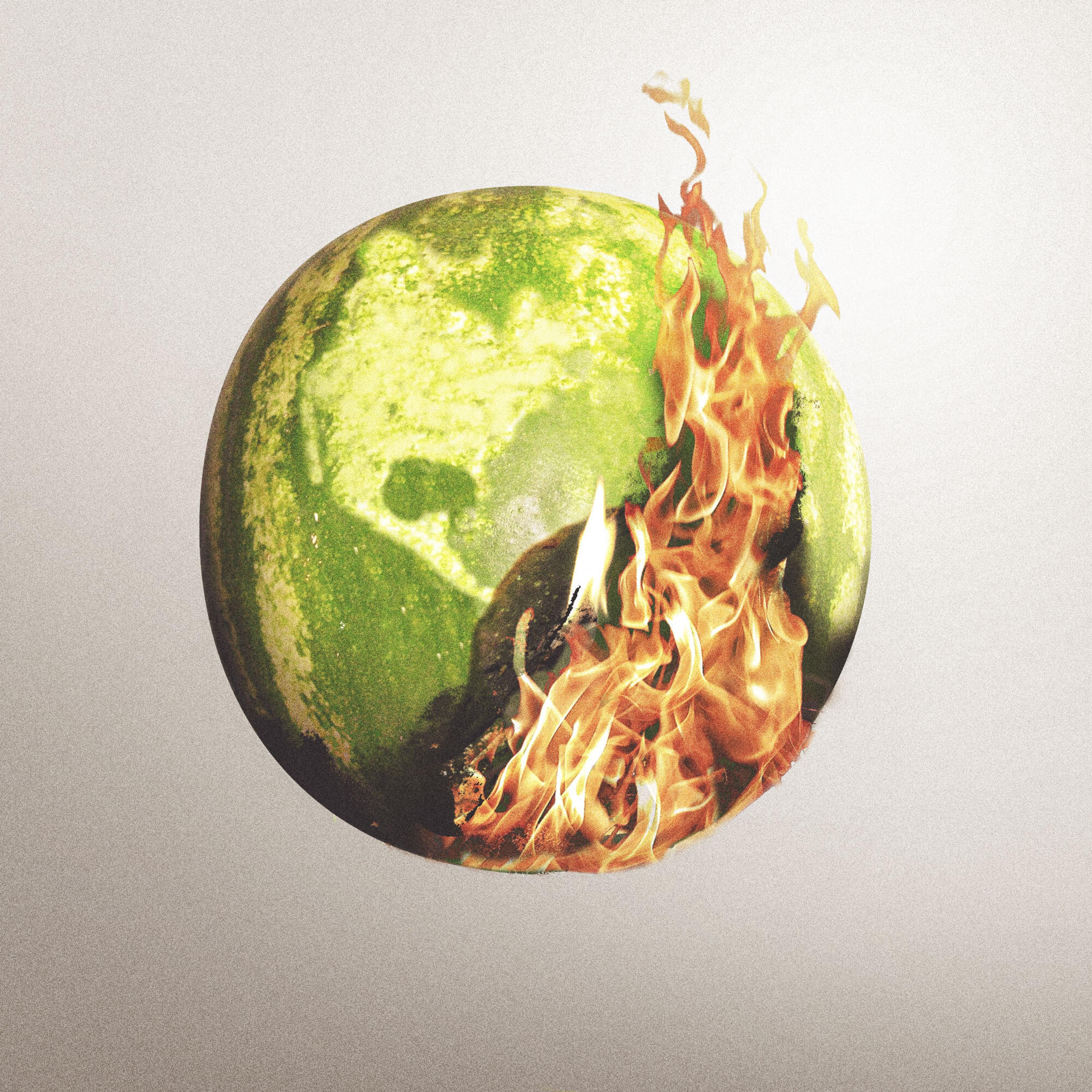
A beloved—and generally reliable—summer crop now finds itself confronting environmental shifts.
Two years ago, Alexandria White, a gardener from Desoto, Texas, had the ambitious goal of growing her first watermelon yield. But for the first time in nearly a decade, White’s town, located just a few minutes south of Dallas, experienced a rainy spring and summer. Immediately followed by a devastating heat wave, the weather made it difficult for the eager gardener to manage her own crops.

“It rained profusely for days at a time, and then it was super-dry for days,” explained White. “I had a difficult time watering them. Some [watermelons] had bright yellow spots and some actually rotted before they fully matured,” she continued. Although White’s yield of half a dozen watermelons grew very large, the melons simply lacked flavor.
According to Oklahoma State University’s Division of Natural Agricultural Sciences and Natural Resources, watermelon sweetness is directly tied to the amount of sunshine the garden or field receives during the growing process. Therefore, during cloudy and rainy seasons, it’s difficult to get watermelons to “sugar up” because photosynthesis is driven by the sun.
Based on data from the National Watermelon Promotion Board, last season’s watermelon sales were thriving. Consumption in the United States surpassed 5.3 billion pounds in 2025, with more than 363 millions pounds of exported watermelon. Arguably, these numbers support the demand for more melon.
But what White experienced in Texas speaks to a shift that has made warm-weather crops like watermelon susceptible to the impacts of climate change. “Since watermelon is a warm-season crop, its productivity is not [yet] drastically impacted by increasing temperatures. Warmer springs can be beneficial, because watermelon transplants grow faster, and, when the soil warms above 81 degrees (F), it reduces the risk of Fusarium wilt developing,” explained Anthony Keinath, professor of vegetable pathology at Clemson University.
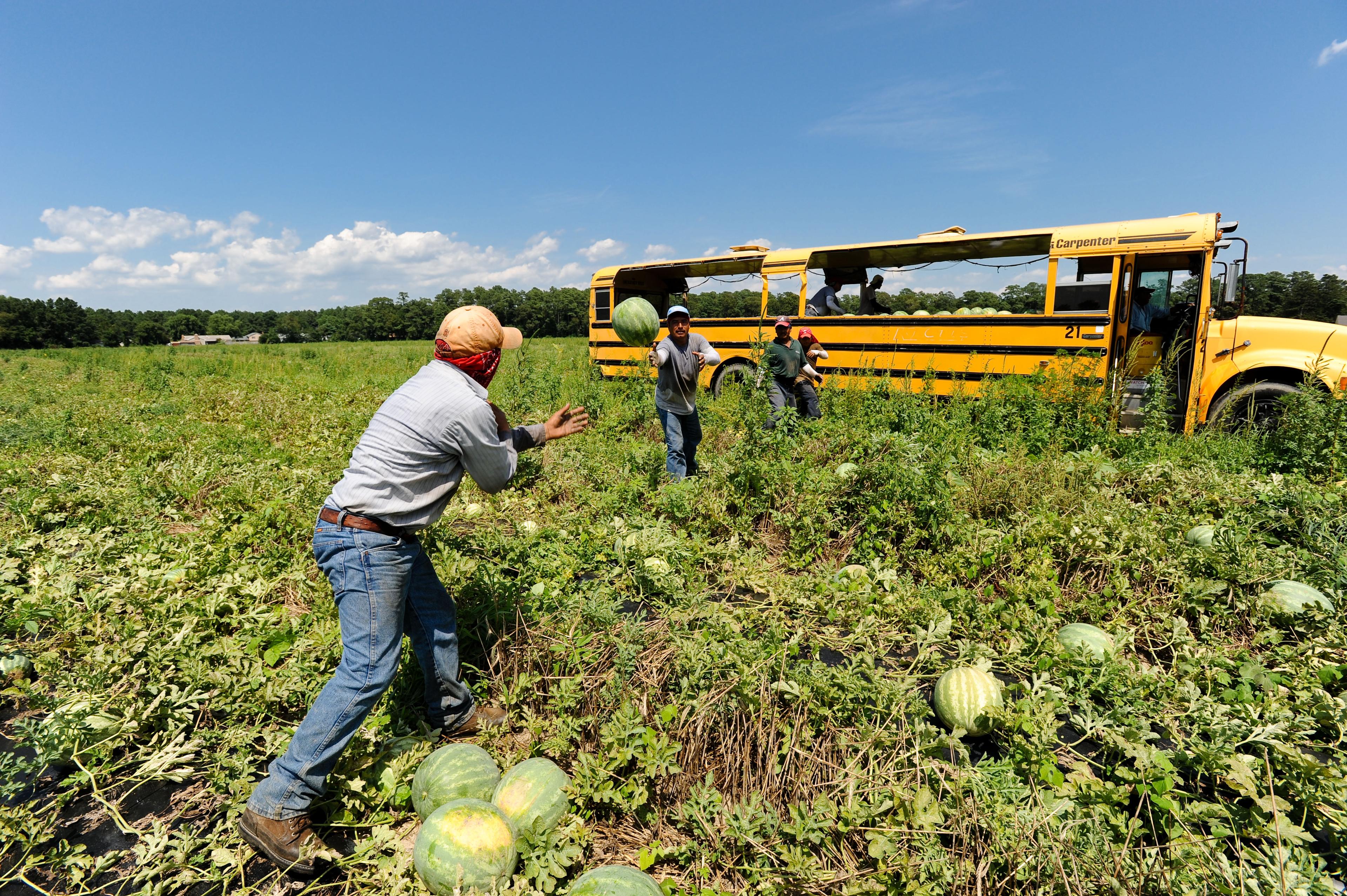
Jillian Hishaw, a Charlotte-based agricultural attorney who provides services to rural family farms said, “I have noticed challenges when it comes to harvesting our watermelon crops. The yields have been reduced by nearly 25-50 percent due to flooding, drought, deer, or feral pigs.”
“The yields have been reduced by nearly 25-50 percent due to flooding, drought, deer, or feral pigs.”
Meanwhile in Watson, Louisiana, first-generation commercial farmer J’Quincy Jones has also faced climate-related challenges which have resulted in growing adjustments. “In the past five years or so, neighborhood development in rural areas has resulted in decreased tree canopies. And the hotter it is here in Louisiana [without those trees] there’s more bugs,” said Jones.
Drier and warmer winters across the country—but particularly in Southern regions—correlate to increased bugs and pests. In Conyers, Georgia, urban gardener, farmer, educator, and founder of Kansas City Aquaponics, Maurice Person, said that his biggest problem growing watermelons in hotter temperatures these past few years have been pests.
What that means on the ground is simple—bugs like aphids, whiteflies, cucumber beetles, and spider mites show up sooner, stick around longer, and build up faster.
“For farmers, that just means you’ve got to start checking fields earlier and more often, act quicker, and not rely too much on how timing used to work past years,” explained Nicole Carpenter, president of Black Pest Prevention, a Charlotte pest control company.
Aside from more bugs and other pests, extreme heat also increases the likelihood of watermelons developing mold. “Climate can dictate which diseases develop on watermelon. For example, powdery mildew is more likely to develop on watermelon since we’ve started having dry periods in the spring since 1996,” said Keinath.
Aside from more bugs and other pests, extreme heat also increases the likelihood of watermelons developing mold.
Alongside direct environmental impacts, farmers are also navigating indirect effects of climate change such as inflated pricing of materials. “My pest control formula has gone up nearly 80% in the past two years,” said Jones.
Other monetary losses occur when climate-induced natural disasters like hurricanes and tornadoes demolish yields. “These things are out of the grower’s control, but there have been years when I’ve prepared and invested in growing watermelons for three weeks for all of that to be gone in one week because of a hurricane,” explained Jones.
Jones encourages consumers to buy their watermelons directly from local farmers. “Buying from local farmers helps with products like mulching and soil management, and fertilizer. [Watermelons are a heavy fertilizer eater.] You also have to feed watermelons a lot of potassium, magnesium, shade, and wind, too. Money can go into microcomponents that help to buy shade cloths so they don’t get rotted from heat exhaustion.”
A meaningful but indirect way that farmers, gardeners, and agricultural workers are combating climate change is through education and investigation. At Texas A&M Agrilife, researchers and scientists have been examining how heat stress affects taste and nutritional value.
Understanding new weather patterns in order to anticipate disruption can also support climate preparedness for watermelon growers. “Periods of drought, excessive rainfall, heat stress, and freeze events are increasingly occurring in patterns that directly affect soil moisture balance, planting windows, irrigation demand and ultimately yield stability. So we encourage agricultural stakeholders to look at evolving patterns year over year—not as isolated storms, but as part of a broader climate signal that informs operational planning,” explained Crystal Egger, president of Monarch Weather Consulting.
“Our family loves watermelon, so I’m determined to get this right.”
Meanwhile, Alexandra White started gardening to help her family be more mindful of finances and to eliminate a dependency on buying produce from grocery stores. Through more education, next season she’s anticipating using raised garden beds and studying the weather patterns in Desoto, Texas.
“The unpredictability of rain—with unreliable weather services—there’s just an overall distrust or reduced level of confidence in my ability to grow a fruitful harvest these days. I’ve spent a lot of money on gardening tools and time researching strategies, but if you don’t reap what you sow, it’s money [that we really don’t have] wasted,” said White. “Regardless, our family loves watermelon, so I’m determined to get this right.”