Along Tucson’s Santa Cruz River, archaeological discoveries and historical records trace 4,100 years of corn cultivation.
At the foot of Sentinel Peak on Tucson’s west side, gardeners cultivate four walled acres at Mission Garden, on the site of an O’odham village named S-cuk Ṣon. The living agricultural museum grows heritage crops in gardens representing the cultures and agricultural traditions that have shaped the region. In 2026, the site was added to the National Register of Historic Places.
Dena Cowan, Mission Garden’s curator of collections and a Tucson native, guided me through the orchard one morning. She wore a wide-brimmed straw hat and a blue-and-yellow plaid shirt, her hair in two long braids. Fig leaves brushed her shoulder, and the whitewashed A on Sentinel Peak showed above the fruit trees.
I visited to learn how Mission Garden grows and preserves heritage corn, including O’odham 60-day, Chapalote, and Yaqui corn, near archaeological sites that document some of the earliest maize cultivation in what is now the United States.
Corn in the Tucson Basin
Corn reached the Tucson Basin from Mesoamerica thousands of years ago. At the nearby Clearwater archaeological site, researchers recovered maize remains and directly radiocarbon-dated two samples to approximately 4,100 years ago. Along with his colleagues, archaeologist Jonathan Mabry, who co-authored a 2009 study of early maize in the Southwest, concluded that maize cultivation likely spread north through exchanges of seeds and agricultural knowledge among communities.
Over the following centuries, farmers developed irrigation systems to grow corn along the Santa Cruz River. At Las Capas, they constructed canals between 1200 and 800 BC, directing water into fields divided by earthen berms. Archaeologists identified individual planting holes in the preserved fields. At the Sunset Road site, they discovered footprints left by adults, children, and a dog among ancient maize planting pits, preserved beneath flood deposits.
Excavations within Mission Garden’s present boundaries uncovered further evidence of farming and settlement, including early pit structures, a building containing five large seed-storage jars, and Hohokam irrigation canals, one nearly 25 feet wide. At the Mission Gardens locus of the Clearwater archaeological site, researchers also recovered maize from a pit structure and radiocarbon-dated it to between AD 230 and 450. Elsewhere in Tucson, archaeologists found charred corn kernels in a burned Hohokam house at the Presidio site.
By the time Spanish missionaries reached the Tucson Basin in the 1690s, O’odham farmers were cultivating corn, beans, squash, and watermelons along the Santa Cruz River. Written records document corn harvests in later centuries. An 1804 report by Tucson presidio commander José de Zúñiga recorded 600 bushels of corn harvested the previous year. In 1862, Union soldier George Hand wrote in his diary about taking green corn from Mexican farmers’ fields.
Mexican and Chinese farmers continued cultivating the historic walled garden near Mission San Agustín into the 1930s. Houses subsequently occupied the property, and heritage planting resumed when Mission Garden was reconstructed beginning in 2012.
From Teosinte to Maize
At Mission Garden, teosinte, a wild grass native to Mexico and the ancestor of domesticated corn, grows alongside wild relatives of other crops. Unlike modern maize, which produces large ears packed with kernels, teosinte has small seed heads measuring only a couple of inches long.
“If you touch it, it shatters”—the mature seed head breaks apart and releases its seeds—“so it’s hard to harvest,” Cowan said.
Beginning roughly 9,000 years ago in southwestern Mexico, people gradually transformed teosinte through selective breeding. By saving and replanting seeds from plants with desirable traits, they developed corn with larger ears and kernels that remained attached to the cob. These changes made harvesting easier but also left domesticated maize dependent on people to plant its seeds.
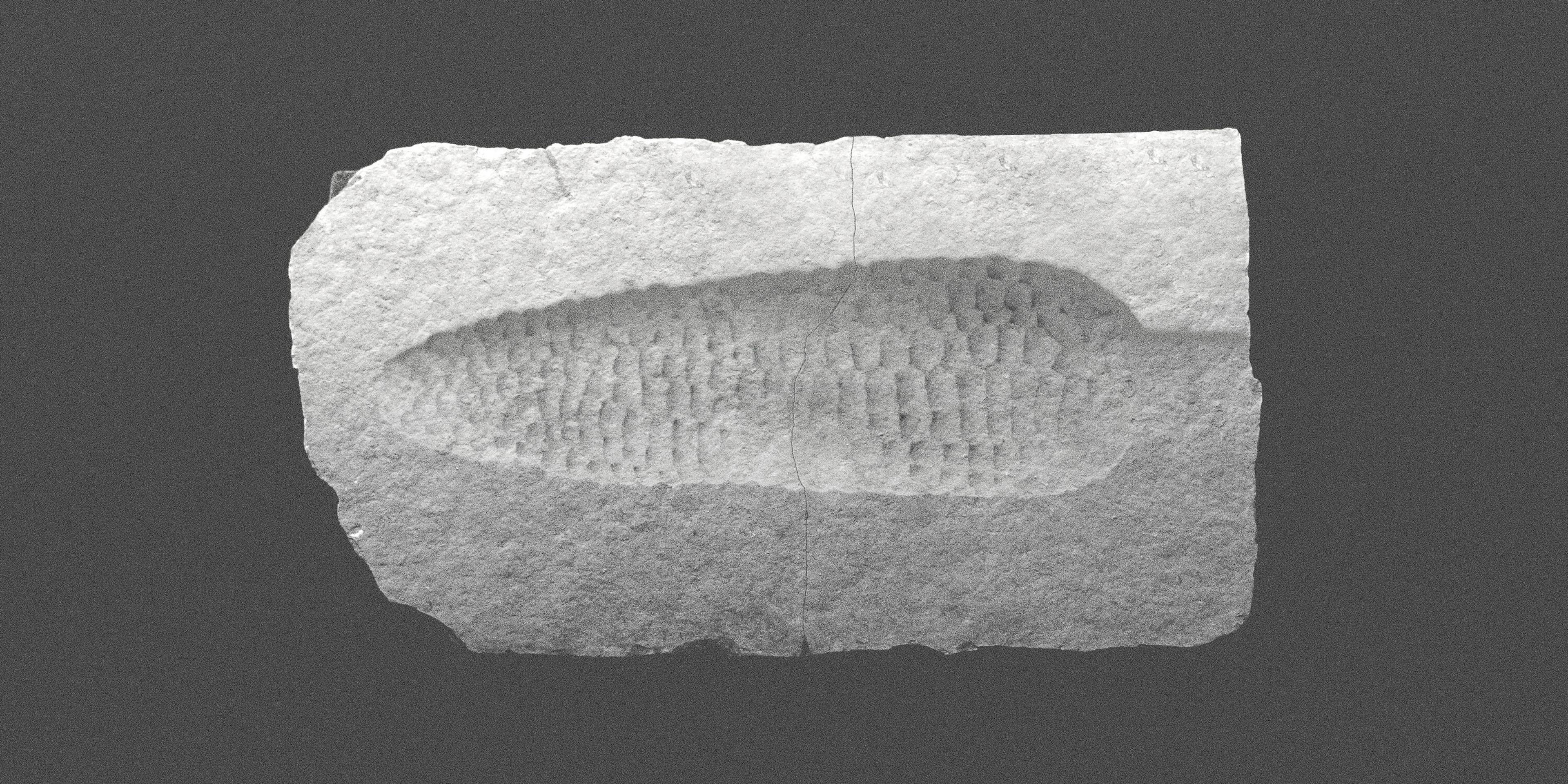
The earliest surviving cobs were much smaller than those grown today. At Guilá Naquitz Cave in Oaxaca, archaeologists recovered maize cobs dating to approximately 6,250 years ago. One measures just 2.5 centimeters.
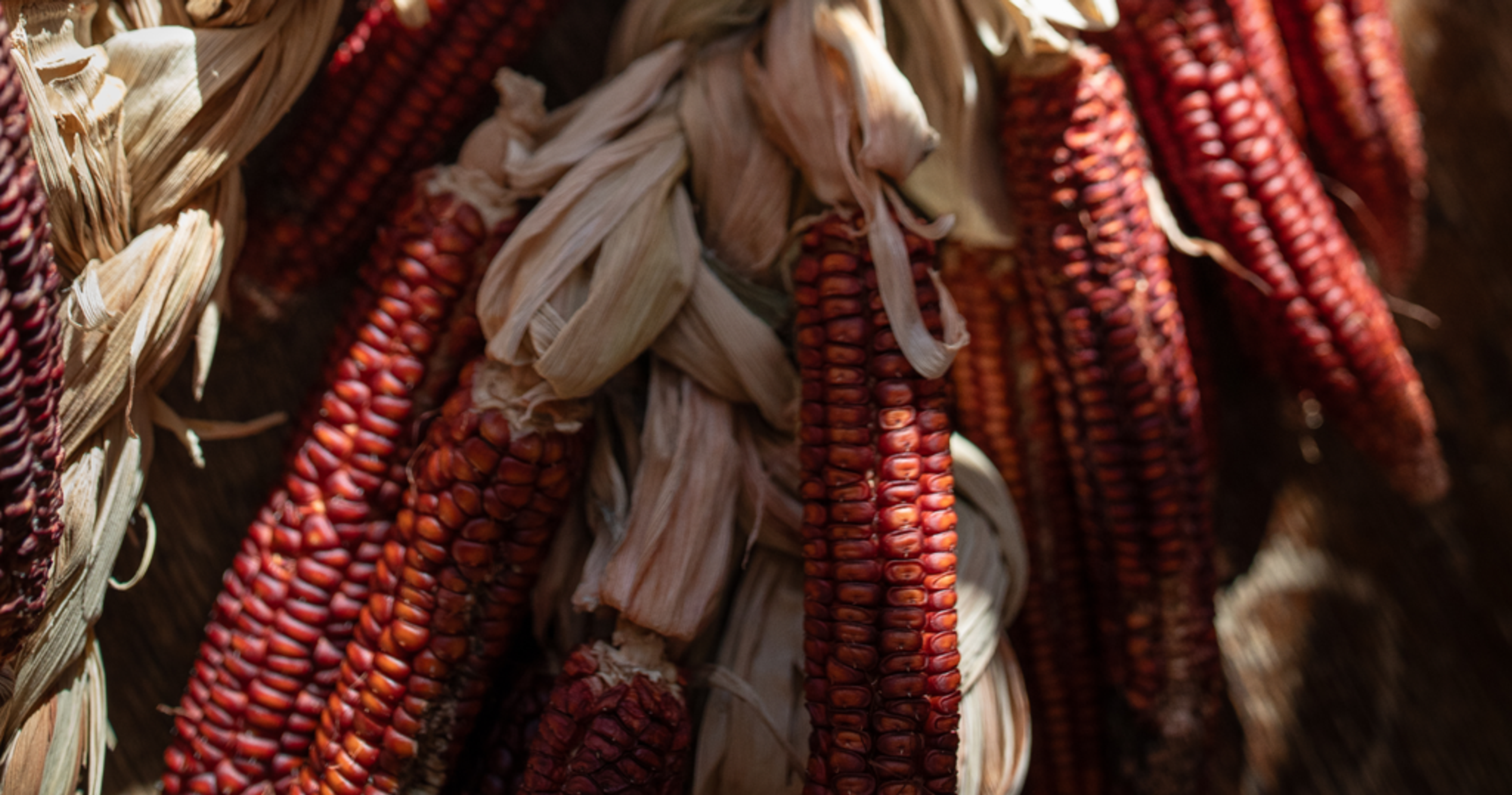
Over generations, growers developed corn varieties suited to different climates and purposes, including flour corn, flint corn, popcorn and the sweet corn familiar to most Americans.
“There’s a lot of variety of corn, different corn adapted to different places for different purposes,” Cowan said. Traditional varieties known as landraces develop over generations as farmers save and replant seeds adapted to local conditions.
One of those varieties is Chapalote, an ancient Mexican maize race classified as a popcorn. Mission Garden grew Chapalote for Native Seeds/SEARCH in 2025. “It always grows tall, but last year was like uncommonly tall,” Cowan said, estimating that some stalks reached 12 feet.
O’odham 60-day Corn
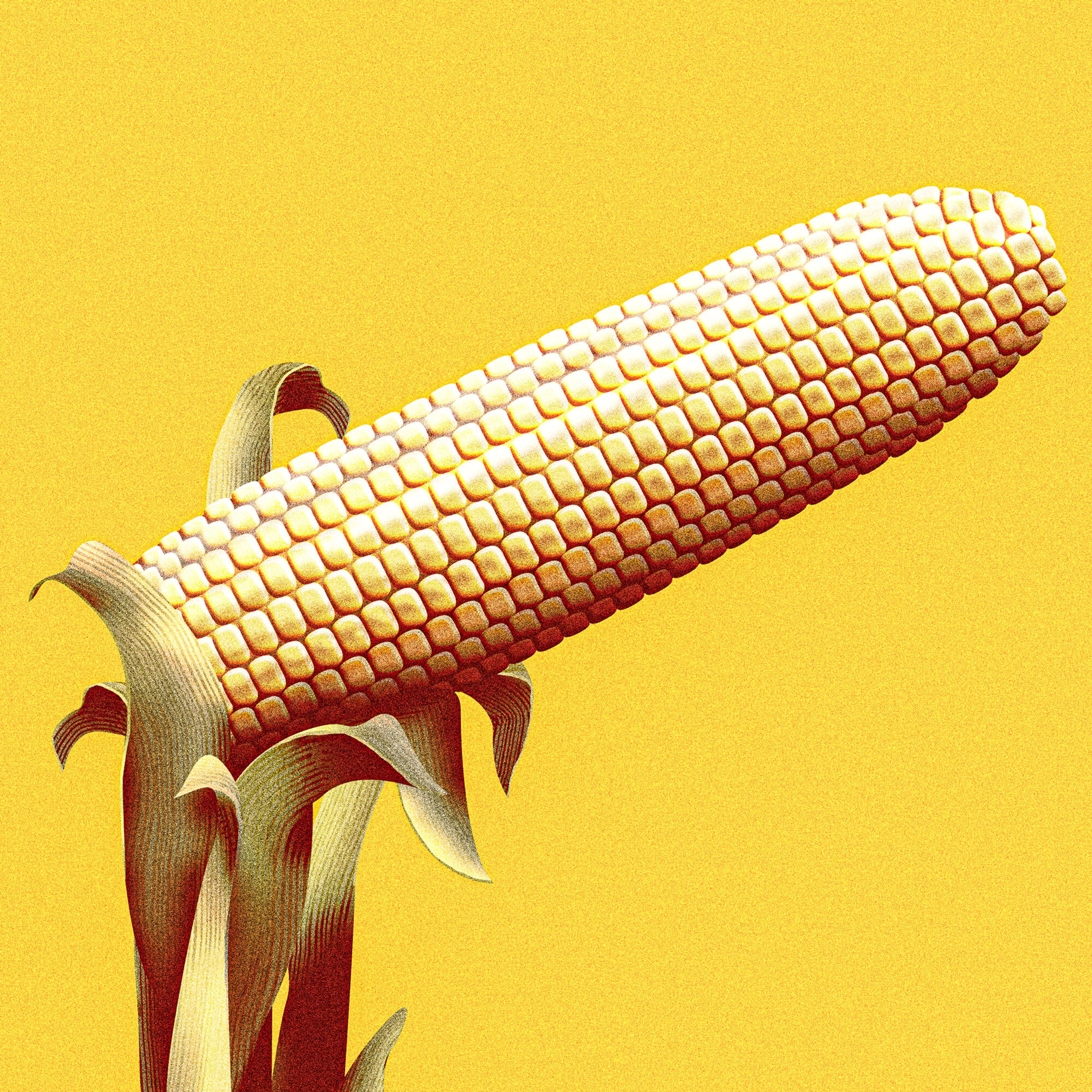
Mission Garden also grows O’odham 60-day corn, a variety with opaque, light-yellow kernels and characteristics of both flour and flint corn. Growers grind the dried kernels into flour for tortillas or eat the corn fresh or roasted. Cowan said its flavor differs from the sweet corn most Americans know.
The name refers to the approximately 60 days the corn takes to reach the green-corn stage under favorable summer conditions. Cowan said it has been one of Mission Garden’s most successful varieties. In dryland areas farther west, O’odham farmers plant with the summer monsoon, taking advantage of the corn’s short growing season. Along the Santa Cruz River, where farmers historically had access to perennial or near-surface water, irrigation allowed different planting schedules.
Mission Garden has featured nixtamalization demonstrations during its Pueblos del Maíz programming. This traditional method involves cooking and soaking dried corn in an alkaline solution, usually made with slaked lime. After rinsing away the loosened outer skins, the treated kernels can be ground into masa for tortillas and tamales. The process makes more of the corn’s niacin available to the body and adds calcium.
The garden has also offered demonstrations of traditional corn preparations, with tastings of freshly made tortillas and O’odham ga’iwsa, a corn stew. Other preparations include pinole, made from roasted corn ground into meal. Cowan explained that people can transport pinole as a dry powder and mix it with water to make a drink or porridge, sometimes adding mesquite.
The 2026 Yaqui Corn Grow-Out
In 2026, Seed Savers Exchange, an Iowa nonprofit that preserves heirloom seeds, asked Mission Garden to grow Yaqui corn from its collection. Its RENEW program works with growers to replenish seed supplies when quantities are low or viability has declined. According to the conservation paperwork, the seed came from a Yaqui village near Phoenix in the early 1900s.
The seeds germinated poorly, as the paperwork had warned. Cowan suspected animals had eaten some of the newly sprouted kernels. Two small plots remained in the Yoeme Garden, but the plants were unusually short. Corn depends on pollen from tassels at the top of the stalk reaching fresh silks on the developing ears. Cowan calls corn “promiscuous” because wind can carry pollen between varieties, complicating efforts to preserve particular seeds.
The Yaqui corn presented another problem. “This year the tassels came out, and there were no silks, and the tassels dried up,” Cowan said. “They had no corn, so I’ve been trying to hand-pollinate.”
She described collecting pollen in a bag and applying it to the fresh silks. Other Tucson growers had also reported unusually short corn. “We’ve had several people this year come in and tell us, hey, what’s going on with my corn, it’s so short,” Cowan said. “It’s anecdotal. But from what I am gathering, that it’s not a good corn year.”
Tucson experienced record-breaking heat in 2026. According to the National Weather Service, March was the warmest on record, and temperatures reached 101 degrees on March 19, the city’s earliest recorded triple-digit day. July rainfall was also below normal. “It’s not only just the amount of heat,” Cowan said. “It’s the number of days. It’s the wind. It’s all kinds of stuff. There are a lot of factors.”
Cowan said some growers were experimenting with earlier planting dates. One Mission Garden gardener planted corn at home in March and produced what Cowan called “beautiful corn.” Mission Garden planted its Yaqui corn in May. The different results raised questions about planting schedules.
Keeping Seed Alive
A few miles from Mission Garden, Native Seeds/SEARCH maintains a collection of more than 1,800 regional seed varieties from the desert Southwest and Mexico. More than half of its seed-bank accessions are corn, beans, and squash. The organization sends seeds to growers, who plant them and return seed from successful crops. Cowan said she has also seen greater emphasis on returning seeds to the communities from which they originated.
Asked whether any one of Native Seeds/SEARCH’s corn varieties was especially significant, Cowan answered more broadly.
“Every seed is special,” she said. “Every single seed has in it thousands of years of culture, relationship with people, selecting. That tiny little seed has all that culture, all those years, thousands of years of domestication, of adapting to the land, of adapting to the weather, of providing.”
Cowan compared the loss of a crop variety to the extinction of a language.
“There’s a lot of languages that are endangered and extinct because people don’t speak them anymore,” she said. “And in every single one of those languages, there’s untranslatable knowledge contained in the expressions, songs, poetry, and it’s all lost when you lose those languages. Same as a seed.”
In Mission Garden’s collections room, glass jars with white lids line mint-green shelves, holding seeds that Cowan and her fellow gardeners work to preserve.
“You can’t just keep them forever, like in a museum,” Cowan said. “You have to grow them out. They’re living.”