In Maine’s northernmost county, broccoli farming helps drive the local economy. That’s why it’s so important to keep moose—and their hunters—out of the growing fields.
Back in the early 2000s, there were at times 30 moose in a single broccoli field. They were feasting to their hearts’ delight—and ruining one of the principal crops in Maine’s northernmost Aroostook County, a forested hinterland that’s larger than the state of Connecticut and central to the reason why Maine is one of the top broccoli producers in the U.S.
“What the moose do,” says Tom Ayer, the proprietor of Circle B Farms and a fourth-generation Aroostook County grower, “is chomp one side of the head and then move on. The broccoli isn’t marketable at that point, and when the FDA comes to audit, they’ll say, ‘Oh, there’s been animal intrusion here.’ And that causes more problems.”
Aroostook County produces 28 million pounds of broccoli each year, making it a major East Coast hub for the crop—munching moose constitute a unique threat. Sort of. Nationwide, crop depredation by animals causes farmers billions of dollars each year. White-tailed deer are the leading culprit, and in Missouri, the state’s Department of Conservation at times issues hunters “depredation permits,” allowing them to shoot deer out of season. In Texas, wild hogs wreak such havoc to corn and peanut farmers that hunters are allowed to shoot them year-round, 24-7.
In Maine, Lee Kantar knew he had to do something. Kantar is the lead moose biologist for the state, which is home to over 60,000 moose, more than anywhere else in the lower 48. In 2009, aiming to protect Aroostook County’s broccoli industry—now valued at roughly $25 million annually—he implemented a limited hunt in the county. This allowed 100 licensed rifle-bearers to spend a single week in August or September stalking moose along the edge of the county’s roughly 7,000 acres of broccoli fields.
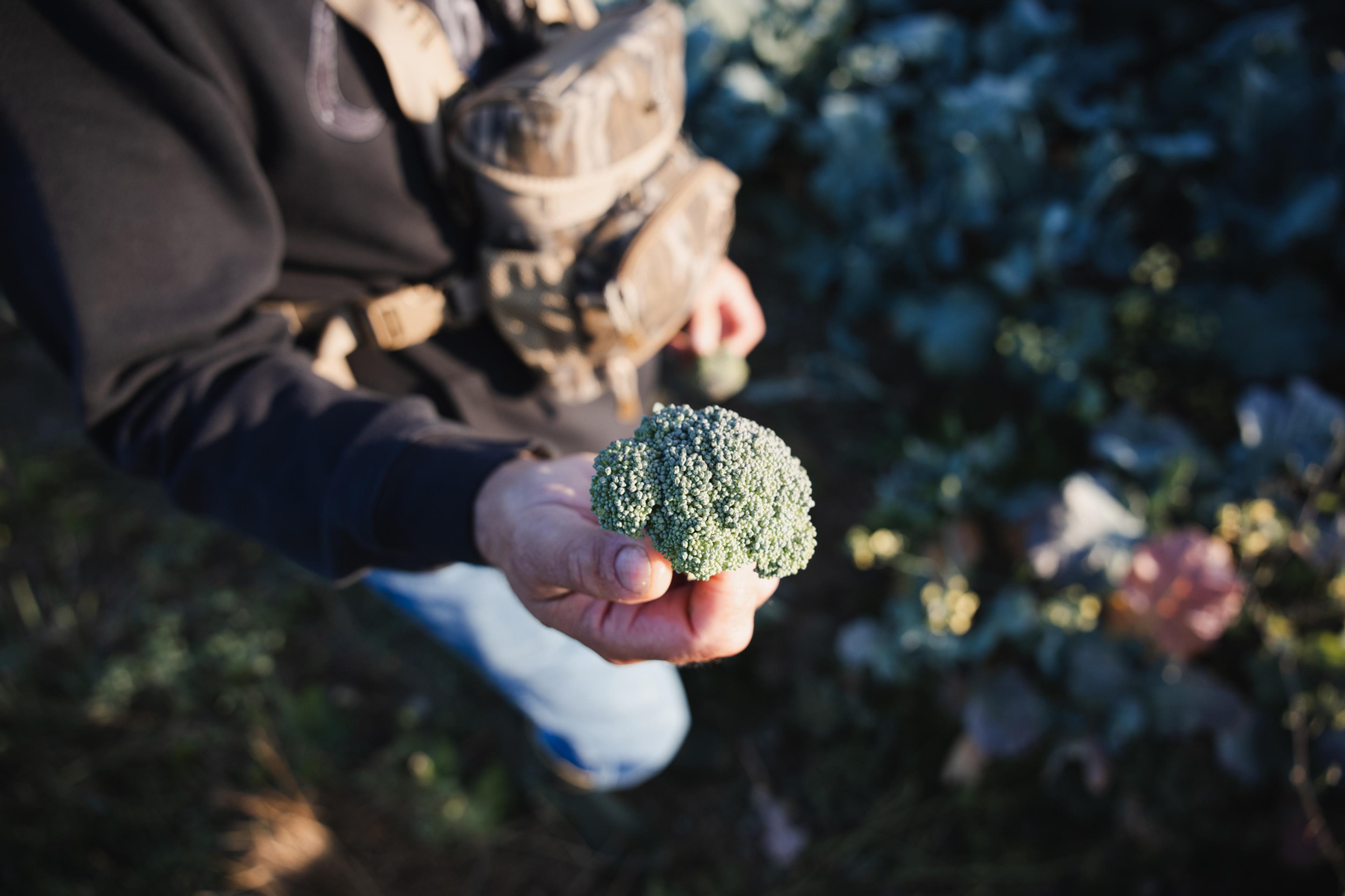
Dave Hentosh holds a piece of broccoli from a crop with signs of Moose activity.
The hunt, which lasted but a single season, was a disaster. While deer dart under the siege of gunfire, moose take cover. In Aroostook County, they just hunkered down in the forest during the day, to save their energy for nighttime broccoli devastation. Hunters killed very few moose, but they still drove their pickups and their ATVs onto the broccoli fields, ravaging crops.
Kantar needed to devise a Plan B, and luckily he found the perfect collaborator. Dave Hentosh, a wildlife biologist, had moved to Aroostook County a few years earlier, to open Smoldering Lake Outfitters, which specializes in taking wounded combat veterans on hunting and fishing trips. Together, the two men decided that the broccoli-eating moose could best be brought to heel via a tightly orchestrated, six-week veterans hunt.
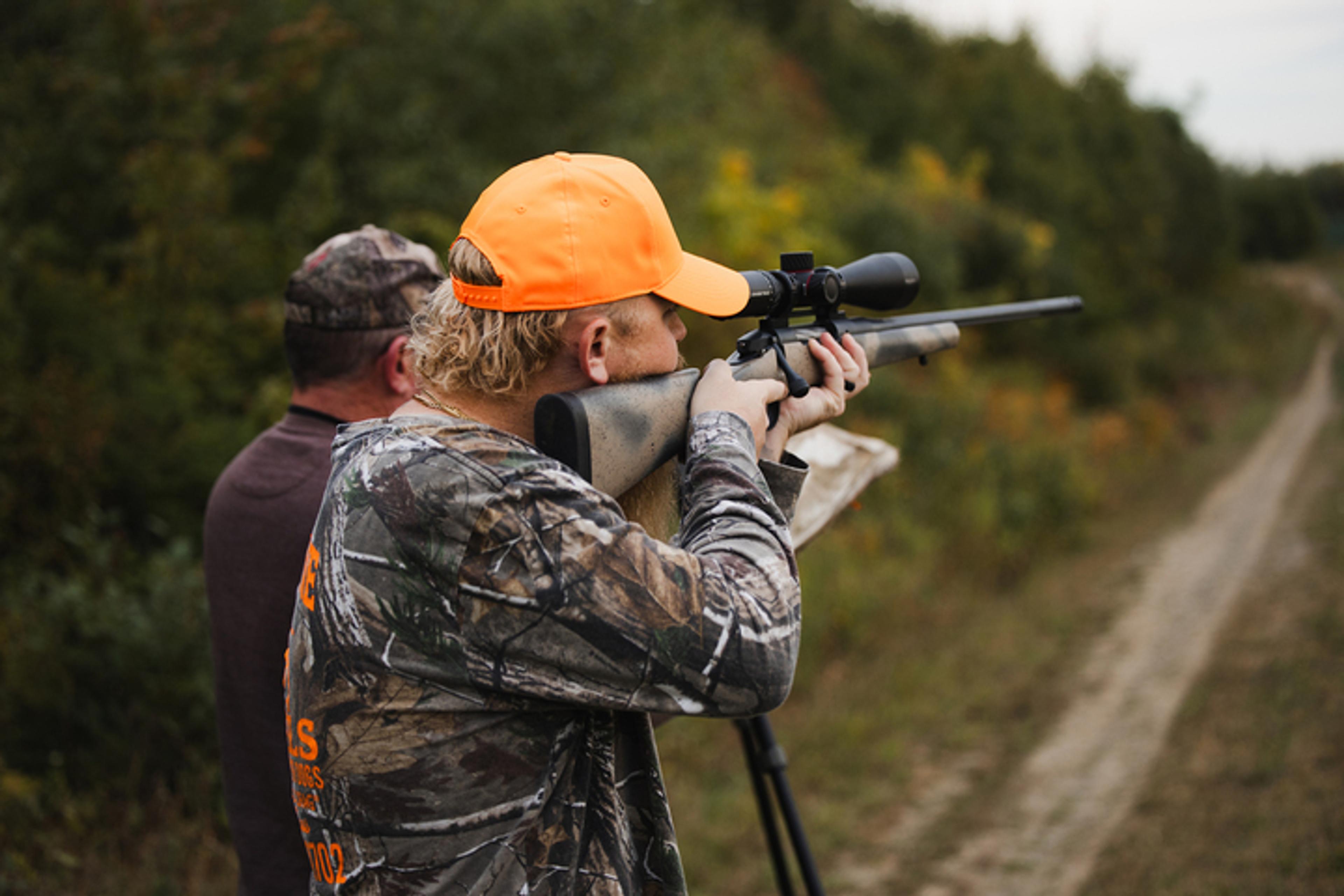
Robert Stitham looks through a scope, scanning the fields for moose.
In 2010, Maine began issuing a maximum of 25 moose permits each year to disabled vets—and to this day, the vets are still stalking the perimeters of the East Coast’s most productive broccoli fields each August and September. While their able-bodied counterparts, working freelance, without supervision, caused extensive damage to broccoli crops, the disabled vets’ impact is minimal.
Hentosh guides them, expertly. He knows where the moose hide. He knows which broccoli fields have historically drawn the most moose. He dialogues with Aroostook County growers—there are just three of them, each with a vast operation—to ascertain when the crops will be ready for harvest (and, as such, most alluring to moose). Then he moves the veterans around, strategically. The approach works, even if moose continue to damage Aroostook County’s cabbage and cauliflower and find themselves frequently mauled in car crashes. The disabled hunters “keep the moose population in check,” says Ayer, the broccoli farmer, “and it also helps stave off the sort of animal intrusion that would knock down our crops.”
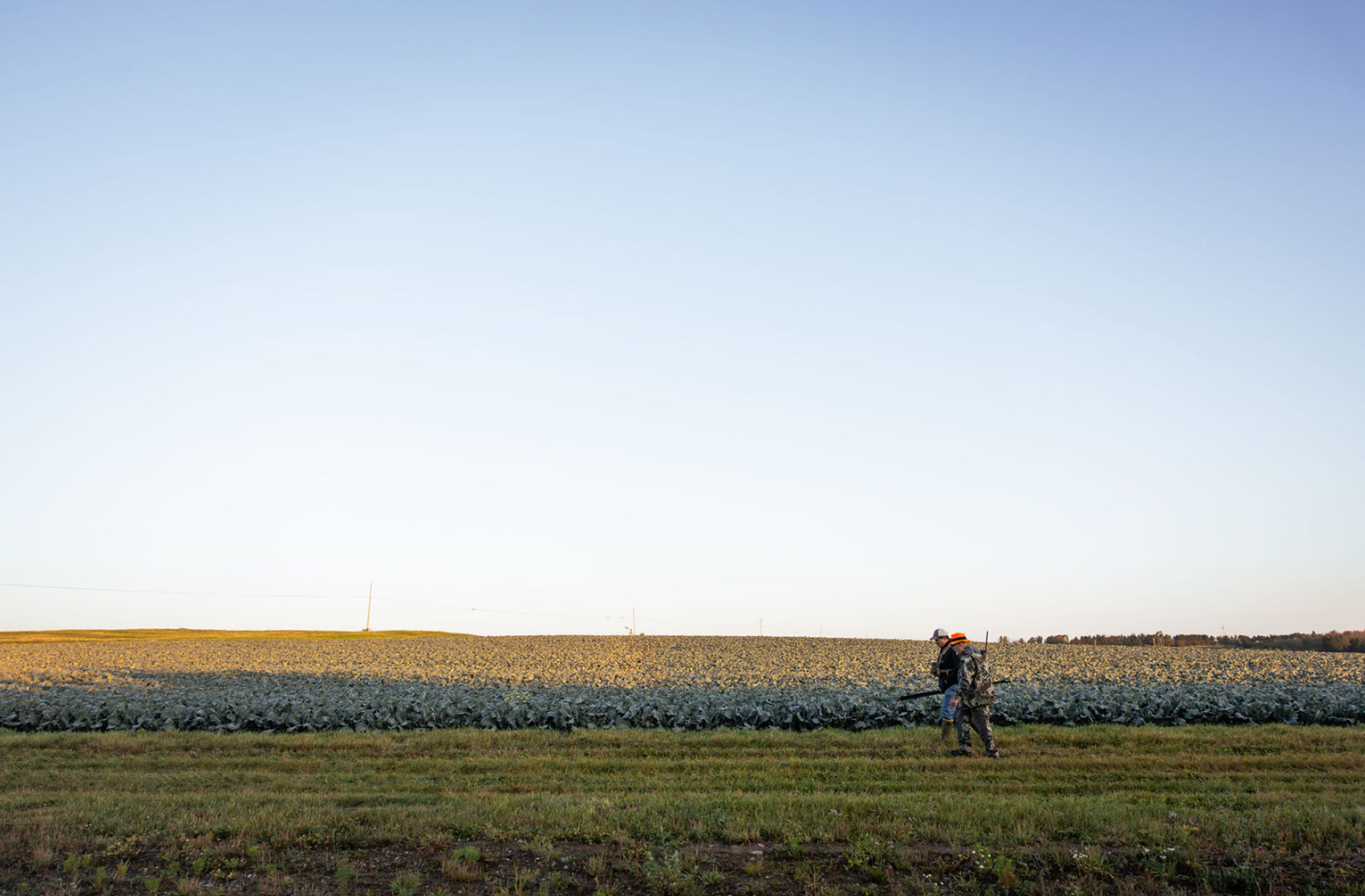
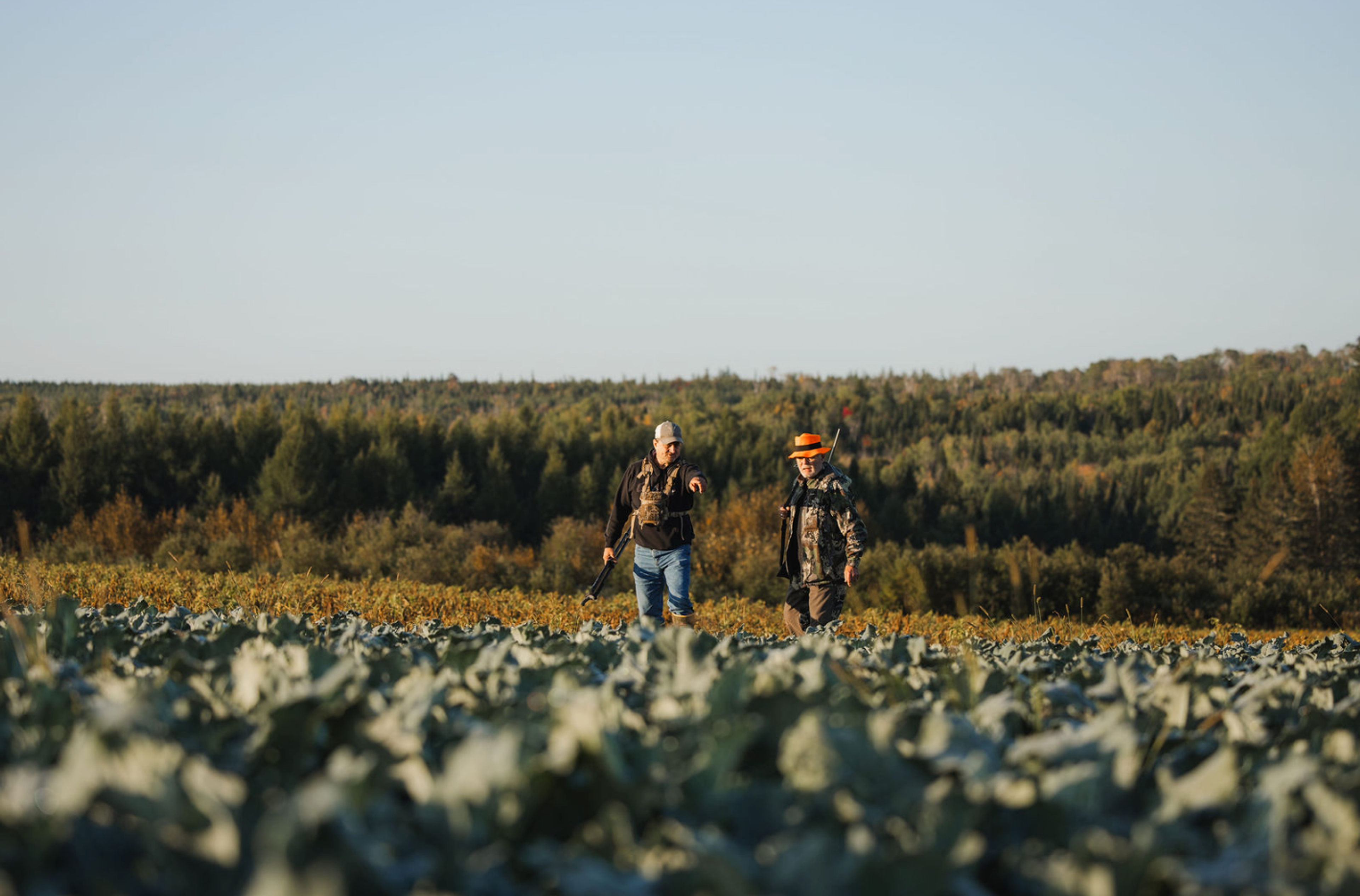
Dave Hentosh and Bill Westfall search for signs of moose activity in the broccoli fields.
The disabled veterans moose hunt is far more than a surgical strike, though. It is, first and foremost, a donation-funded social program aimed at giving warriors a chance to heal. The veterans, nearly all of whom have seen combat, are largely from Maine, and they earn the chance to make a single moose hunting trip via a highly competitive lottery. They come to Aroostook County in groups of three to six for a four-day experience, and they hunt at dawn and at dusk, some on foot, some in all-terrain wheelchairs. At night, they gather in Smoldering Lake’s comfortable lodge, their meals cooked and their moose processed by Hentosh’s co-workers. They hang out and share stories.
Bob Demchak, a retired Air Force major, quotes his wife to capture the powerful effect of his 2023 moose hunt: “It gave me my husband back.”
Demchak served during Vietnam and continued on through the first Gulf War. Over the years, he incurred a medley of injuries—to his back, to both knees, and to his shoulder. Later, as he aged, these injuries became increasingly disabling. Demchak brooded. He sat in his house in Maine and thought, “I have a beautiful backyard and all kinds of trails, but I can’t walk anymore.” Afflicted with major depressive disorder, he became stone-like, incommunicative.
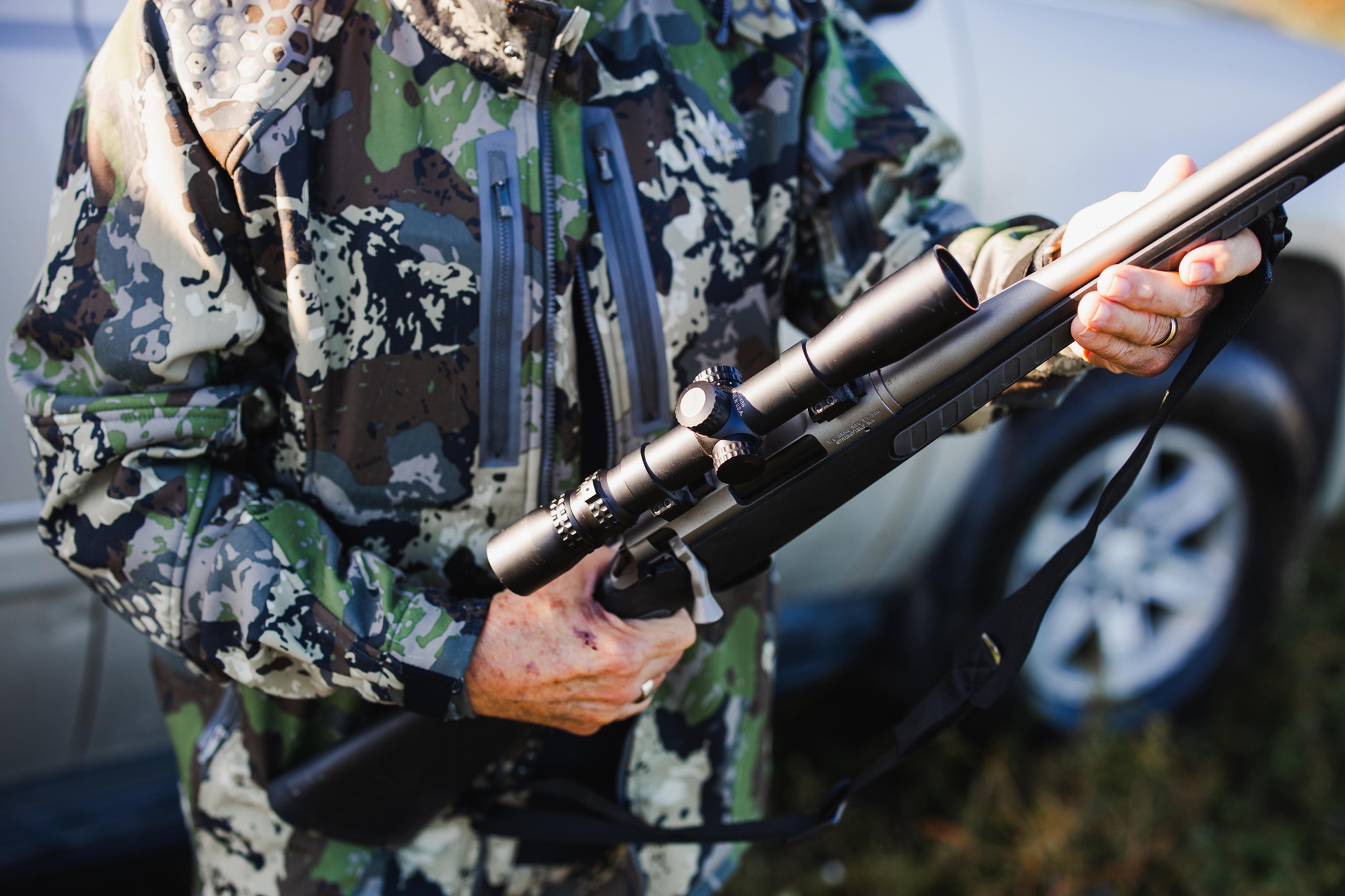
Bill Westfall inspects his rifle.
But then as he rode the edges of the broccoli fields in an ATV affixed with a gun mount, he found himself among men who understood his plight—and were sufficiently removed from their daily life to speak with passion and candor about trauma. “There was a guy in our group,” Demchak says, “who was laughing about having his leg blown off—about how he didn’t even learn of his injury until he tried to stand up. There was that level of openness and understanding.”
Greg Stube, a retired Green Beret who endured 17 surgeries after being nearly killed by a bomb in Afghanistan in 2006, still thinks about his 2025 Aroostook County moose hunt every day. The hunt itself was invigorating, for it involved, he says, “a fair amount of stalking and positioning and patience and not being so stubborn that you stay in one place forever.” It also changed the way he thinks about guns.
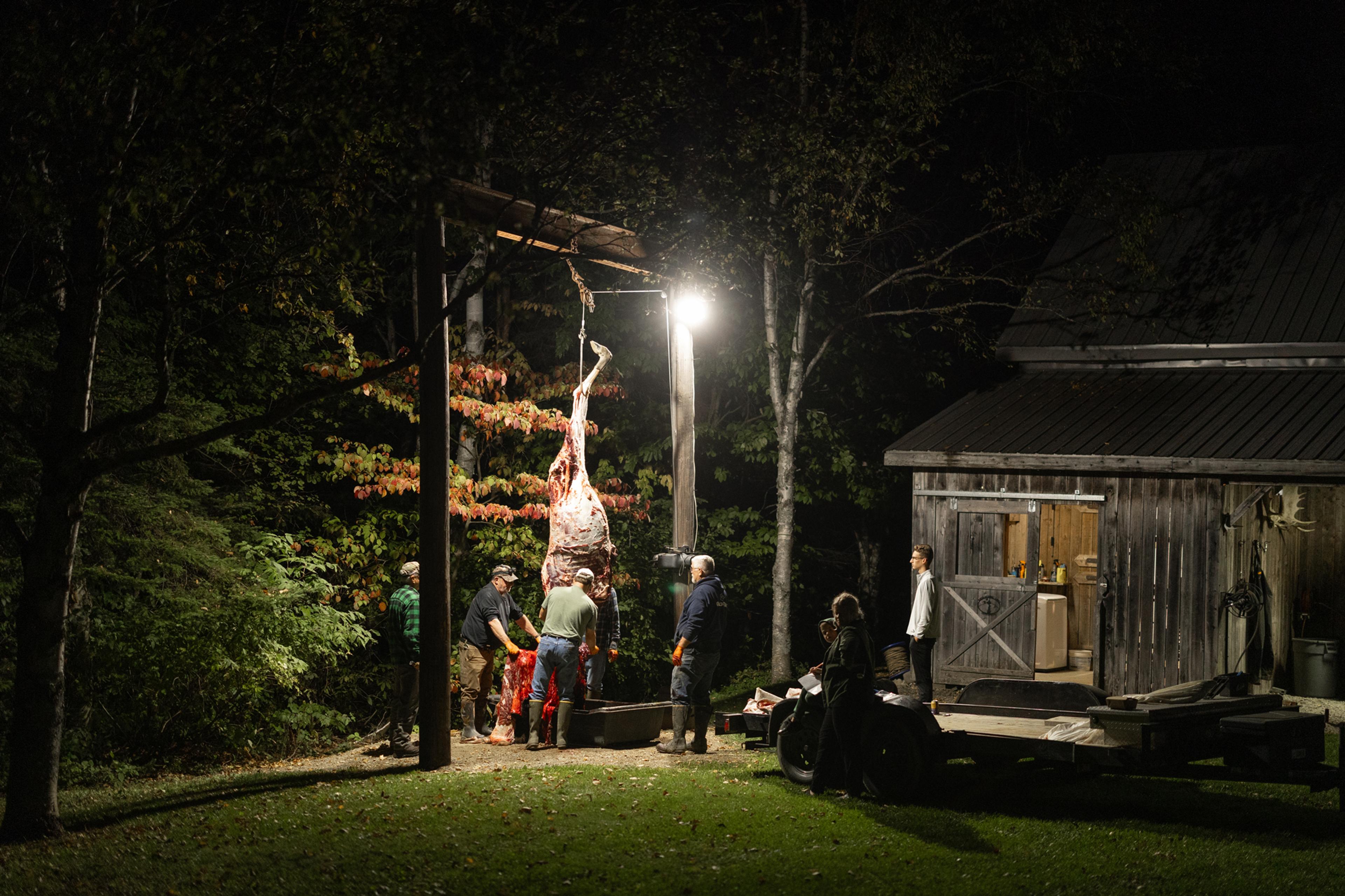
A moose shot during the evening hunt, strung up for butchering.
“When you spend a career looking at weapons as a tool to do damage to other humans,” he explains, “well, that has lifetime effects on your psyche. But on the moose hunt, we were using our guns to procure a great harvest. There was no trauma, no tragedy, and there was fellowship involved. We had veterans of all generations there—men in their forties who’d fought in Iraq, as well as older men, Vietnam vets. All of us were in one room, and as we talked, we discovered that the concept of military service is actually timeless. The technology may change, but the intent of the soldiers and the love of country doesn’t. None of us had ever met before, but by the time we left we were brothers for life.”
For Stube, the devotion of Smoldering Lake’s hardworking support crew only deepened the experience. “Many veterans don’t feel validated,” he explains, “but the volunteers facilitating that moose hunt were getting up early and going to bed late as they braved the mosquitoes. It was obvious that they loved us.”
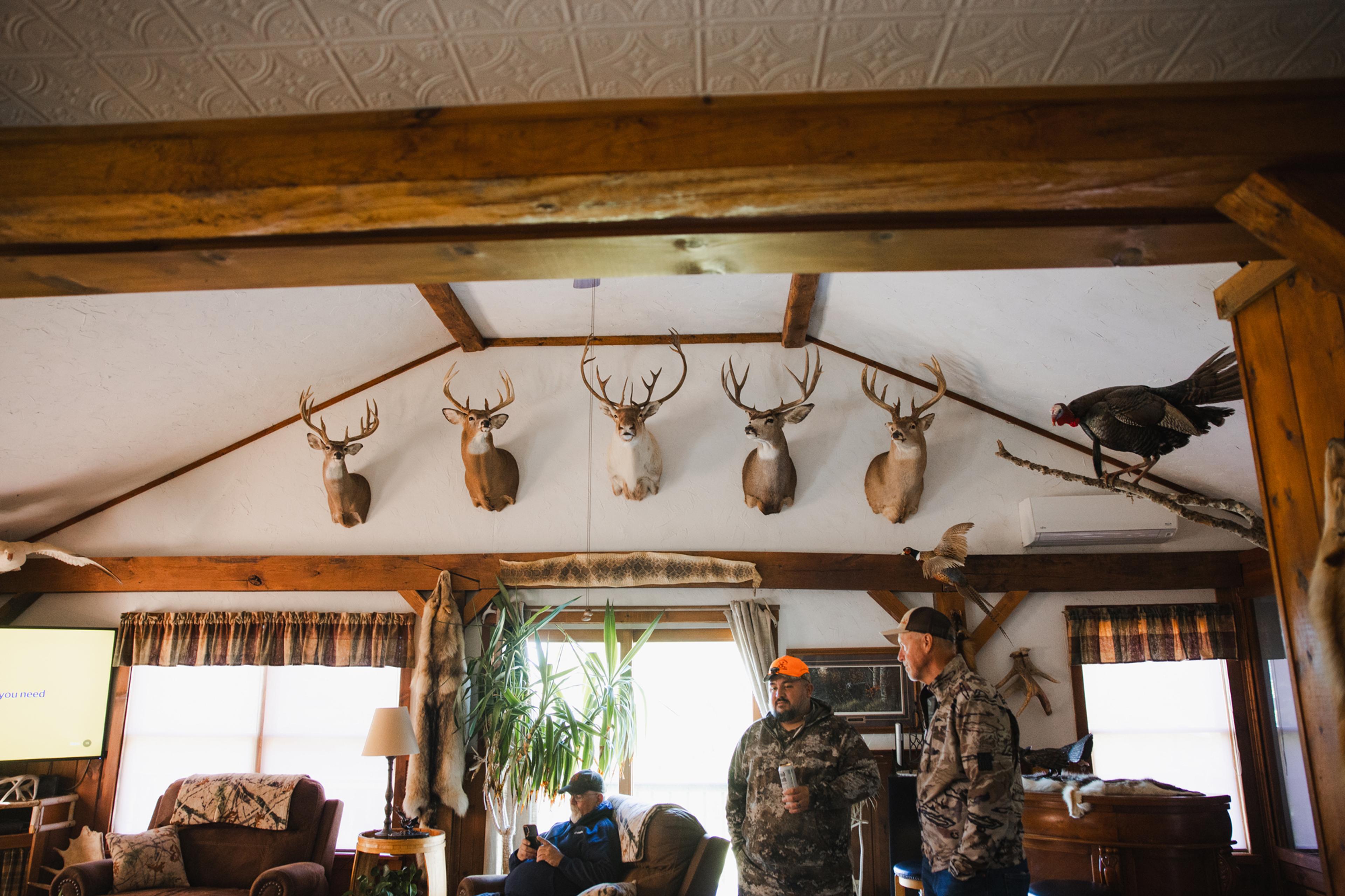
Hunters relax in the lodge between morning and evening hunts.
Building on the success of Maine’s disabled veterans hunt, Hentosh now leads veterans on about a dozen hunting and fishing trips a year, In Texas, Georgia, and Florida, as well as in Maine. There have been hunts for turkey, deer, and antelope. Each expedition is free to participants and funded via a nonprofit that Henshaw founded—Veterans Afield Foundation.
This year, Veterans of the Field will travel to New Brunswick, Alaska, Tennessee, and Maryland. But the Maine hunt, on Henshaw’s home turf, remains close to his heart. This year, there were six four-day disabled veterans moose hunts in broccoli country during August and September.
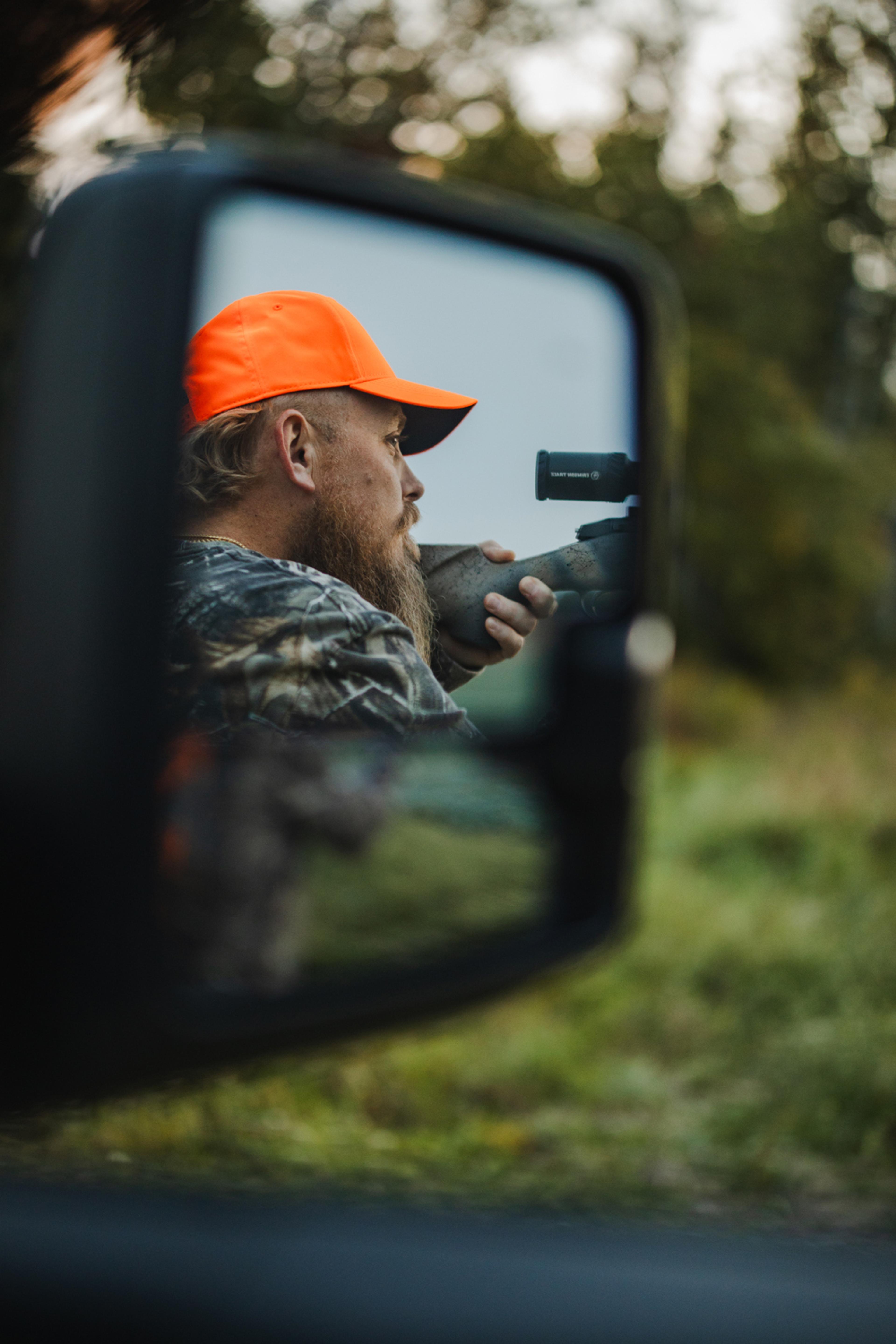
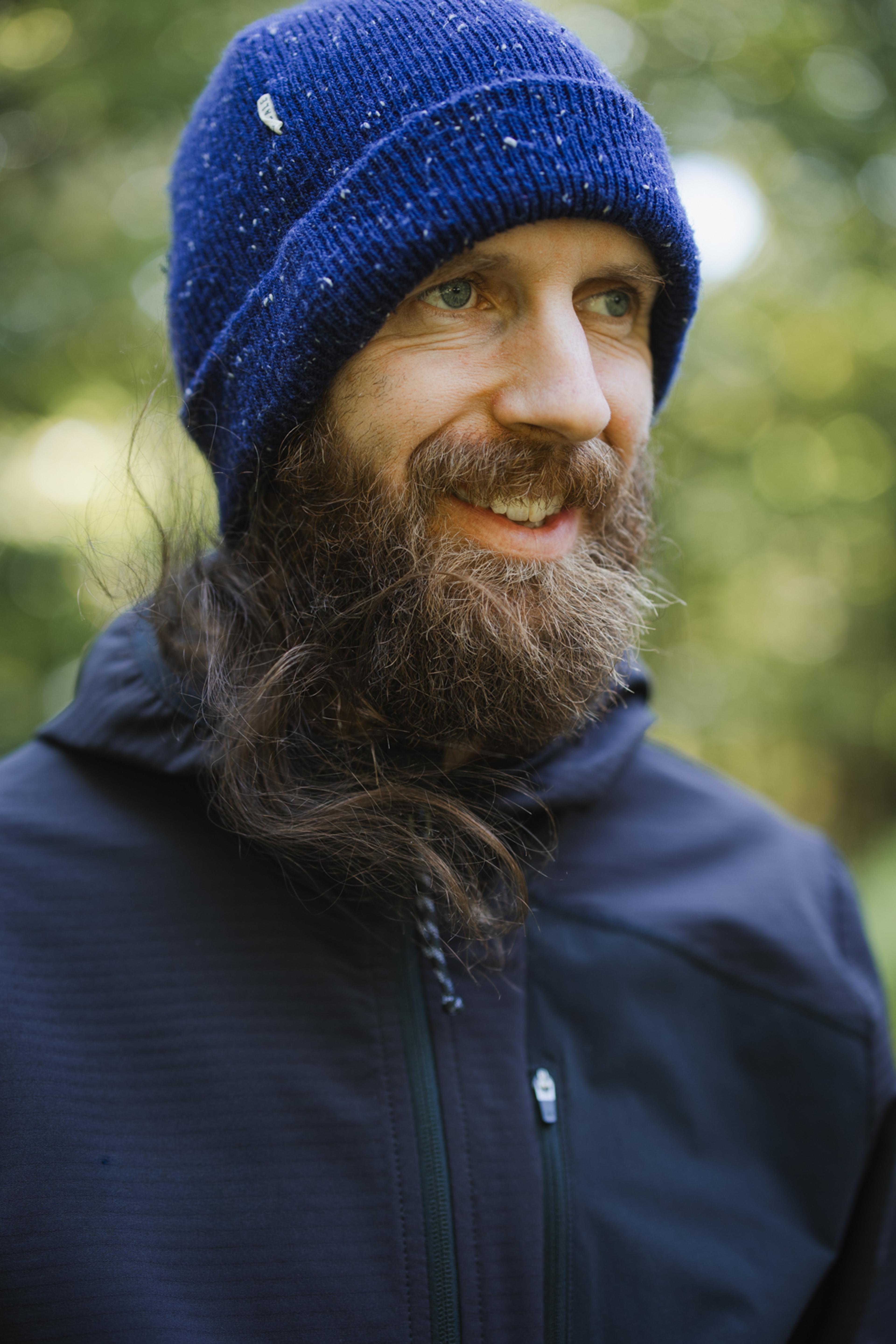
A portrait of Robert Stitham.
“We’re not looking to wipe out the moose,” Henshaw says, his tone understated, workaday. “We’re looking to take just a few and educate the others that, ‘Hey, we really don’t want you here.’ And it has nothing to do with you know the shooting of an animal. It’s about the experience that veterans have. They commune, and then they go home with some moose meat. And that stuff’s highly nutritious. It’s very tasty.”