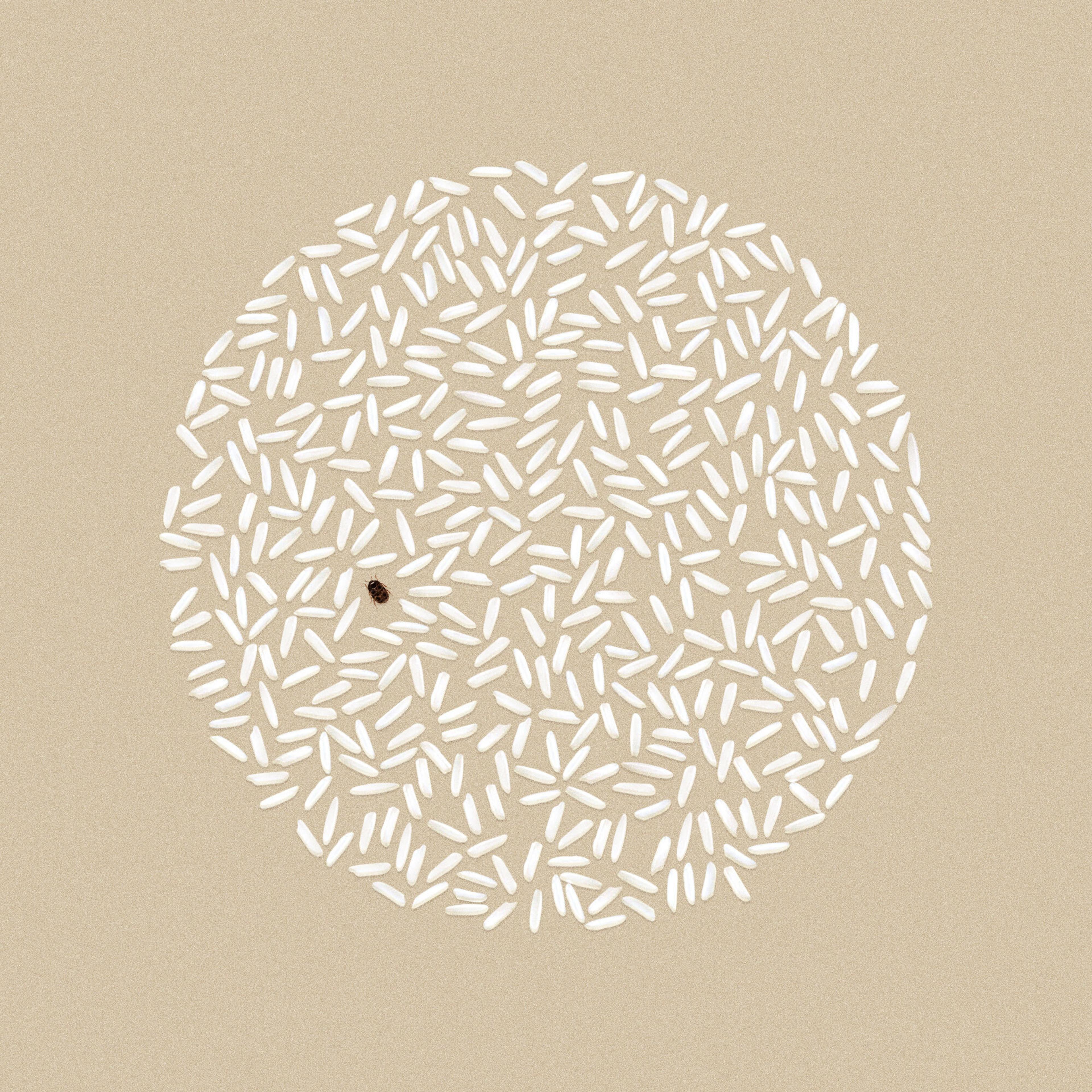
In America’s breadbasket, stored product entomologists work to safeguard our stored crops from annihilation.
Back in 2015, a somber-faced beagle named Emeril, working as an agricultural K-9 at O’Hare International Airport, perked up his nose at a passenger’s unassuming baggage. Although the traveler had neglected to declare, further inspection of their belongings uncovered a smorgasbord of illicit food items, ranging from pickled mutton to rice to curry leaves.
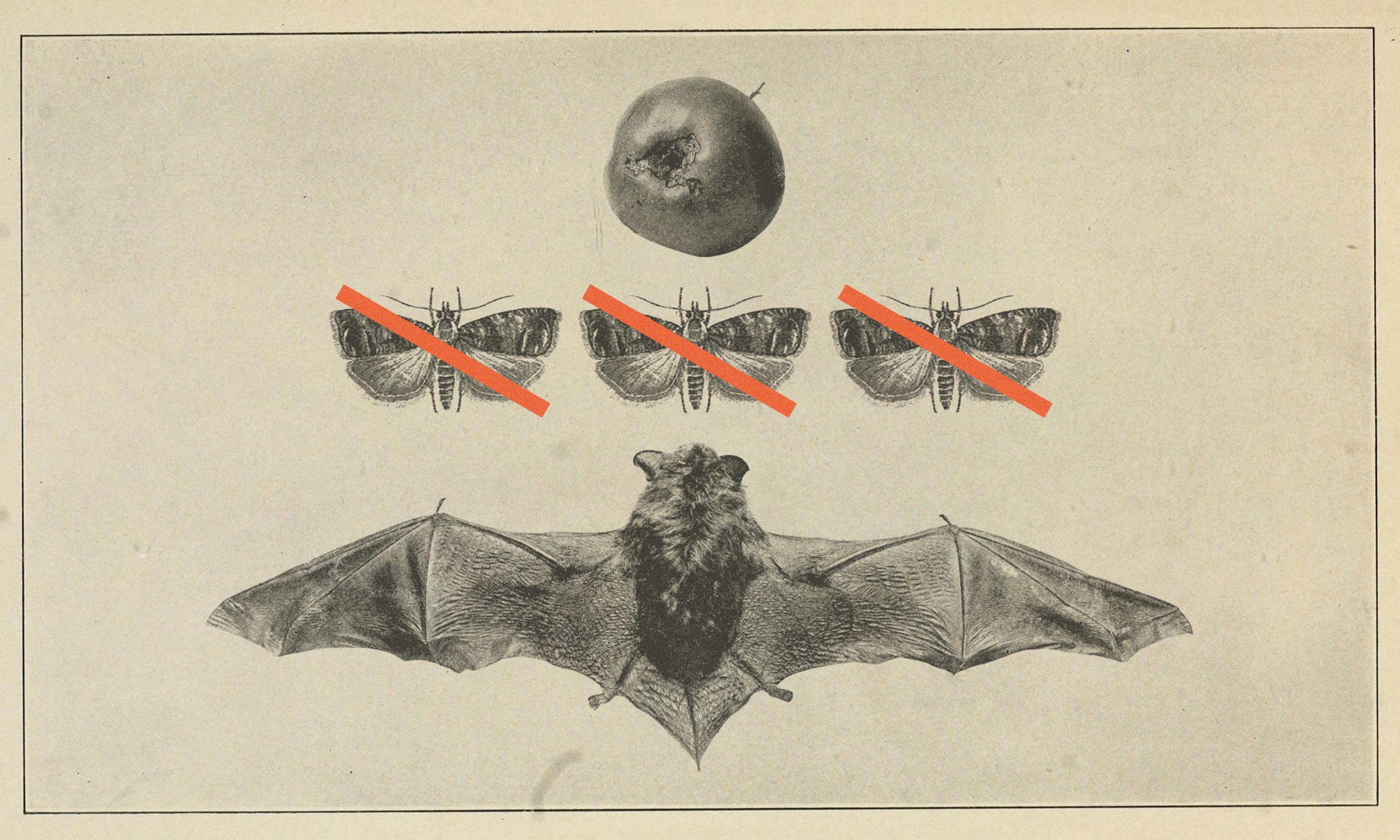
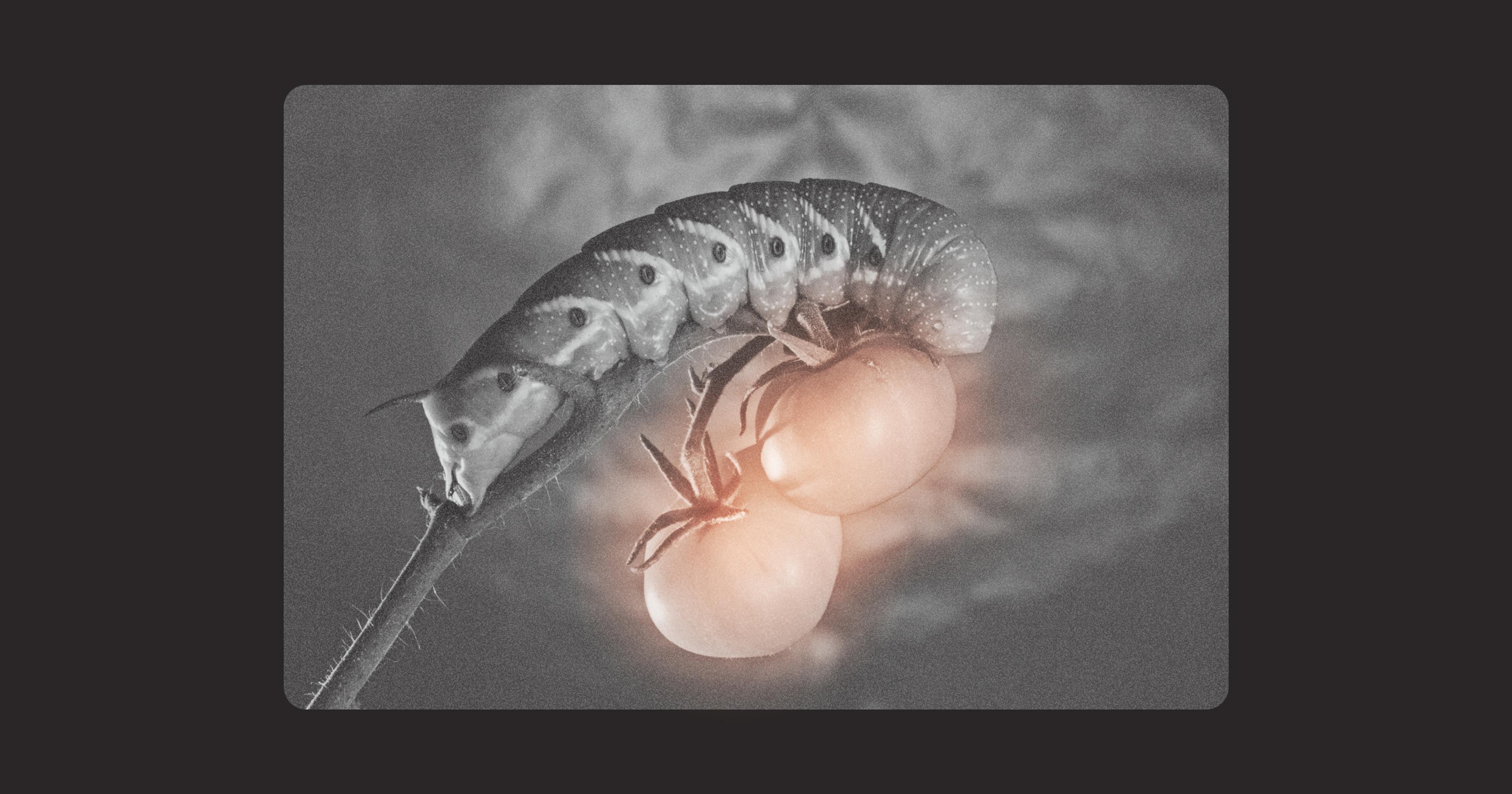
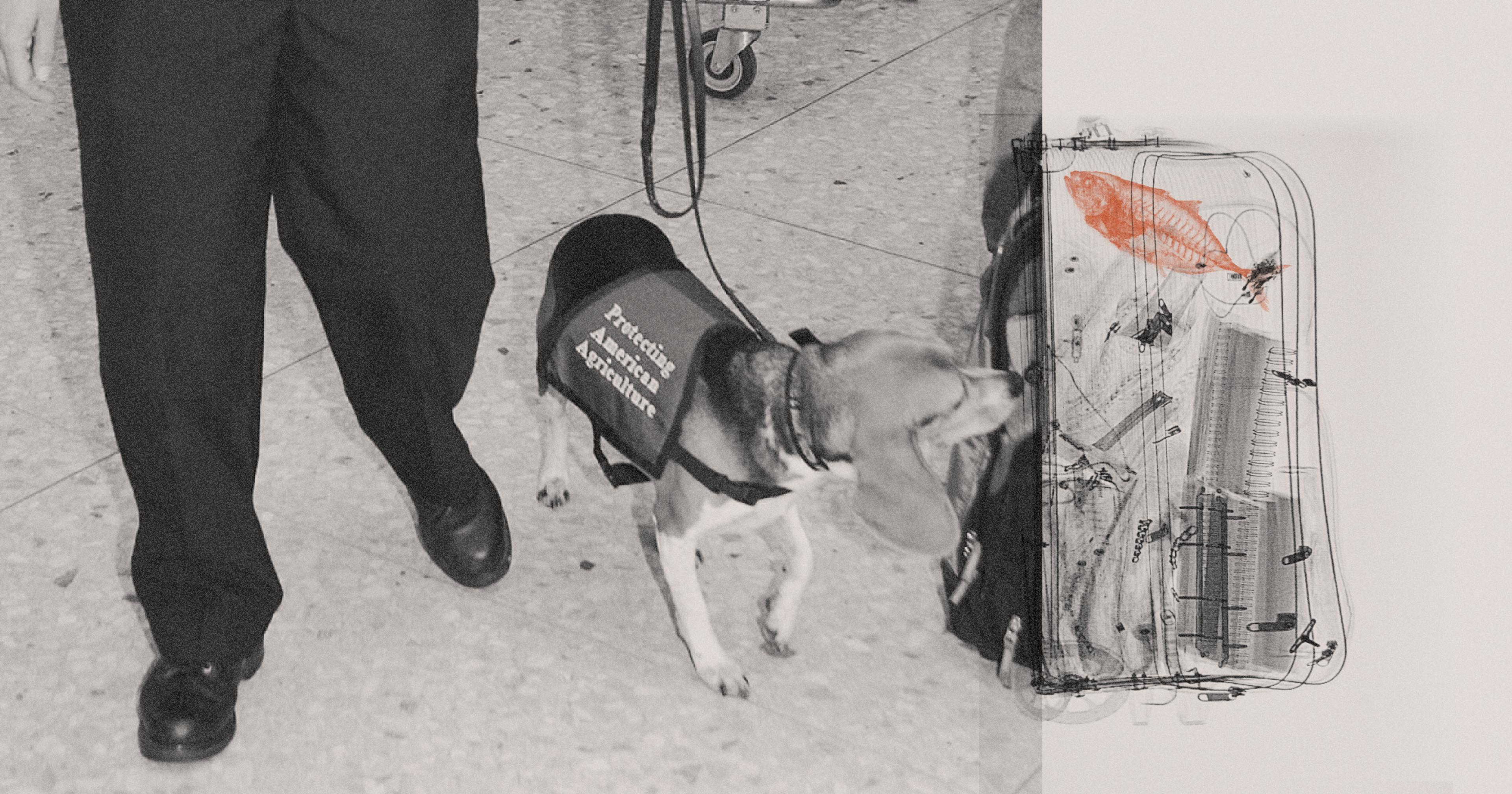
The fermented sheep meat, as it turned out, did not actually warrant much concern. The invasive Khapra beetle in a bag of rice, on the other hand, could have reaped far more havoc than any stew.
“The number in my field is that, after harvest, we always lose a minimum of 30%. It can be as high as 80%, especially in regions where maybe there’s less access to inputs or secure storage,” said Hannah Quellhorst. A postdoc at Kansas State, Quellhorst studies “stored product entomology,” tackling the intense challenges of safeguarding grains after the harvest but before they reach the shelves. From bins to packaging, the amount of lost product brought about by entomological pests alone could easily rival better-known, higher-profile losses that occur in both the field, or in dumpsters.
“[That first 30% is] just the insects,” Quellhorst stressed. “That’s not even including food waste, or attack by rodents. Just insects.”
Quellhorst arrived at K-State after earning her master’s in entomology at Purdue; driven by a passion for global food security, her thesis studied the oxygen consumption of grain pests in hermetic storage in Haiti. But the siren call of stored product entomology brought her to the lab of Rob Morrison, a USDA-Agricultural Research Service entomologist at the Western Star Global Grain and Food Center. Kansas State has long maintained an intensive partnership with the USDA, and is one of — if not the only — universities in the world with a specialized program in grain science.
“They call us the breadbasket for a reason,” Quellhorst said.
Two insects that dominate most of Quellhort’s attention are the aforementioned, airline gate-crashing khapra beetle (Trogoderma granarium) and the greater grain borer (Prostephanus truncatus). One of the top hundred most dangerous invasive species in the world, Khapra beetle larvae can be voracious, devouring their way through stored grains while leaving behind an unholy mess of skins and waste; they also have the capacity for diapause, a trick of arrested development that enables them to survive harsh conditions or lack of food for prolonged periods.
The khapra beetle has a storied history on U.S. farms, having already been the subject of intense (and costly) eradication campaigns.
The khapra has a storied history on U.S. farms, having already been the subject of intense (and costly) eradication campaigns, including a decades-long bout in the 1950s and 60s throughout the American Southwest. The final tally for its successful, mid-century eradication amounted — in 2026 dollars — to over $100 million.
“The real benefit of the khapra beetle is that it’s just a hitchhiker, which can’t disperse very well on its own,” Morrison explained. “So if you can figure out where some specimens have been intercepted, and quarantine it, it’s going to be more successful with this particular species than others.”
The greater grain borer, meanwhile, poses its own significant threat. An American pest that has already successfully invaded and ravaged the African maize industry (possibly through contaminated food aid), a preference for toasty climates has managed to keep its range south of the border. The steady march of climate change, however, risks expanding their range perilously north.
“It’s a tiny little wood boring insect. Very, very tiny,” Quellhorst said. “But at some point it switched from trees, to corn and cassava. So imagine those little jaws chewing through softer material; they turn it to powder in 24 hours. I mean, it’s flour.”
“It can chew through metal. It can chew through plastic. I have pictures of it chewing through a plastic petri dish so it can escape,” Quellhorst added. “It can chew through anything.”
“It can chew through metal. It can chew through plastic. I have pictures of it chewing through a plastic petri dish so it can escape.”
There is, of course, no shortage of intrusive bugs that farmers know and loathe. Jacob Landis, a regenerative farmer outside of Sterling, Illinois, often reckons with grain weevils; his direct knowledge of the khapra and grain borer remain, mercifully, minimal.
“My general experience is that what happens in the ivory towers of the universities, and maybe in the legislated law, does not necessarily trickle down into the farm world,” Landis said.
In his silos and pastures nestled one hundred miles straight west from Chicago, Landis enjoys certain advantages more temperate climes do not: During colder seasons, Landis blows cold air through grain bins to kill or arrest the life cycle of insects. He also makes liberal use of diatomaceous earth — the ubiquitous bags of powdered, fossilized microalgae that coat a wayward insect’s joints and exoskeleton, acting like microscopic razor blades and eventually causing death by dehydration. Both these tactics, however, lose effectiveness as temperatures rise.
Within stored product entomology, these techniques would fall under the rubric of either physical or cultural pest control — controlling pest populations with mechanical devices or manual techniques, versus modifying their environment or habitat. But Morrison’s lab also investigates behavioral controls, which aim to befuddle and discombobulate insects into submission, like by disrupting the creature’s mating cycle.
There’s also biocontrol, in which beneficial insects keep down more destructive varieties; most common are parasitoid wasps, who tend to target (and lay eggs within) particular species. While the FDA has established maximum acceptable amounts of “insect filth” in food products (for example, 60 or more insect parts per 100 grams of chocolate), Morrison clarified that biocontrol species have actually been exempted from these tolerances.
“We lose 10 to 30% of that crop as it travels. And that’s a large amount of food that could be going into people’s mouths.”
“But there’s this perception among stakeholders that they’ll have rejected shipments,” Morrison says. “[That] no insects is better than any insects.”
As the world’s food supply rushes to accommodate eight and a half billion mouths, the Morrison Lab endeavors to pioneer techniques that prevent post-harvest loss, rather than just react to it. Quellhorst’s most recent paper, for instance, investigates the efficacy of insecticide-incorporated netting — research that many industry partners’ own R&D lack the resources to conduct themselves. She is also currently wrapping up her USDA-NIFA postdoctoral fellowship, in which her team has worked to compile a molecular database of khapra beetles and larger grain borer, through which entomologists can then track the genetic interrelatedness of outbreaks across the world.
The trials and travails of global food security can often hinge on forces barely larger than a grain of rice. But a pint of prevention can be worth a bushel of cure.
“We spend all this time and effort growing these crops,” Morrison said. “But what ends up happening is that we lose 10 to 30% of that crop as it travels. And that’s a large amount of food that could be going into people’s mouths, in a time when there’s never been more food insecurity.”
Jacob Landis echoes this. “I push back on the fallacy that we need to raise bumper crops to be able to feed the world,” he says. “There is just a lot of waste in the system. If we would manage our waste, it wouldn’t be as much of a concern.”