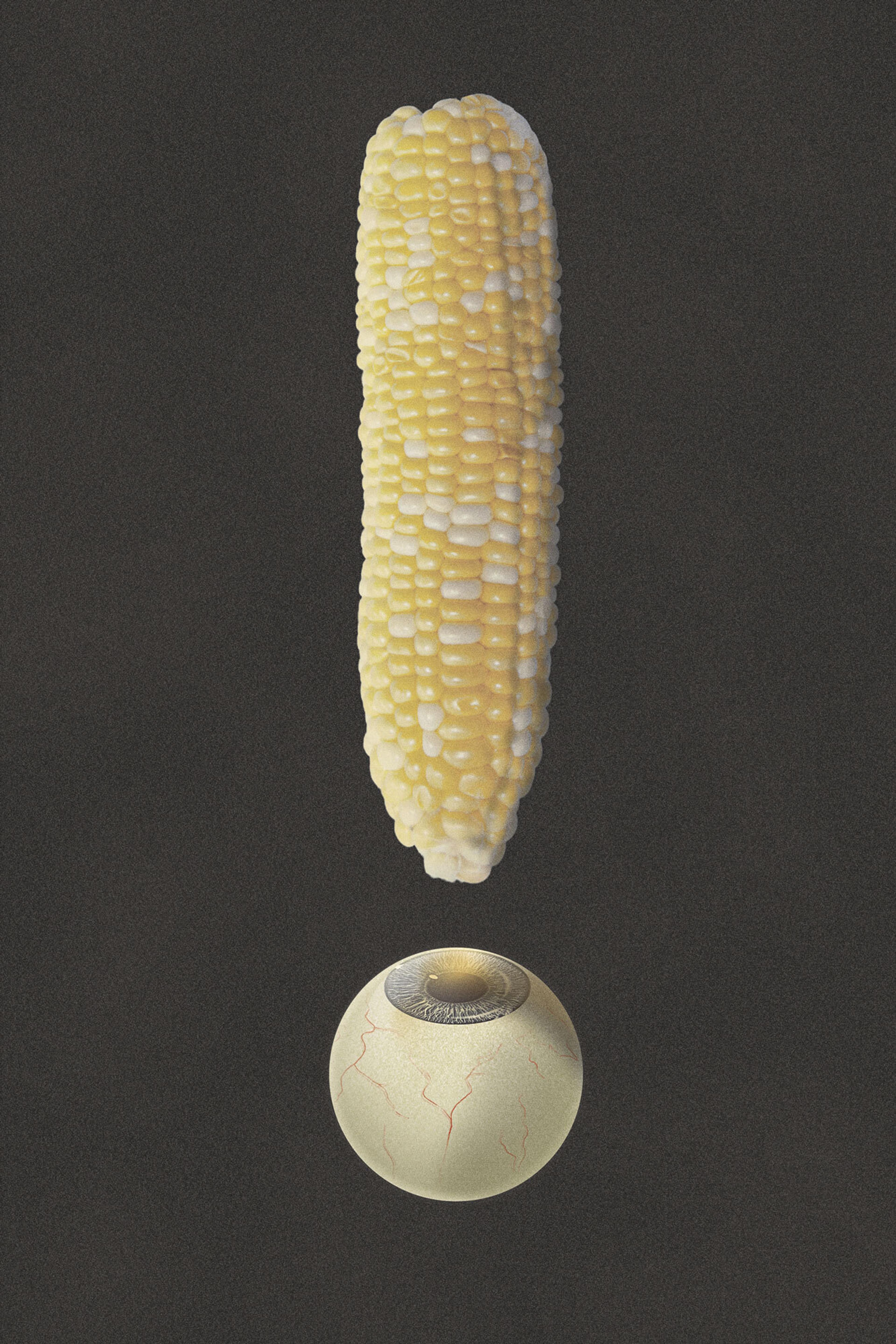
Corn breeding long ago moved away from reliance on visual assessment. Meet phenomics, where phenotyping meets modern technology.
Corn is a poster child for many things: simple plant breeding taught in schools, political involvement in our food systems, advancements in molecular breeding, and new harvesting equipment, to name just a few. This one vegetable has become a core representative of both the perception and the reality of modern American agriculture.
But in a country continuously chasing the next major technological advance, will the next big thing in corn tech bring us back to the way things started? That is—do we just need to spend more time looking at our crops?
In recent years, corn has benefited from genomic prediction—a molecular approach to breeding that uses our massive storehouse of genetic information to predict the success of new hybrids. Genomic prediction acts as a corn variety’s fortune teller, and since we know a lot about corn to begin with, these algorithms are very good at improving corn in a diversity of ways (higher yield, more disease tolerance, etc.).
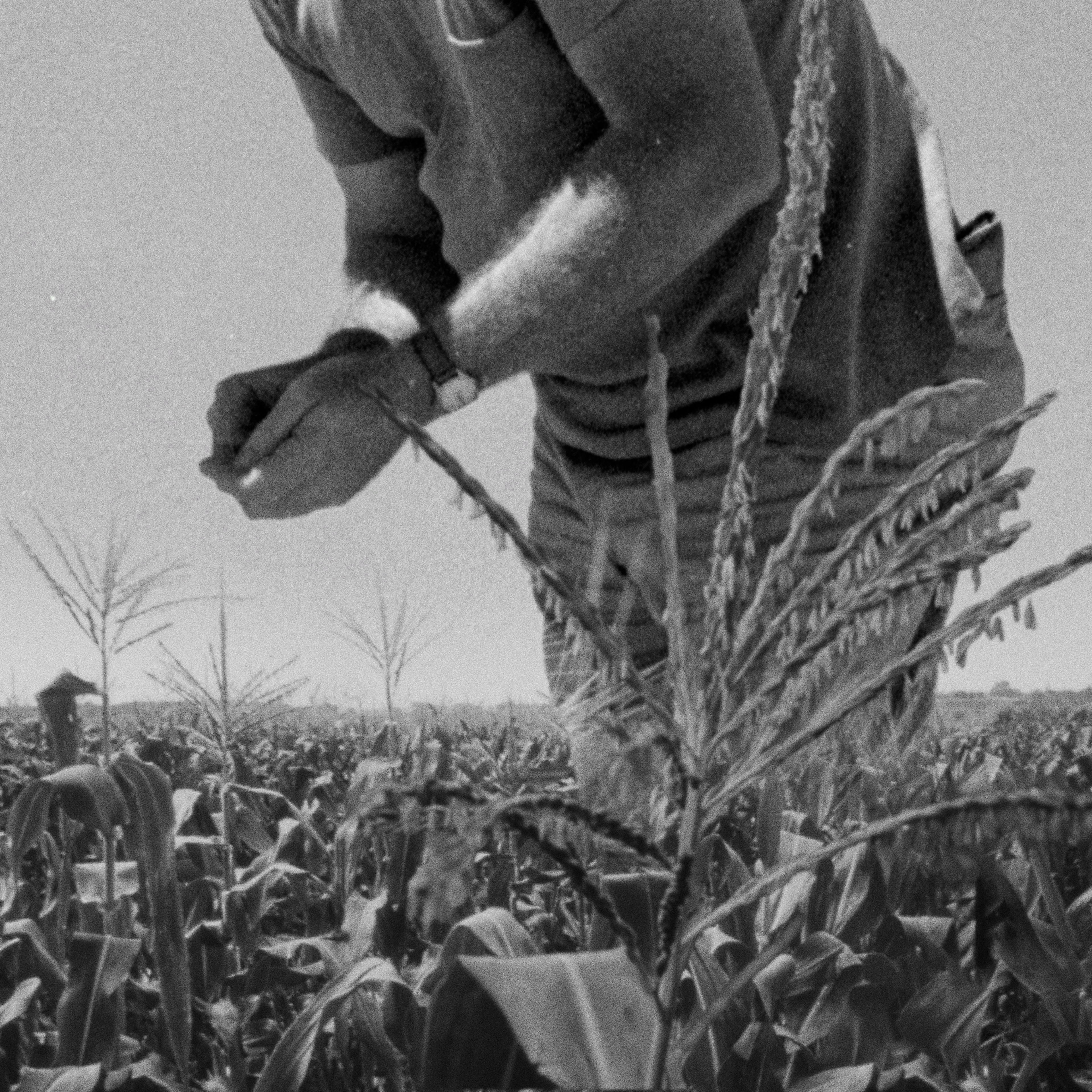
However, after hitting a ceiling of genetic gain based on molecular tools alone, some corn breeders are turning to technologies that help them do what ag breeders did in bygone eras: making selections by visual assessment. But unlike manual corn breeders of the past, scientists can now leverage modern tools to decrease the amount of physical labor involved in visually assessing their crop—and help them see things that their eyes alone cannot.
“My hypothesis is that breeders, through visual selection, have already selected most of the good genetic diversity for post-flowering traits in corn, for example,” said Seth Murray, corn breeder and professor of crop sciences at Texas A&M University.
Technology is now optimizing the ways that breeders can collect visual information. Perhaps most importantly, these tools are supercharging the scale at which they can compile and analyze data to inform planting or breeding decisions in the future.
Judging Corn by Its Cover
A breeder looking at their plants and making selections based on physical traits like height, canopy, chlorophyll content, or yield are making a decision based on that plant’s phenotype, which is any visually observable characteristic. Take that idea, and do it en masse—you get high-throughput phenotyping, or noting many different plant characteristics over thousands of individual plants or plots. Essentially, it’s taking the human ability to determine what looks like a good cornstalk and amplifying it.
This methodology addresses an issue that scientists run into as experiments get bigger and bigger—the phenotyping challenge.
Measurements like plant height or chlorophyll content are quantitative ways to track visual characteristics of plants. It takes what breeders see as a “good cornstalk” and turns it into data that can be compiled and analyzed.
It takes what breeders see as a “good cornstalk” and turns it into data that can be compiled and analyzed.
Taking measurements of these visual cues for a couple of plants is reasonable for a person to do in a day. But once an experiment requires those measurements to be taken every day, for an entire growing season, across tens of thousands of plants—it becomes impossible for a research team to tackle with their eyes alone.
“That is the phenotyping challenge,” said Andrew Leakey, an integrative plant scientist and professor at the University of Illinois at Urbana-Champaign.
Impossible—without the right tools.
Shucking the Challenge
Several different types of technology can be used for high-throughput phenotyping in corn. For Leakey, it’s a long list of different types of technology—many of which take the limited human ability to look through a microscope, or at an image on a computer, and train an artificial intelligence model to look at them instead.
His group has trained AI algorithms to consider stomatal patterning on leaves, and to distinguish between roots and anything else you can find in soil from grainy black and white images. Out in the field, they have employed specialized tractors designed to stick hundreds of 6-foot clear pipes into fields for studying root morphology.
“Our field looks like hundreds of darts have been thrown by some giant,” Leakey said. Previously, these experiments were considered “large” at 50-100 root samples—now, they can scale their data collection up to multiple hundreds, and rather than employing undergraduate students to spend hours attempting to trace roots from pictures, they have their AI algorithm analyze the images and present the data back to them within a week.
“If we managed to have humans analyze all the [roots] data before the start of the next growing season, that was a huge victory,” Leakey said. “But now, we’re getting the analysis basically as fast as we can collect the images. It’s a whole new world.”
These models can also describe where these pores are arranged on the leaf surface—which plays an important role in how gas exchange and the release of water takes place.
Across his high-throughput phenotyping escapades, Leakey seeks to better understand water-use efficiency in corn—the exchange between carbon dioxide and water at the surface of leaves (the process responsible for corn sweat Midwesterners are all too familiar with).
To this end, his group has also developed ways to evaluate nearly all aspects of stomatal pores using computers. These pores open and close on the undersides of leaves to allow for gas exchange that is critical for photosynthesis (and allows water to escape at the same time).
Leakey’s team has trained AI models to successfully characterize the number and size of these pores—a task historically done by a team of expert eyes over the course of many days. These models can also describe where these pores are arranged on the leaf surface—which plays an important role in how gas exchange and the release of water takes place.
“These models can do all of the cell finding and counting and measuring, which otherwise would be a spectacularly slow process,” Leakey said. “And, we can disentangle a lot of combinatorial effects in our data that before would have just seemed like noise.”
“I don’t see a replacement for what they are doing right now, but perhaps a complement to it,” Leakey said. “It could give them a lot of extra information.”
For Murray, the technology of choice is drones, which capture thousands of images in a single growing season, and machine learning pipelines to process those images, and help him uncover what is predictive of a variety’s success in a season. This high-throughput phenotyping taken to the extreme—toward the discovery of new traits—is called phenomics.
“There is a lot more room for discovery when it comes to phenomics,” Murray said. “With molecular approaches, you can’t capture gene-by-environment interaction, and you can’t capture temporal differences.”
Murray’s research has been focused on using phenomics for nearly a decade now, specifically looking at how the entire field changes over the course of a growing season, bringing in that temporal element that is difficult or impossible to capture any other way.
Phenotyping Outside of the Academy
While Murray is sure that it will be a while before any seed companies look to replace their established genomics-based breeding pipelines, Leakey is more optimistic that phenotyping technology could enter private-sector breeding soon. He’s already working with industry partners on root phenotyping, and sees this as just the beginning.
“I don’t see a replacement for what they are doing right now, but perhaps a complement to it,” Leakey said. “It could give them a lot of extra information.”
For home gardeners who are dedicated to continuous successful growing seasons, high-throughput phenotyping appears to be a more accessible improvement route than alternatives like genetic testing. It’s cheaper to buy a camera or a small drone than the components of a molecular biology lab, and the data can be more easily digested (even without sophisticated computational pipelines) than genetic testing data.
“I became interested in how the early pre-colonial peoples grew corn.
Plus, for a population already spending a lot of time looking at their plants, phenotyping technology might save them time thinking about their garden to allow for more time enjoying it.
Tom Bridgeland has been growing corn in his backyard since 1996. He’s both a gardener and a citizen scientist—for the last four seasons, he’s been diligently documenting an ongoing experiment where he is tracking yield in his cornfield with no tillage and no fertilizer.
“I became interested in how the early pre-colonial peoples grew corn. It turns out, that is a deeply divisive topic among researchers, and very little is really known,” Bridgeland said. “One major point of contention is farm productivity. So I dug in to see if anyone had attempted to replicate ancient techniques, what little we know about them, and to see what kind of production is possible.”
Similar to Leakey’s passion for how corn plants work at a molecular level is Bridgeland’s passion for growing corn the way that Indigenous people did. This focus on more sustainably grown corn is something academic labs using high-throughput phenotyping methods—like Ed Buckler’s group at Cornell—are also focused on.
Bridgeland has had a lot of success with his experiment so far, and he anticipates continuing to investigate the stability of his harvests without any fertilizer or tilling—with hopes to eventually publish his findings.
“If I were going for technology, mine would all be made of buffalo bones or wood,” Bridgeland said. “I work a 3000-square-foot garden completely by hand, and I love it.”
However, for Bridgeland, it’s not about incorporating technology like drones or AI pipelines—it’s about understanding the way corn was grown long before all of that. It’s about what it looks like to grow corn alongside other crops like squash and beans (the Three Sisters method), and what vibrant colors of corn he can create or recreate. It’s about noting what he sees during time spent in the garden in a virtual journal. And it’s about mimicking the way corn breeding happened long before molecular breeding, or tractors for that matter—back when visual assessment was all we had.
“If I were going for technology, mine would all be made of buffalo bones or wood,” Bridgeland said. “I work a 3000-square-foot garden completely by hand, and I love it.”