
An emergent line of research is exploring the possibility of efficient and productive lab-grown vegetables.
Imagine: Tall grass whistling over hills from North Dakota to the Texas panhandle, forests full of oaks and maples covering Arkansas all the way up to Pennsylvania. Bison roam, wolves prowl, birds swoop, and rodents scamper. Nutritious, fresh food is accessible in every village, town, and city. No one is hungry.
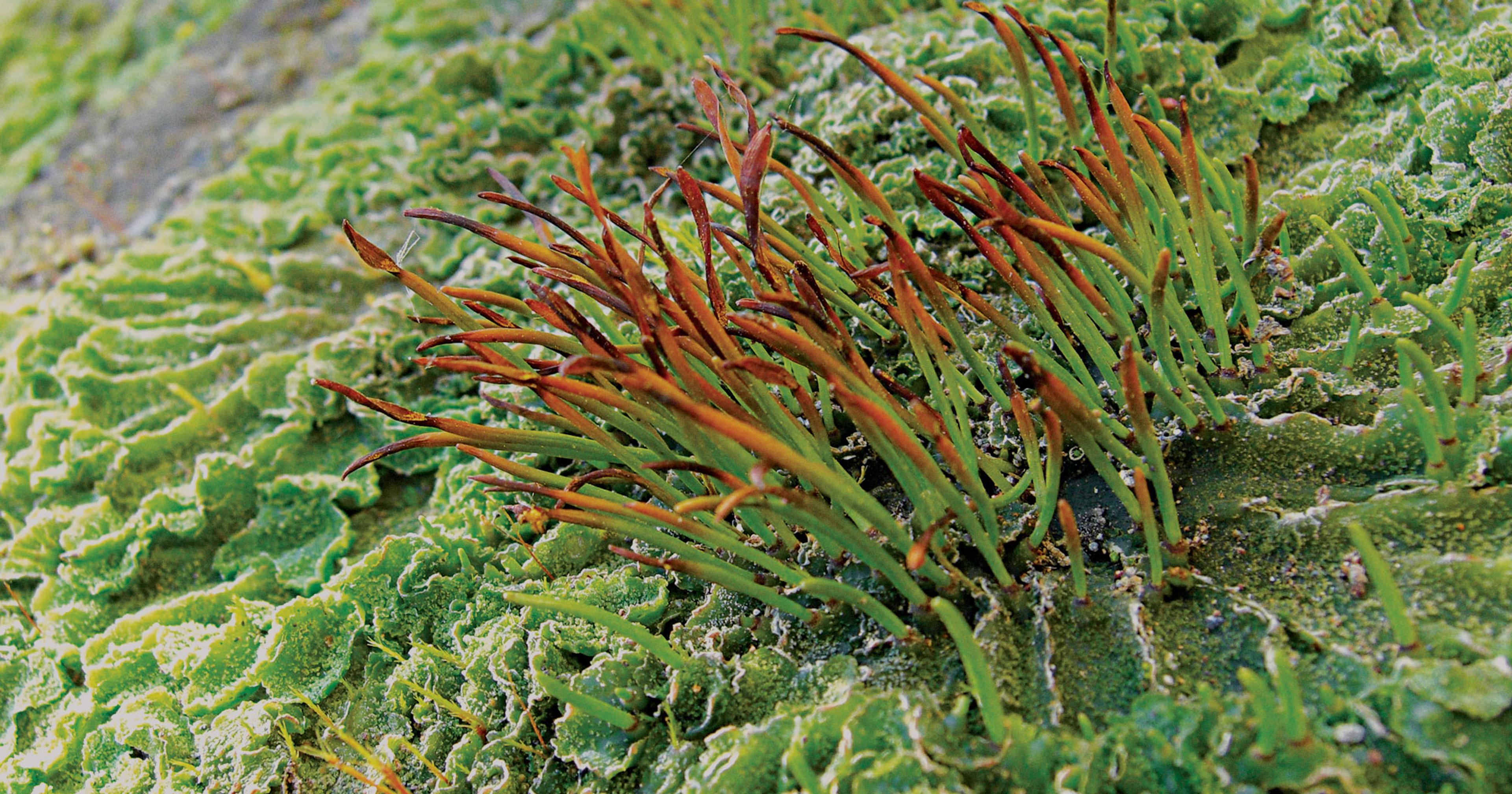
Yet there is not a tractor, sprayer, planter—not even a single row of crops—in sight.
This vision of a world full of food, people, and wilderness is what Robert Jinkerson works towards in his research at University of California, Riverside: a world of food without agriculture. Taken a step further, think food in the absence of the world. Jinkerson’s research paves the way for producing food without land, light, and gravity—in outer space.
And it starts with the cherry tomato.
Tomato Troubles
More specifically, it starts with the ability to produce food without plants. It’s an idea Jinkerson had based on his previous work, which focused on using green algae to produce biofuel. He said his engineering background allows him to look at plants—and agriculture as a whole—like energetic systems, and identify where efficiency is lacking.
Federico Marques, a vertical farmer-turned-hydroponics systems entrepreneur with Houston’s Moonflower Farms, sees this primary inefficiency as transportation time for fresh fruit and vegetables.
“People are moving to the cities—but where is the food? It ain’t in the cities!” he said.
Marques explained that fresh fruits and vegetables often travel thousands of miles between where they are grown and consumed, all while transporters put in time, energy, and money to maintain their freshness—an uphill battle as global temperatures continue to rise. Not to mention the supply chain disruptions that can negate all of these efforts almost instantly, like global unrest, electric grid failures, geopolitical shifts, and natural disasters.
This transportation issue is exactly the focus of current tomato breeders, according to Andrew Horgan, a recent Texas A&M graduate who is about to continue his research on tomato ripening at Cornell University.
“For the last, say, 50 years, the focus for breeders has been on shelf life,” Horgan said. “Whether that’s tougher skin, firmer carp, slower ripening: looking at things that expand transportation potential.”
However, in Jinkerson’s mind, the efficiency hiccup for fresh fruits and vegetables isn’t the transportation—it’s the energetic uses of the plant itself, specifically during photosynthesis.
Getting Around Photosynthesis
“Plants can photosynthesize and that’s amazing but photosynthesis is only 1% energy-efficient, so we have to grow huge areas of them to capture enough solar energy to produce enough food,” Jinkerson said.
In the mind of an engineer, this system is extremely flawed for creating our desired product—food, and enough of it to feed a seemingly ever-expanding human population on an Earth with a finite surface area and resources to grow it.
“Because I don’t have a classic plant biologist background, I can see a plant from an engineering perspective,” Jinkerson said. “And from a purely applied industrial engineering perspective, we care about plants because they make food—so how can we make food more efficiently?”
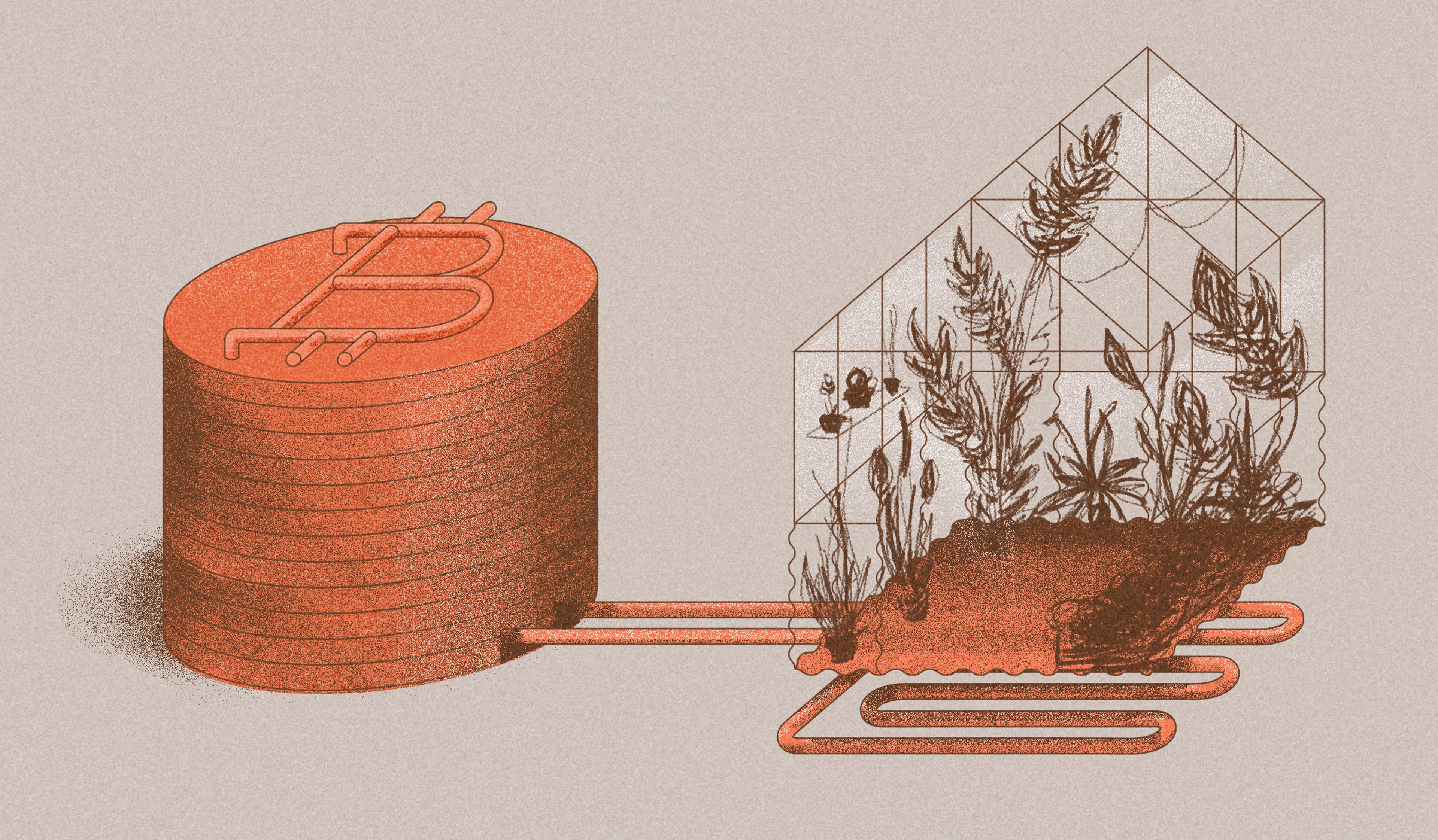
This question is what brought about the current version of Jinkerson’s artificial photosynthesis, or heterotrophic, system. He developed the system in collaboration with Feng Jiao, whose research at Washington University in St. Louis focuses on using renewable electricity to convert CO₂ into useful molecules, and integrating those molecules into biological systems.
“From a purely applied industrial engineering perspective, we care about plants because they make food—so how can we make food more efficiently?”
“In hydroponic or controlled-growth systems, organisms are often supplied with an external carbon source. If that carbon source could instead be produced from CO₂ using renewable electricity, it creates a new artificial photosynthesis pathway,” Jiao said. “Acetate is attractive because it can be produced electrochemically from CO₂ and can also be used by a range of biological systems.”
The key here is that the carbon fixation step happens outside of the plant itself—conserving valuable carbon molecules that are otherwise lost in traditional photosynthesis. Now all they needed was a plant to act as a guinea pig for their new and improved heterotrophic photosynthesis system—one that was small and agriculturally relevant.
Enter the cherry tomato.
Teeny-Tiny Tomato Plants
In particular, it was a chance interaction with a cherry tomato Jinkerson saw in a collaborator’s greenhouse. This tomato was already a dwarf research variety—MicroTom—but this one was extremely small. And, most notably, this tiny plant was producing fruit.
“When I saw these tomatoes, it was like, ‘Oh, these are exactly what I was looking for, this is really unique,’” Jinkerson said.
He explained the ratio of fruit to biomass, or non-edible plant material, is called the harvest index. And this cherry tomato had exactly the harvest index he had been looking for—lots of the product he was interested in, the fruit, and far less leaves and stem.
This tomato’s genes had been modified using CRISPR-Cas9. Jinkerson’s collaborator, and the owner of the inspirational tomato, Martha Orozco-Cardenas, is a researcher at UC Riverside who had been tinkering with a subset of DNA damage repair genes. The harvest index of the plant that caught Jinkerson’s eye was a happy accident—a side-effect of the genes that had been modified.
Jinkerson recognized this side effect held a lot of potential for application in his artificial photosynthesis system to try to help the plant focus even more energy on fruit production. Without needing to worry about making its own food, these plants would be able to redirect energy from making leaves that can capture sunlight, and focus on simply making tomatoes.
SPACE Tomatoes on Earth
SPACE (Small Plants for Space Expeditions) tomatoes are just what their name implies—ideal for growing in small dark spaces on earth, or in outer space. Which may seem a little out-of-this-world, but if you think about it, one of the big challenges to growing food in space is the same as growing it here on Earth—which is, well, space.
Agricultural space on the space station and on Earth is hard to come by, especially as land becomes increasingly more expensive and owned by people who are not using it to produce food.
While SPACE tomatoes are still waiting to board a NASA ship in the next few years, SPACE tomato seeds did make it into a 30-day spaceflight mission last year to test their germination rates, and the results were promising.
“We had very good germination, 23 out of 24 germinated,” Jinkerson said. “And they all germinated in orbit, so that was really great.”
One of the big challenges to growing food in space is the same as growing it here on Earth—which is, well, space.
In addition to their spaceflight debut, SPACE tomatoes and the technology that makes them unique might soon be commercially available. Jinkerson’s long-time mentee, Andre Yeung, started Lux Foods—a company aimed at bringing their artificial photosynthesis system and SPACE tomatoes to the public.
“Food is one of our most fundamental technologies,” Yeung said. “In a way, the abundance of food is not our most important issue now—it’s the abundance of healthy, affordable, good-tasting, and nutritious food.”
The focus of Lux Foods, for now, remains the SPACE tomato and the heterotrophic system for growing food, but Yueng said looking forward he’s excited for the technology to translate to other types of tomatoes, like heirlooms, and to other crops like strawberries.
In space or on earth, this research invites us to completely reconsider how we produce food in a world with more people, more uncertainty, and less space. We’ve always looked to plants for answers—this time those answers may look a bit different.