The biogas industry might have a new customer: data centers.
As you’ve likely heard, the rush to build AI data centers has put a massive strain on the U.S. power grid over the last three years. In 2023, roughly 4.4% of total U.S. electricity usage was attributed to data centers, according to the Lawrence Berkeley National Laboratory. This number could double or triple by 2028.

Many of these centers have opted to use fossil fuels-derived natural gas. Natural gas can be used during power grid outages, which cause major problems for data centers that are connected to the grid (if one or multiple data centers lose power simultaneously, it can lead to a surge in excess electricity use that creates dangerous voltage fluctuations). Natural gas infrastructure is faster to build and modular, meaning it’s easy to add more gas generators after the infrastructure is built. It’s also more reliable than weather-dependent wind and solar energy; data centers can run on natural gas both day and night.
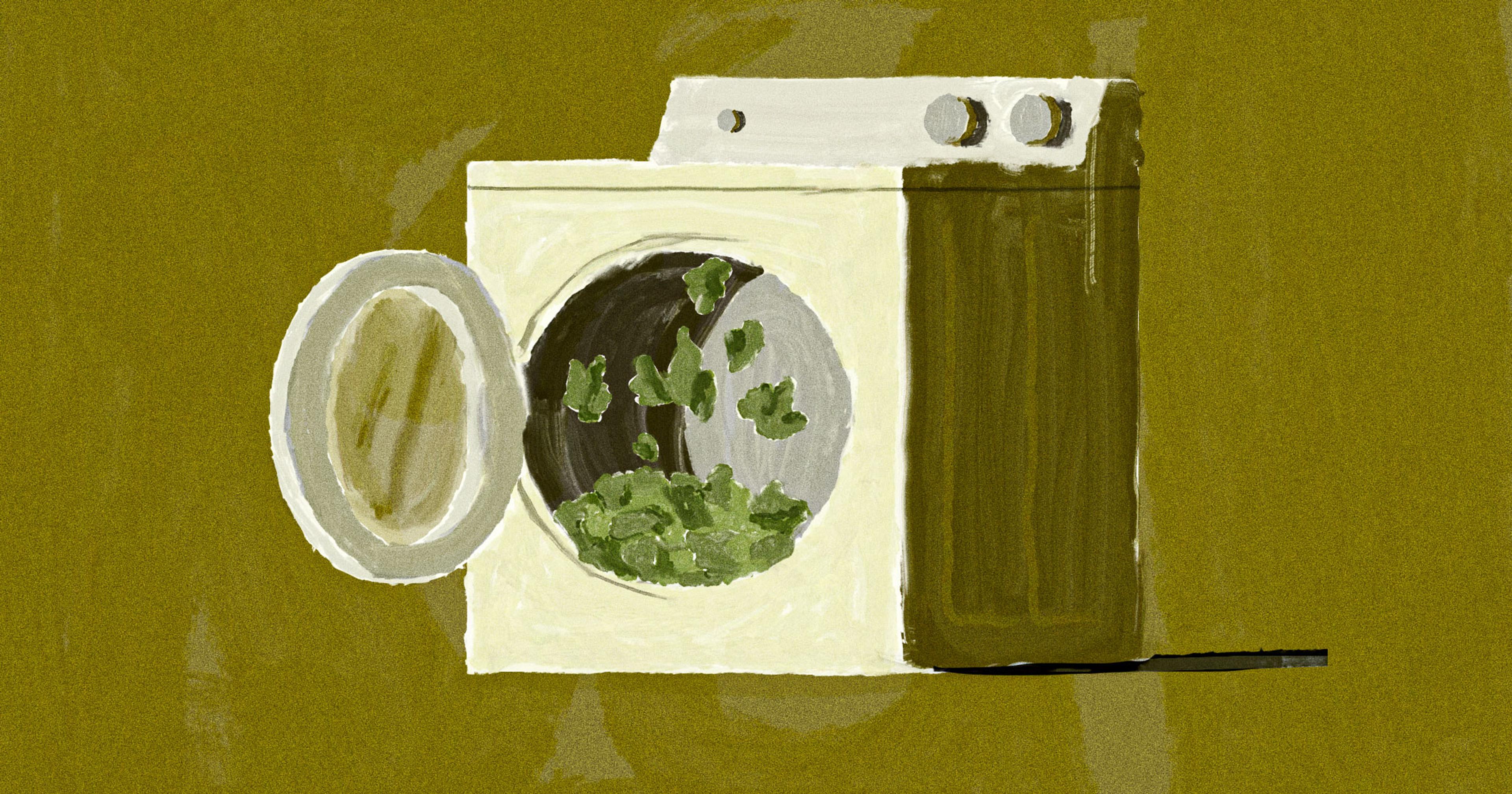
But the climate consequences of this natural gas dependency — especially as data centers increase their power needs — has led some experts to look elsewhere for energy. One option being explored is biogas, a type of renewable energy that uses gases (mainly methane) released from decomposing manure, food waste, and other organic matter.
“Biogas is a renewable fuel, it’s storable, and while it does have a higher price, it can be used when the wind isn’t blowing or sun isn’t shining,” said Alex Marshall, a business development and marketing director at Clarke Energy, which has been working with the company Rehlko (formerly Kohler Energy) to research the biogas potential for data centers. Marshall said biogas could help take a load off the grid, and be an easy transition for data centers already equipped with natural gas infrastructure.
As of 2024, there were 400 manure-based anaerobic digestion plants (the technical term for a biogas facility) in operation, according to the U.S. Environmental Protection Agency. Dairy farms are a significant player in this biogas production.
One anaerobic digestion plant in Watertown, South Dakota, for example, uses 300,000 gallons of manure every day from nearly 10,000 dairy cows to produce biogas. The digestion process breaks down carbohydrates in the manure and produces methane, which is captured, compressed, and moved via pipeline to an energy user.
“Data centers require a lot of energy, a lot of electricity, and they also generate a lot of heat. That’s where I can see some complementary needs.”
Data centers could be a recipient of that energy, biogas experts argue — and a potential partner. That’s because biogas facilities and data centers share a common ingredient: heat.
“Data centers require a lot of energy, a lot of electricity, and they also generate a lot of heat,” said Erin Cortus, a University of Minnesota professor of bioproducts and biosystems engineering. “That’s where I can see some complementary needs.”
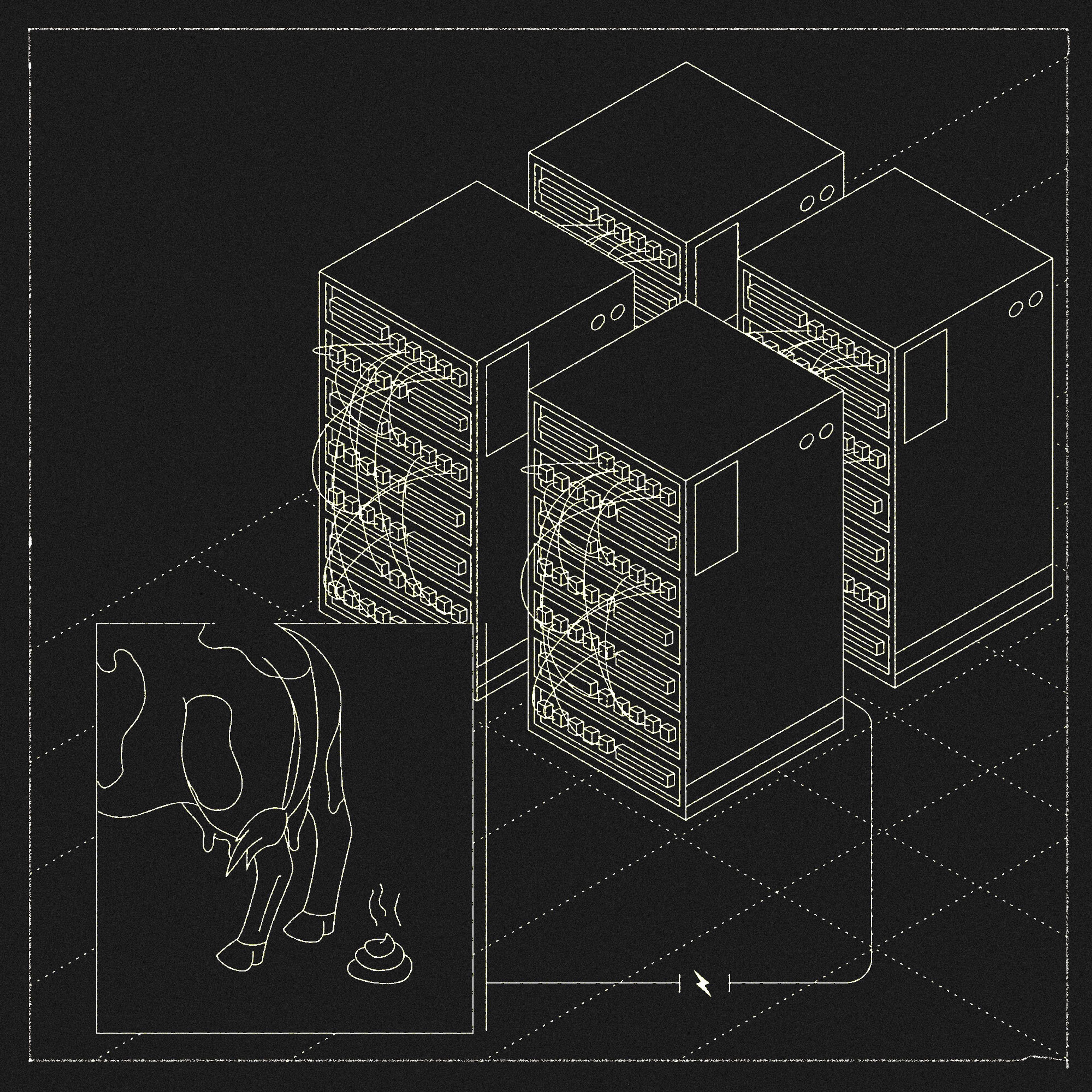
Data centers house large computers that run 24/7, powering energy-intensive artificial intelligence models. The continuous operation of these computers creates excess heat, which is something an anaerobic digestion plant needs in order to speed up the decomposition of manure.
Cortus said a data center’s heat could be transferred to an anaerobic digestion plant using a heat exchanger, which uses water to absorb and transport heat. In a data center, this would mean pulling the facility’s hot air into a radiator that has cool water flowing on one side of it. This water would absorb the heat and be transported to a biogas facility, where it could be used for the anaerobic digestion process. The biogas produced from this process could then power the data center and offset some of its heavy energy usage.
Despite these complementary processes, data centers have not started using biogas, even though many of them are moving into the same regions as dairies and anaerobic digestion plants.
Biogas is expensive compared to more popular renewables like solar and wind that have reached economies of scale.
That could be because biogas is still a relatively overlooked renewable energy source. It is expensive compared to more popular renewables like solar and wind that have reached economies of scale, which means the infrastructure to build them has gotten cheaper. Biogas has not experienced this yet, so the initial investment is steep.
There are also very few federal dollars going to the biogas industry right now — most biogas investments are coming from the private sector. A 2025 report found that biogas faces major hurdles to implementation without political support and legislation.
The biogas industry also faces major critics who say it props up the dairy sector, which is responsible for 1.4% of all U.S. greenhouse gas emissions.
“[The dairies] are not even worried about making money on the milk as long as they’re producing enough manure that they can get paid to generate methane out of it,” said James Kanne, a Minnesota dairy farmer who’s critical of the biogas industry.
Dairies and data centers also have something of a reputational problem: They don’t make for an ideal neighbor. A number of states are considering moratoriums or bans on data center development because of pushback from neighbors worried about issues like water usage and pollution in their backyards. Large-scale dairies (and to create enough biogas, you really do need thousands of cows), can face similar pushback.
“If the data center can be a long-term partner for a digester, then I think that will continue to make digestion more feasible on farms, too.“
“It’s not going to be challenge-free [to implement],” Cortus said. “Both dairies and data centers are still resource-intensive, they still need water, they still need feed.”
But finding an alternative to fossil fuels will likely be necessary as data centers take up more of the United States’ energy demands in the coming years. While it’s unlikely that data centers could be completely powered by biogas — compared to solar and wind, biogas is responsible for just a small fraction of the total renewable energy currently in use — experts say it could play a complementary role in decarbonizing data centers, especially if paired with federal and local government biogas incentives. California is already doing some of this work through its Low Carbon Fuel Standard program and the federal Renewable Fuel Standard program, which uses a cap-and-trade carbon credit model to incentivize companies to lower their climate emissions.
Credit programs like these are what’s motivating companies to build anaerobic digestion plants, but Cortus said data centers could represent a new opportunity for these plants.
“If the data center can be a long-term partner for a digester, then I think that will continue to make digestion more feasible on farms, too,” she said.