How non-farm heirs can navigate the decisions that come with farmland ownership.
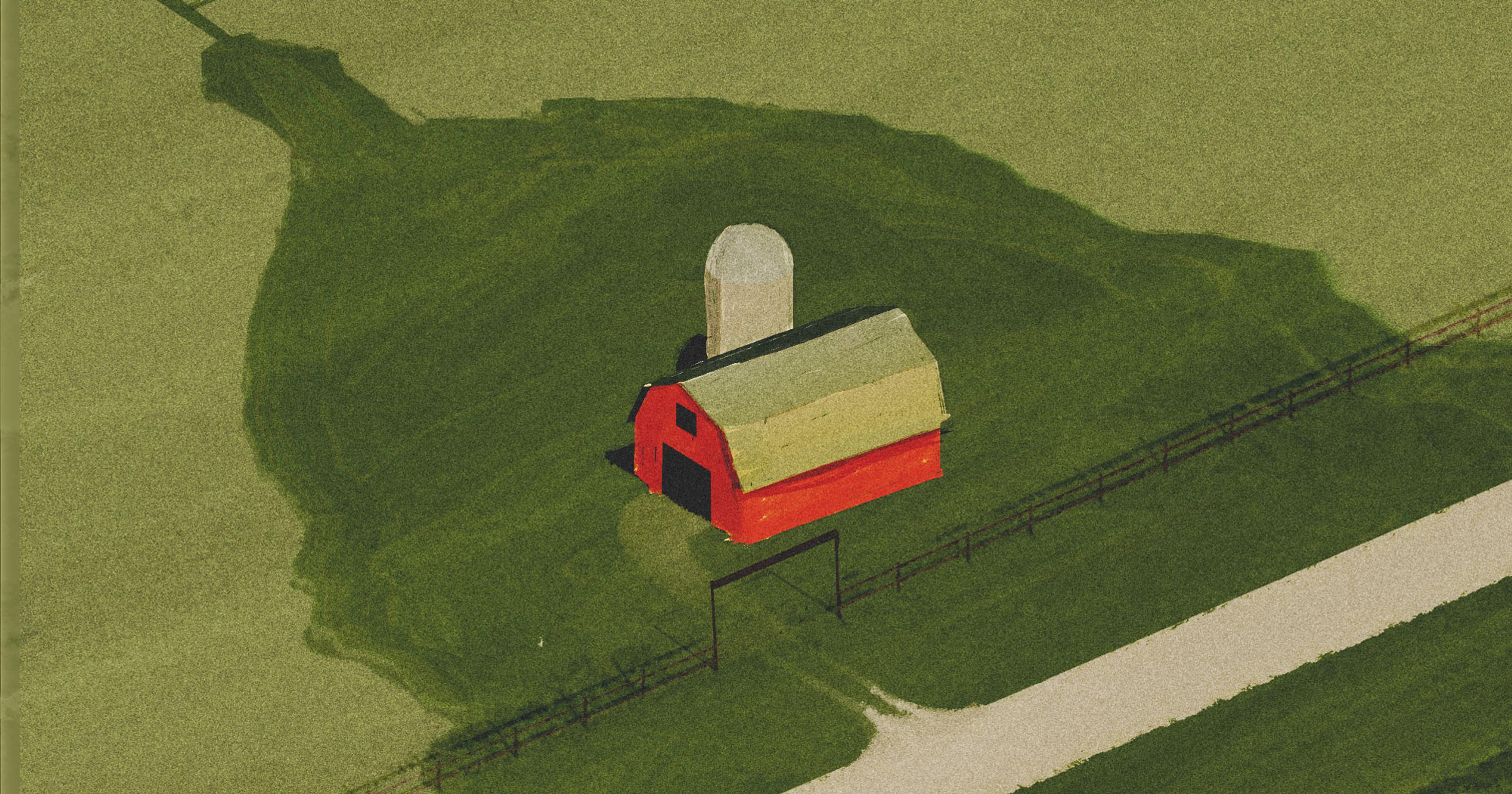
In 1893, Curt Craig’s great, great grandparents purchased 160 acres in Benton County, Indiana, building the farmhouse that still stands today, and cultivating the land that sustained four generations after them. Craig recalls wandering the fencerows as a kid, looking for arrowheads in the ditch with his brother, and spending time with his grandparents just hanging out. And while he knew one day it would be passed along to him, he never realized how complicated inheriting farmland could be—especially when navigating the family dynamics that come along with it.
“My great, great grandparents … raised five boys and two girls on those 160 acres,” said Craig. “Even with all of those kids, my sister and I ended up with the farm.”
Craig isn’t a farmer. He chose an off-farm career in education, which recently culminated in retirement in 2025 as the school superintendent of Rensselaer, Indiana. Nowadays, he has plenty of time to figure out what to do with the inheritance. Because while Craig may have inherited land, he also inherited a major family decision.
“You might think that you get along with your siblings, but whenever it comes to these big decisions like this, things come up and it’s tough,” said Craig. For their family, that meant that Craig and his sister ended up with the 1893 farm and his brother, who is a farmer, inherited another piece of land.
His situation isn’t uncommon. With roughly 40% of American farm and forest land owned by individuals aged 65 and older, and more than 370 million acres expected to change ownership by 2040, according to Land Trust Alliance, who owns the land—and what happens to it—are two of the largest current intergenerational questions without clear answers. That inheritance is about more than who gets which acres. It tests family relationships, competing visions for the land and can force difficult decisions about its future. While selling may seem like the simplest solution, keeping the land—and finding a way for it to continue to serve the family—can create the inheritance’s greatest long-term value.
More Than Land
Keeping a farm can be risky these days, especially with agricultural operations facing unpredictable markets, costs, and regulatory changes. As U.S. farmland values reach record highs, with national average cropland at roughly $6,000 per acre, according to the American Farm Bureau, expertise on how to get all of the moving parts working together can be incredibly valuable.
For Craig, that meant seeking out Johnny Klemme, an experienced farmland mediator and advisor, to help him and his siblings come to a decision that they could all agree upon, especially after witnessing cousins who’d experienced a bit of turmoil trying to navigate a similar inheritance without help.
“Having somebody who understands the farm business to lead you through the process of everything is key,” said Craig, adding that farmland appraisals aren’t like regular real estate transactions. Instead, assessments must be made regarding the structures and buildings, soil quality and productivity, drainage and topography, and location and access.
Klemme has seen firsthand families who work together well—and others who can’t be in the same room. “Because everyone’s in a different stage of life, emotionally, physically with their health and wellbeing, and financially,” said Klemme, author of American Family Farmland: Preserving Values and Creating Wealth. “Some of those heirs have children, and some don’t, and those are factors that come into that decision-making as well.”
“A question I ask families is … what did mom and dad really want for you?”
Family emotions and values often run parallel to financial or practical considerations when it comes to farm inheritance decisions. Klemme sees problems arise when heirs ignore the emotional side of the situation, and focus only on the practical side of whether to keep or sell the farm, especially when none of the heirs are active farmers, nor want to be.
Rather than trying to separate emotion from logic, Klemme counsels families to look beyond the land itself to the values and intentions behind the original inheritance.
“A question I ask families is … what did mom and dad really want for you?” said Klemme. “Parents may have wanted the farm to remain in the family, but they may also have been trying to provide their children with security, stability and opportunity. Those values can endure even when circumstances change, and honoring a family legacy doesn’t necessarily mean making the same decisions in every generation.”
The goal isn’t necessarily to preserve the farm at all costs, according to Klemme, but to understand what the farm was originally meant to preserve—family well-being, freedom, and opportunity—and make decisions that honor those values. Klemme recommends assembling a team of trusted professionals to help navigate the complexities of farmland ownership and transition. This often includes a farmland manager, a CPA, and an attorney with farmland experience.
The Fine Print
How someone inherits farmland determines the tax implications, according to John Schwarz, an attorney specializing in agricultural law. For most, if it’s a regular inheritance or gift, there’s no tax required at the time of inheritance. However, he says it’s important to realize that the tax basis resets to the fair market value on the day the previous owner died. If the heir decides to sell it, they will be required to pay capital gains tax on any increase in value that happened after they inherited the land.
His biggest piece of advice? Don’t be quick to sell.
“A lot of times people inherit ground, they see how much the ground’s worth, and then they jump, and say I want to sell it,” said Schwarz, who raises corn, wheat, and soybeans on his family farm in Cass County, Indiana. “But I think owning the farm is something special.”
Instead, he recommends figuring out the goals surrounding that inheritance. Is it to generate income? Keep the family legacy? Increase conservation or stewardship in the area? Then determine the next steps, which he said should definitely include reevaluating who’s currently farming the land.
His biggest piece of advice? Don’t be quick to sell.
“Just because your uncle had Bob Smith farming the land for 20 years, you need to decide if he’s still the best fit for the new owner,” said Schwarz, who advises checking into how they’re maintaining the land. “Are they fertilizing the way they should be? Are they fixing the tiles? What types of things are they doing?”
“To be frank,” he added, “I’ve seen in some instances where the prior owner was kind of getting taken advantage of. Then the new owner takes over, and the tenant farmer wants business as usual, which doesn’t always work.”
Leasing inherited farmland to interested hunters is also a way to increase cash-flow, according to Schwarz.
Craig and his sister plan to restore the original farmhouse and rent it out. They’re also working with Klemme to enroll some of the acreage into conservation programs. Federal, state, and private timber and agroforestry programs like the U.S. Department of Agriculture’s (USDA) Conservation Reserve Program or Environmental Quality Incentives Program and conservation improvement programs like the Farmable Wetlands Program or Conservation Reserve Enhancement Program allow heirs to enroll sensitive or marginal agricultural land in exchange for tax breaks, cost-sharing and even annual income, depending on the acreage enrolled.
Land With a Legacy
Agricultural conservation easements, which are designed to keep farmland as farmland, are another option. Basically, they act as a voluntary legal agreement between a landowner and a qualified organization like American Farmland Trust (AFT) that permanently limits non-farm development to keep the land available for agriculture, according to Jerry Cosgrove, farm legacy director and senior advisor at AFT.
“The easement is drafted to promote and encourage agriculture,” said Cosgrove. “It’s a descriptive term that basically makes it clear that we’re protecting land for agriculture and not from it.”
These agreements can lower estate taxes when passing farms to heirs, unlock equity without selling the land and provide operational continuity while also establishing environmental and conservation guardrails that keep soil healthy and prevent suburban sprawl. In other words, enrolling land in this type of agreement can also keep it safe from controversial use like data centers.
As Craig and his sister continue the process of navigating their farmland inheritance and the legacy that comes with it, there will be steps along the way that won’t be easy like figuring out what to do with furniture and family photos that still hang on the walls of the farmhouse. And there’s always risk involved when owning a farm.
“But the nice thing about keeping the farm and having that farm ground is that I know it’s going to be there,” said Craig. “You can have other investments, but the farm is really a stability that’s going to be there, that’s going to generate some income. And, if you take care of it and don’t get too crazy, you can pass it down to future generations.”