Now entering its fourth decade, a Kansas program that pays landowners to allow public hunting access faces challenges from outfitters who pay more for exclusivity.
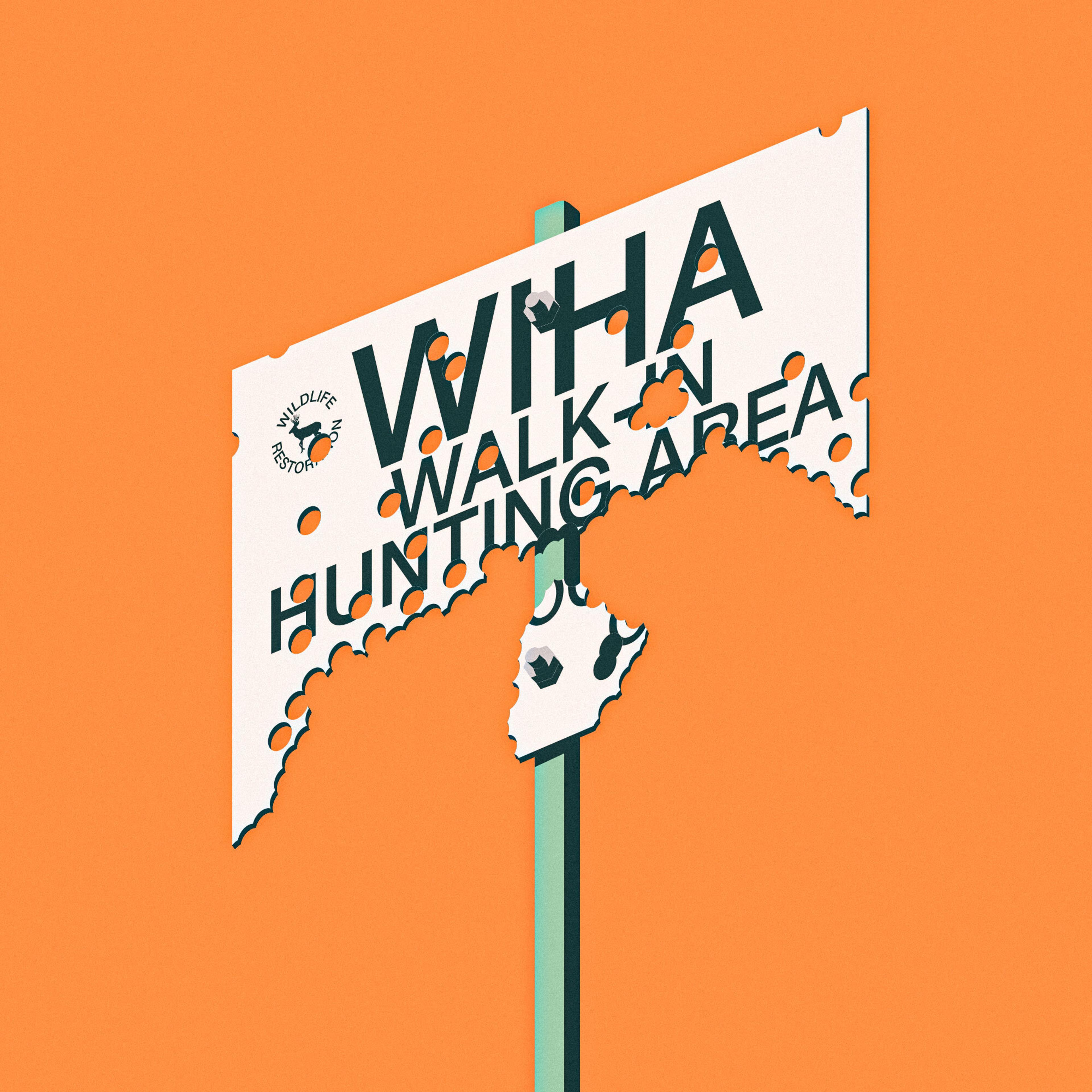
The Walk-In Hunting Access program in Kansas is supposed to be a win-win-win.

It’s a win for hunters, who get more land access in the state with the third lowest ratio of public to private land in the nation. It’s a win for landowners, who get another opportunity to make money off their acreage. They can also get funding for habitat improvement projects, which gives the third win to wildlife conservation.
This type of program, one in which the state pays landowners a per-acre rate based on quality and location of land, is so popular that more than half of the U.S. has some version of the same thing, mostly in states located west of the Mississippi River. When the Kansas Department of Wildlife and Parks launched a pilot of WIHA around Wichita in 1995, it was so successful that they took the program statewide the following year.
But cultural and economic ties between hunters and landowners across the Midwest have shifted, causing enrollment in certain voluntary public access programs to plateau — or, in the case of Kansas WIHA, to shrink.
Rather than sharing WIHA-enrolled lands with other hunters, some have begun buying exclusive access to private lands directly from landowners. They’ll pay a premium to have the place to themselves, offering rates that many landowners aren’t in a position to turn down, just to avoid increased crowding on WIHA lands. Many will actually poach willing sellers straight from the Kansas Hunt Atlas, an annual map of WIHA-enrolled lands.
“The WIHA properties that pop up within two hours of urban areas effectively become billboards saying ‘This property is for lease,’” said Marshal Loftus, a lifelong Kansas hunter and the chair of the Kansas Chapter of Backcountry Hunters and Anglers.
Hunters in Kansas generally agree that landowners deserve to make as much money off their land as possible.
Hunters in Kansas generally agree that landowners deserve to make as much money off their land as possible, especially as turning a profit in agriculture becomes increasingly challenging.
But when a farmer or rancher unenrolls a piece of land from WIHA and leases it privately instead, the door to collaborative wildlife habitat work with KDWP and partnering organizations closes. Public hunters also argue it delivers a blow to an already deteriorating hunting heritage in Kansas, one that once revolved around trust and generosity but has been commodified over time.
Closing Gates
In 2016, Kansas became one of 24 states to award residents a constitutional right to hunt and fish. But the question of who has the right to hunt, and where, hasn’t always been so simple.
Throughout the 19th century, Plains tribes were stripped of their ancestral hunting and fishing grounds as settlers established a new system of land ownership.
Today, Kansans who are enrolled members of any federally recognized tribe are eligible for free, permanent hunting, fishing, and furharvesting licenses from KDWP. But where to hunt has historically posed a significant barrier for anyone without access to land, enrolled tribal member or not. Furthering this problem, the second half of the 20th century saw monumental consolidation in agricultural land ownership across the Midwest. In 1950, Kansas boasted 135,000 farm operations, according to the USDA’s National Agriculture Statistics Service. By 1970, that number had condensed to 87,000. By 2025, it was 54,800.
Meanwhile, the size of the average farm has only grown. Bigger farms and ranches mean fewer farmers and ranchers, and fewer doors to knock for hunting permissions.
“You just went hunting,” Jeff Hancock, an avid upland bird hunter and local access advocate, recalled of earlier days. “You asked permission, but nobody really cared where you hunted.”
“That’s the number one thing hunters need: a place to go.”
Hancock grew up on a farm in Sedgwick County that grew peaches, soybeans, corn, and wheat. While he did a little hunting on his own farm, plus other farmland his family owned in western Kansas, the bulk of his days afield were spent on other people’s land.
“The greatest amount of hunting I did was on private land secured through relationships my grandfather established in different parts of Kansas,” Hancock, now 51, said. “But as he aged and stopped hunting, that kind of left me on my own. I nurtured some of those relationships over time, but ownership changed, ownership philosophies changed, and those opportunities dwindled down to almost nothing.”
Wes Sowards, the WIHA coordinator and wildlife division assistant director for KDWP, confirms that Hancock’s experience was not unique. By the time KDWP launched the pilot in 1995, hunters were rapidly losing access to private lands, especially access that they originally secured through handshake deals, familial ties, and friendships with neighbors.
“In the 70s, 80s, and 90s, it became pretty evident that gates were starting to close,” Sowards said. “It was really imperative that we attempted to get our hunters more access. That’s the number one thing hunters need: a place to go.”
Funding for Access
The 1995 pilot was so successful that KDWP took the program statewide the following year. They paid the few participating landowners with revenue generated by the sale of hunting and fishing licenses, combined with funding administered by the U.S. Fish and Wildlife Service from excise taxes on hunting gear, firearms, and ammunition. (These funds are more commonly known as Pittman-Robertson dollars, nicknamed for legislation passed in 1937 establishing the federal Wildlife Restoration Fund.)
The program first broke 1,000,000 acres in 2004. Enrollment peaked at 1,236,280 acres in 2018. But it has decreased nearly every year since, according to data kept by KDWP. The 2026 enrollment tally is down 17 percent from the 2018 high point, barely over the 1,000,000-acre mark.
While that might still seem like a lot of land, it amounts to less than 2 percent of the state’s total area. Counting federal and state public lands, just over 3 percent of Kansas will be accessible to the 8.5 percent of the population that hunts this year. That doesn’t take into consideration the pressure from nonresident hunters who consider Kansas a top destination for white-tailed deer, upland birds, and waterfowl.
If landowners want to limit the number of hunters on their property, they can enroll in the “interactive” WIHA, or iWIHA, a newer offering that runs a reservation system through a smartphone app. The hunting opportunities are still open to the public, but on a signup basis — an option that’s also attractive to hunters who don’t want to pay for a private lease but still want a less crowded experience.
“You have access to a quality property and you know there won’t be a bunch of other people out there.”
“You have access to a quality property and you know there won’t be a bunch of other people out there,” said Loftus. “It’s nice to know the surprises are limited. You aren’t going to sit in your tree stand only to watch a group of ten guys walk through the area bird hunting.”
When they sign with KDWP, landowners receive an up-front payment for a year-long contract; when that year is up, they can choose to renew or not, and they can back out of the contract at any time. Depending on the quality and location of the wildlife habitat, KDWP pays between $9 to $18 per acre for both WIHA and iWIHA lands. But private hunters and outfitters regularly outdo those bids.
So why not just increase KDWP’s per-acre rate? According to Sowards, it would trigger runaway price competition. No matter how much KDWP could afford to pay for public access, some hunter with deep pockets would almost certainly cough up more for a private lease.
“It’s a pretty common occurrence in Kansas for recreational hunting property realtors to use WIHA as the basis for setting their rates,” said Sowards. “They’ll find out what we’re paying and then lease for more than that. We don’t want to outcompete them, because they’ll just come in with more. We’re trying to walk that line.”
Why WIHA Matters
Mike Bellar is a third-generation farmer and rancher in southeastern Kansas. While he isn’t sure exactly when he first enrolled land in WIHA, he guesses he’s been a cooperator for close to 15 years. At first, enrollment meant bringing a different type of hunter to the area than the ones he was used to seeing.
“We had a lot of hunters shooting deer from the road. I didn’t particularly care for it,” Bellar recalled. But people who opt to hunt through the WIHA system are more likely to hunt respectfully, he said, and to take does — keeping the exploding deer population in check.
“They don’t need to have that big trophy buck,” he said. “It’s helped me a lot in keeping the deer population down.”
Bellar also feels that WIHA hunters appreciate the opportunity to hunt his property. He said he can hardly recall any negative encounters or poor behavior, which helps explain why the majority of his 4,000 acres are enrolled in WIHA (aside from a small bit of land next to his house that he leases directly to a few archers, to avoid bullets whizzing by his windows).
He’s especially glad to have the liability protection afforded to him as a WIHA cooperator—part of a state law that Sowards says is a big perk for landowners.
“A lot of guides and outfitters don’t have equitable liability insurance resources,” Sowards pointed out. “Some of them have none. But Kansas’s Recreational Use statute says if you are enrolled in WIHA and not charging for access, you are covered for any normal issues that would happen on a hunt. You don’t have to prove ‘duty of care,’ or go out and clear your land of anything that might hurt somebody, as long as they’re using the land to hunt.”
Kansas game wardens also patrol WIHA lands, which is intended to offer peace of mind for landowners who can’t monitor hunter behavior themselves. Beyond designated parking areas, only foot traffic is allowed, which prevents hunters from tearing up land with their trucks. These are especially big selling points as relationships between hunters and landowners have frayed with time.
“We trust people a lot less than we used to. I think landowners, and some with good reason, are less trusting of the care that hunters will use when on their land.“
“The culture has changed,” said Lauren Sill, a lifelong hunter, former Kansas wildlife commissioner, and board member for Kansas Backcountry Hunters and Anglers. “We trust people a lot less than we used to. I think landowners, and some with good reason, are less trusting of the care that hunters will use when on their land. Whether that’s tearing up fences, driving through fields they shouldn’t be driving through, leaving trash. There is some degradation in that trust.”
As for conservation-minded landowners who prioritize stewardship, a major perk of WIHA is the money it unlocks for wildlife habitat projects. Sowards notes a heavy enrollment overlap between WIHA and the USDA’s Conservation Reserve Program. KDWP can spend state funds on habitat improvement efforts like planting native grasses and forbs, managing brush, and conducting prescribed burns.
The agency can also access federal dollars through the USDA’s Natural Resource Conservation Service and partnerships with conservation nonprofits like Pheasants Forever and Ducks Unlimited — all wildlife-friendly options for lands that have already been taken out of production anyway.
And then there’s the intangible reason to enroll in WIHA, said Sowards.
“A lot of our landowners really just believe in the Kansas hunting heritage,” he said. “They understand and cherish what hunters bring to their rural economies. I hear from several who care about the public hunter and the opportunities they have. I don’t think our payment gets a million acres if that weren’t the case.”