
Salmon fishermen in Bristol Bay are seeking alternatives to the massive processors that have long controlled their paychecks, attempting to build a more lucrative, conscientious supply chain. It won’t be easy.
This story was produced in partnership with the Food & Environment Reporting Network, an independent, nonprofit news organization, with funding from the Pulitzer Center.
Nathan Hill pushes his skiff off from the shore as the Alaskan dawn breaks through a dense bank of clouds. It’s high tide at the mouth of the Naknek River, in the northeast arm of Bristol Bay, home to the world’s largest salmon run. That means it’s time to fish.

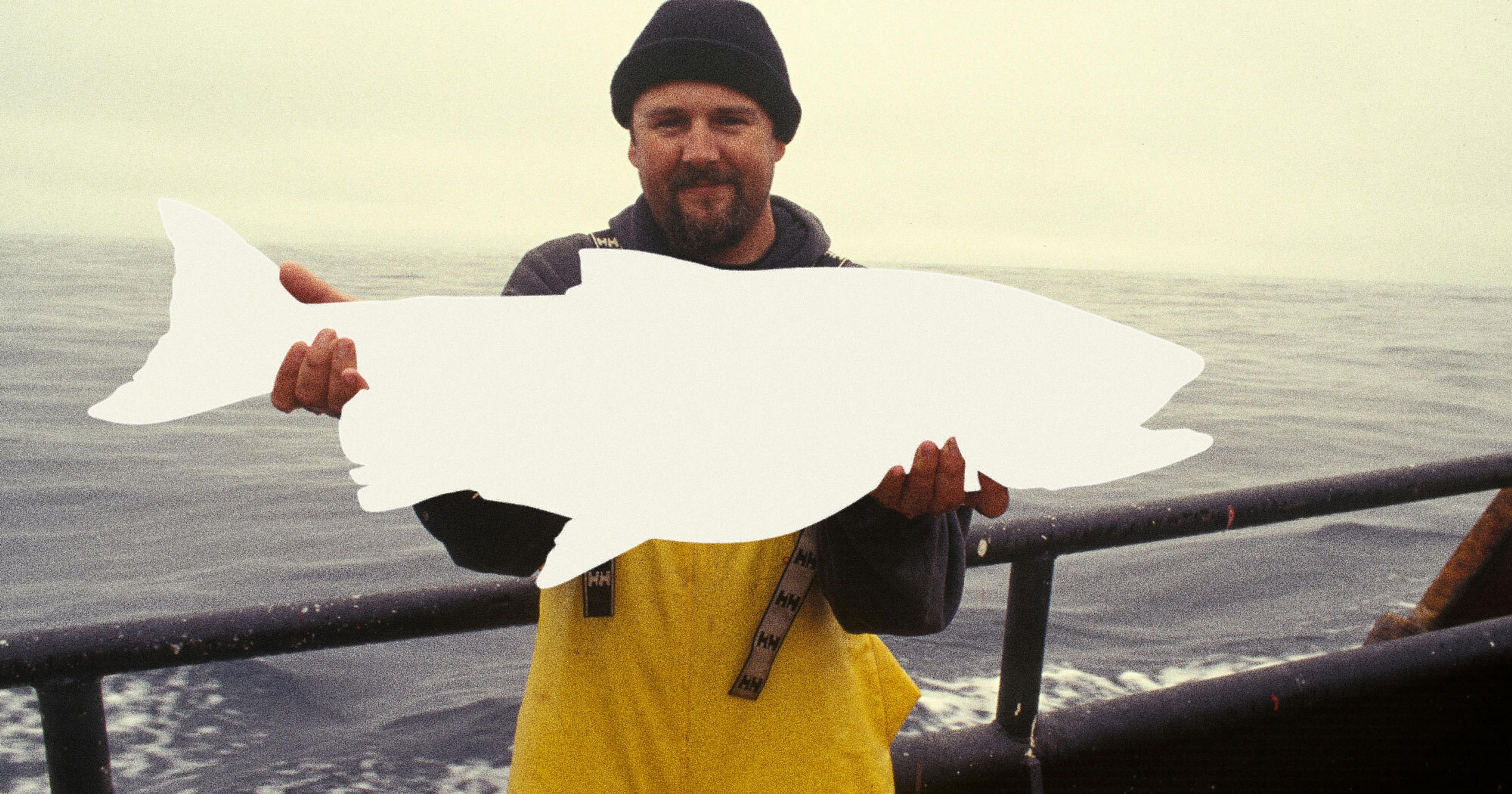
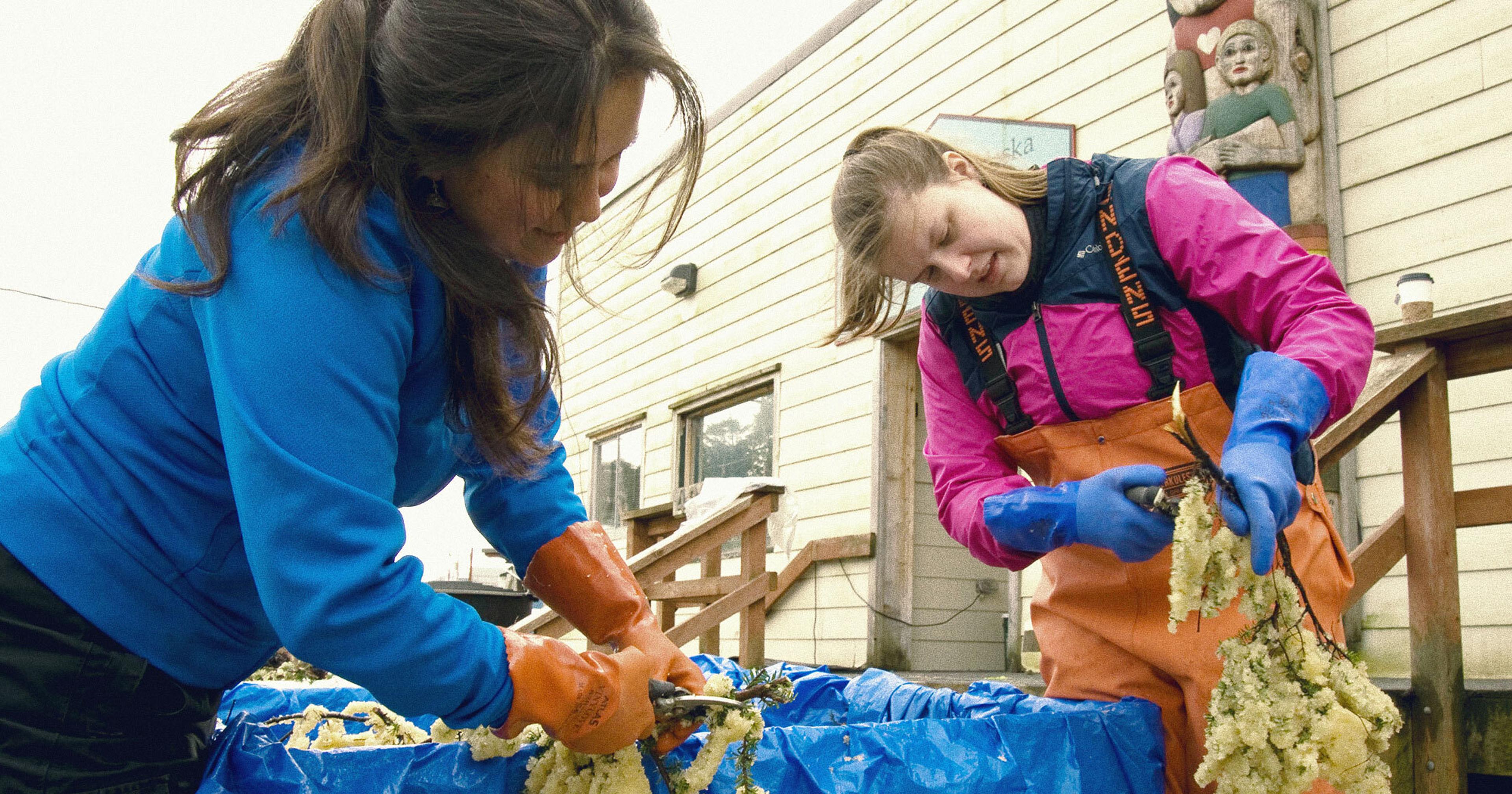
Fishermen got word the night before that enough sockeye had made it through to their spawning grounds, up the rivers that feed into the Bay, to allow state officials to open a window for harvest on this early July day. Hill and his three crew members arrived at the twilit beach hours ago to set their net, which stretches 100 yards out into the calm water of the Bay from an anchor on shore. By now, it’s full of sockeye.
Hill runs the skiff to the end of the net and the crew hoists the line and rests it atop the bow. Light rain falls as they begin pulling the boat back toward shore with a series of sturdy yanks on the line. With each tug, blue-backed, silver-flanked sockeyes spill from the net into the boat.
After working for years with a smaller skiff, Hill, 53, built this one with space for four crew members and eight compartments to hold fish; it’s roomy enough to prevent the salmon from being crushed, and for the crew to work quickly without cutting corners. Everything is designed to keep the fish as pristine as possible. The crew plucks salmon from the net and cuts their gills with a flick of the finger, bleeding them out to avoid degradation of the flesh. The fish are then placed into heavy-duty mesh bags filled with brisk Bay water for transport back to shore, where they are promptly put on ice.
“We’re kind of snobby about our salmon,” one of Hill’s crew says.
While global salmon populations decline, due to overfishing and the effects of climate change, Bristol Bay’s month-long sockeye run has held steady, making it one of the world’s last reliable salmon fisheries. Warming waters may even be contributing to larger runs by extending growing seasons, biologists have suggested. In 2022 the run peaked at 79 million fish, 60 million of which were harvested.
This year’s catch is more typical, roughly 30 million fish, nearly all of which will end up at an industrial processor controlled by one of three companies that dominate the fishery, after a recent wave of consolidation: Seattle-based Trident Seafoods, with 9,000 employees and dozens of facilities around the world; Canadian Fishing Company, or Canfisco, a regional force that’s part of the global conglomerate Jim Pattison Group; and Silver Bay Seafoods, an upstart founded in 2007 that has quickly risen to the top of the industry. Although no data on Silver Bay’s market share is publicly available, fishermen and industry observers say it now handles well over half the bay’s salmon, provoking concerns about the consequences of dwindling competition.
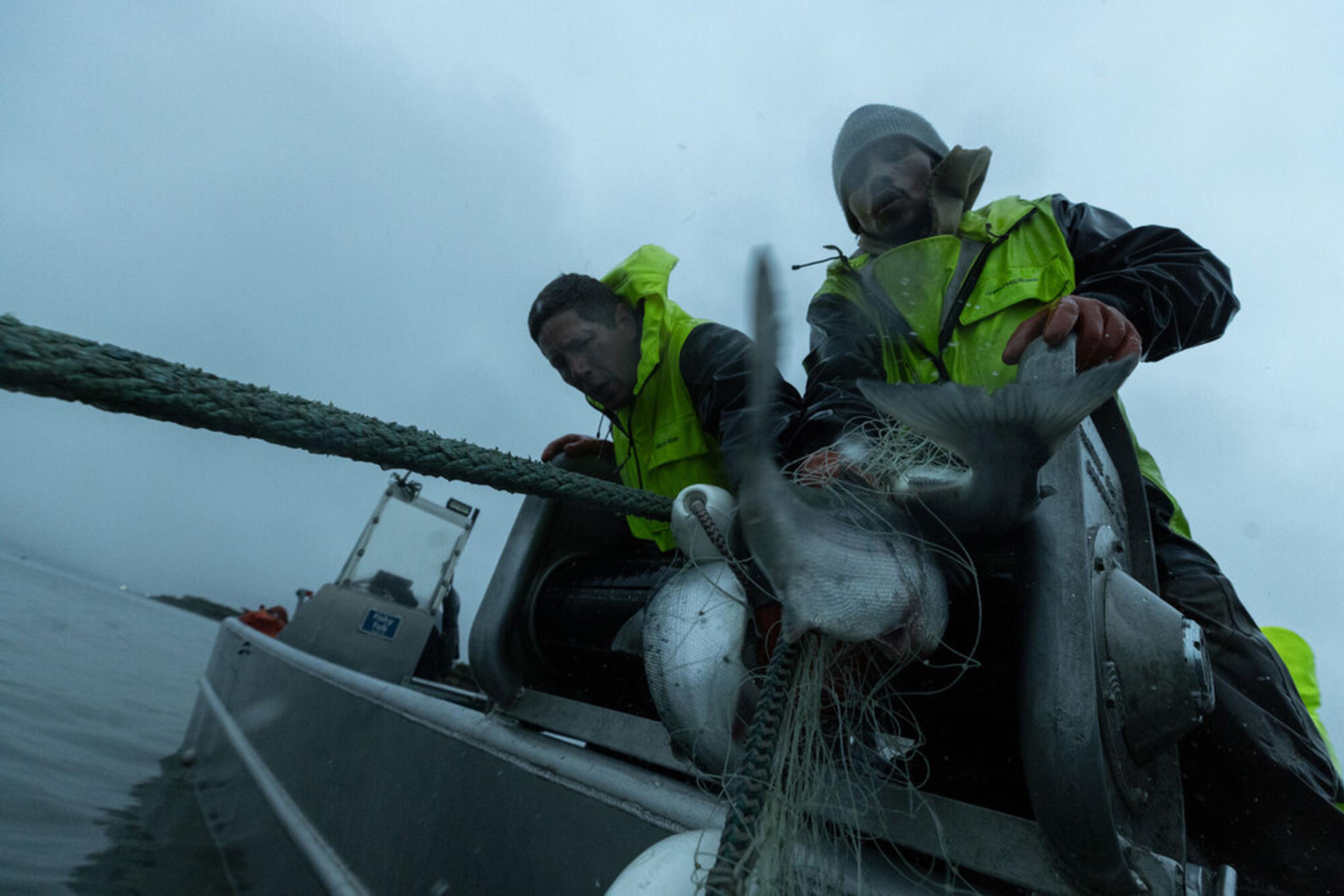
Members of Nathan Hill's crew pull sockeye salmon off their net outside Naknek.
A decade or so ago, Bristol Bay and the rivers that feed it were home to 10 or more large processing companies, along with a number of midsize competitors. Fishermen rattle off their names like a list of fallen friends: Leader Creek, E&E, Ocean Beauty, Icicle, Peter Pan. Some still operate under their old banners but are owned by one of the three major processors, all of which declined to comment for this story.
The processors set the price fishermen receive for their catch, and in Bristol Bay those prices have hardly budged since the 1980s, when a voracious Japanese market briefly pushed them past $2 per pound—still a high-water mark nearly four decades later, despite nearly 200% inflation in the intervening years. Meanwhile, fishermen have seen their pay halved from one summer to the next. The 2022 boom, for example, led to a glut of sockeye on the market that cratered the base price from $1.15 a pound in 2022 to just 50 cents in 2023.
Another round of consolidation followed the 2022 glut. Peter Pan shuttered in 2024 and sold several of its plants to Silver Bay. Last year, Silver Bay bought OBI Seafoods, a processor with facilities statewide that was itself formed in a 2020 merger between Ocean Beauty and Icicle. And just before this season, Silver Bay effectively took over a nascent competitor, Northline Seafoods.
Fishermen say the dearth of competition leaves them with fewer options to leverage for better pay and more operational support from processors. The latest round of consolidation has aggravated longstanding frustration among the fishing fleet, whose members have previously staged strikes over low prices and twice brought antitrust suits alleging price-fixing. Juries in both 1981 and 2003 sided with the processors after months-long trials in which the defense argued that market forces, rather than collusion, were responsible for the lower prices paid to fishermen.
Consolidation has renewed interest in small-scale processors and direct-to-consumer sales, alternatives that allow fishermen to break free from the commodity market and claw back a bit of control. “If you get away from the big corporate model,” Hill says, “it really lends itself to people being more equitably treated.”
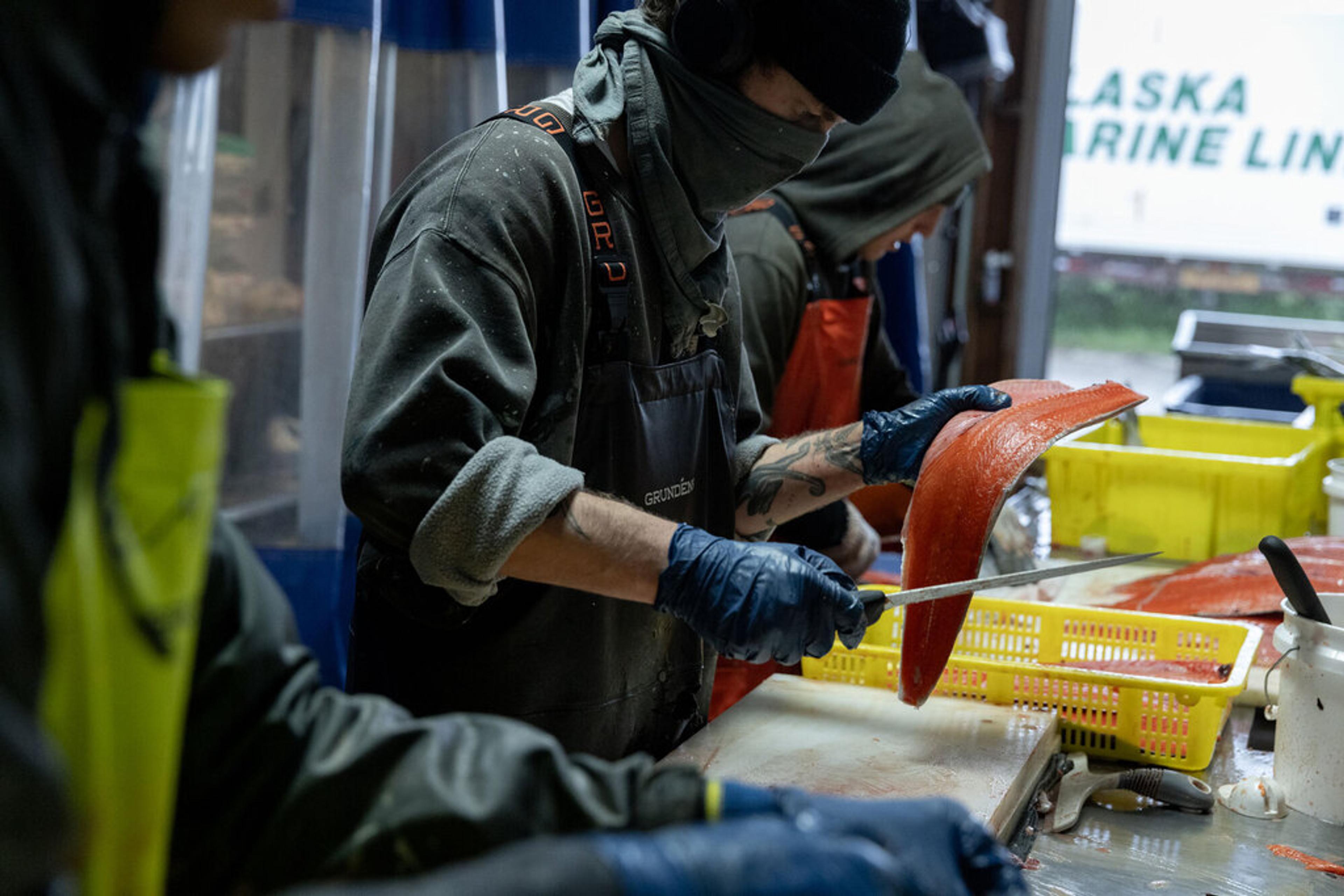
Workers at Kvichak Fish Co., a small-scale processor in Naknek.
For as long as he can remember, Hill has been migrating to Naknek each summer from Kokhanok, an Alaska Native village farther up the peninsula where he is president of the local tribal council. He wants fishers like him to be paid well for their vital part in a statewide seafood industry worth more than $5 billion annually.
But for Hill and many others, the salmon are more than income. They have been central to life here for thousands of years—not just a food source but a piece of the social and cultural fabric. It’s important to him that they are treated with respect. He and his crew take pains to kill and bleed the fish quickly, which minimizes their suffering and helps preserve their catch at its best.
Meanwhile the commodity processors “do business in pounds of protein,” he says, regardless of how the fish have been handled. Rather than delivering to the big guys, Hill is sending this morning’s catch to Kvichak Fish Company, a small operation that sells straight to consumers in the Lower 48, and one of several emerging alternatives that are reliably offering Bristol Bay’s fishermen better pay, a reward for ensuring their catch is well-treated, and a closer relationship to the people who eat what they catch.
***
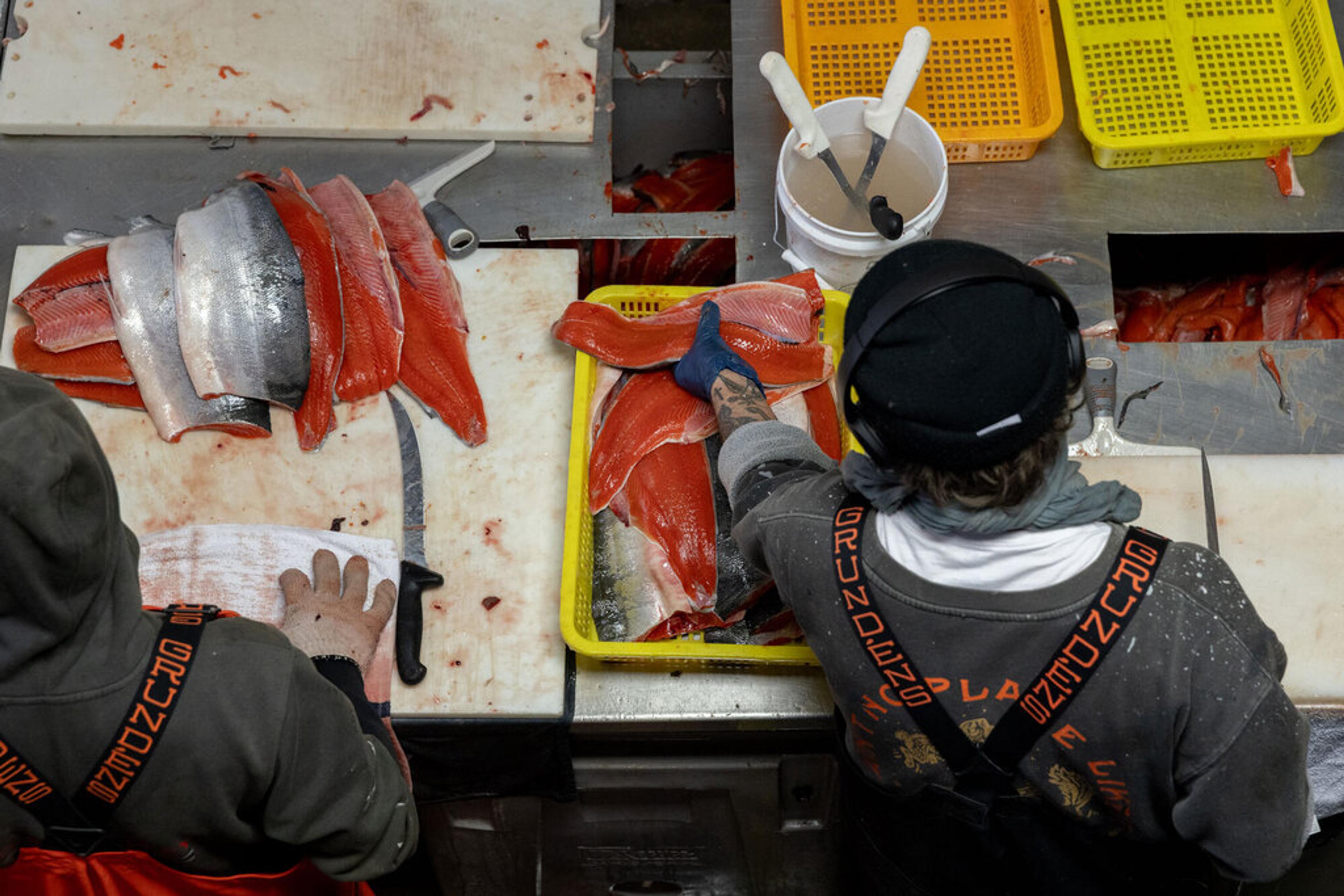
Six at a time, salmon emerge from an icy slurry and land with a thump on a white plastic cutting board. They traveled hundreds or thousands of miles from the open ocean in an effort to reach their natal waters to reproduce, but today their journey down the processing line at Kvichak Fish will cover just a few dozen feet.
A speaker blasts Beastie Boys as a worker removes the heads and guts. Next, a quick power wash, inside and out, before the fish are filleted, vacuum sealed and frozen. From slurry to freezer in a matter of minutes.
At the center of the line is Amanda Wlaysewski, stoic in blue gloves and a hairnet, lost in thought as she fillets the rich coral flesh. Kvichak Fish, named for a nearby river, is her operation. She launched it in 2012 after spending a season in Homer, Alaska, selling direct-to-consumer scallops, where she saw the benefits of bypassing the middle man.
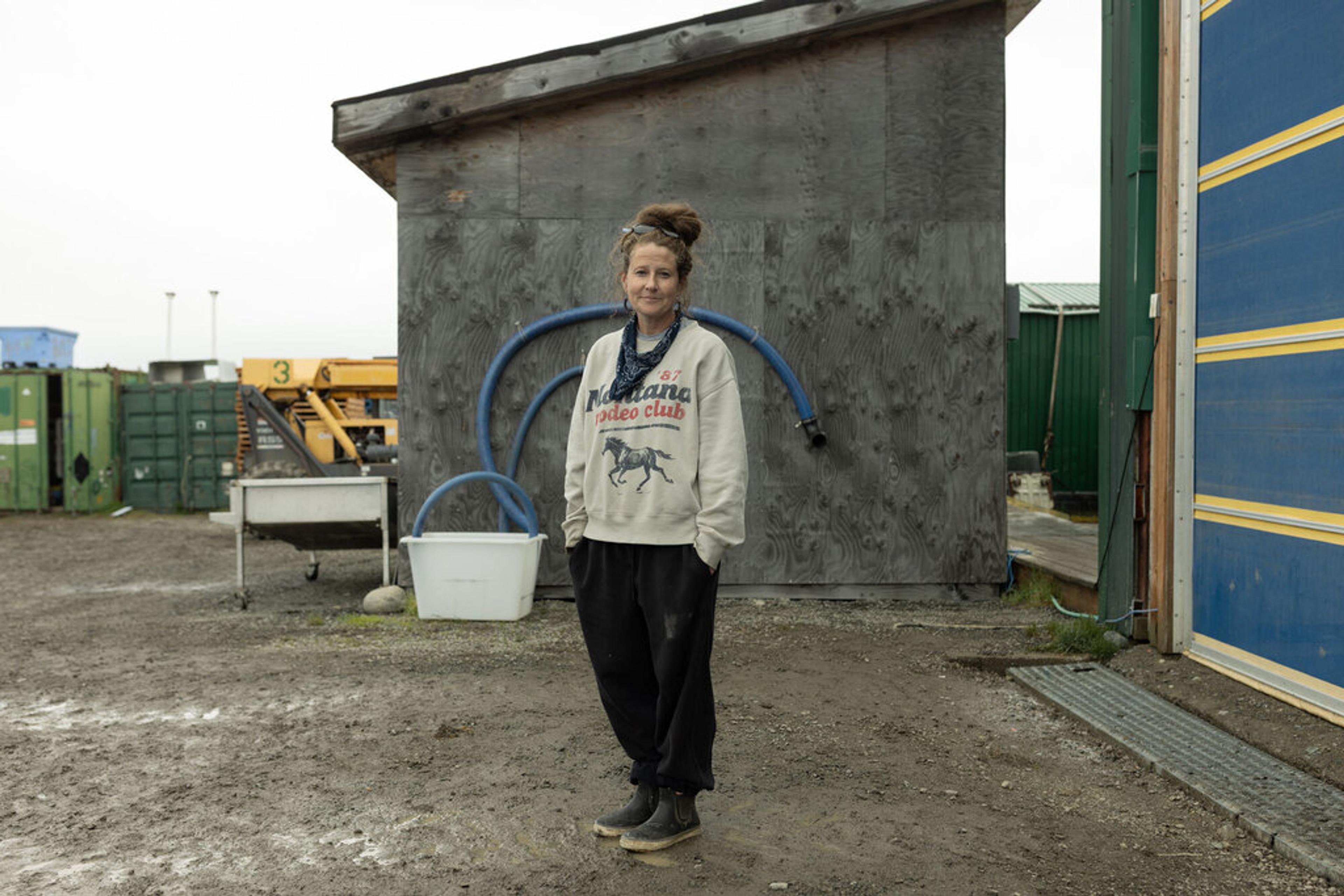
Amanda Wlaysewski fished in Bristol Bay and worked in canneries before founding Kvichak Fish Co.
After finishing high school in Montana, Wlaysewski started coming to Naknek during summer breaks while studying anthropology in college. She worked in the canneries that have brought seasonal labor to the tiny fishing village for more than a century, pulling bones and other errant parts from open cans as they streamed past on a conveyor belt. Eventually, she moved on to heading and gutting and other roles, but something always felt off. In the canneries, salmon “barely even registered as food,” she says. There was no sense of the consumer on the other end.
Wlaysewski started Kvichak Fish with a vision of something different: a processor working at a smaller scale that could restore that relationship by sending fishermen home with their own salmon. They could then sell it directly to people in their communities and recover some of the value normally retained by processors, wholesalers, and grocers. She hung signs around town, hoping fishermen would take a chance on bringing their salmon to someone new. She was surprised when they did.
Wlaysewski’s facility is situated on a scrubby patch of land midway between Naknek and neighboring King Salmon (combined population: about 800, outside of fishing season). It’s dotted with shipping containers repurposed as housing and a kitchen for her 16-person crew. The plant eschews the machinery, mechanization, and sprawling shoreside campuses of the major processors in favor of something simpler: tables, cutting boards, and knives. Her young son plays upstairs while she fillets.
Today’s order is just under 6,000 pounds, but the first days of July are only the beginning. When the rivers are braided with sockeye and fishermen start going out twice daily with the tides, the shifts will lengthen. By the end of the month-long harvest, she and her team will process around a quarter-million pounds of fish, either cut into fillets or headed-and-gutted. Some will head home with Wlaysewski to fill pre-orders from 400 families in Montana, Idaho, and Oregon; some will go back to the people who caught them so they can sell the fish where they live. The better price—a base of $2 per pound, 25 percent above Silver Bay’s preseason price for chilled and bled fish—combined with anything they take home to sell, provides a financial buffer against the ebb and flow of the commodity market.
(Late in the season, Silver Bay raised its price to $2, leading Trident to follow suit. The spike came against the backdrop of a much smaller harvest than recent averages in Bristol Bay, and of declining harvests throughout Alaska and Russia that have reduced supply to the global market. It also reflected Silver Bay’s attempt to secure yet more market share by pushing its competition on price, according to sources in the fishery. “Fishermen are excited but wary,” set-netter David Nicol says, adding that many expect prices to sink much lower next season.)
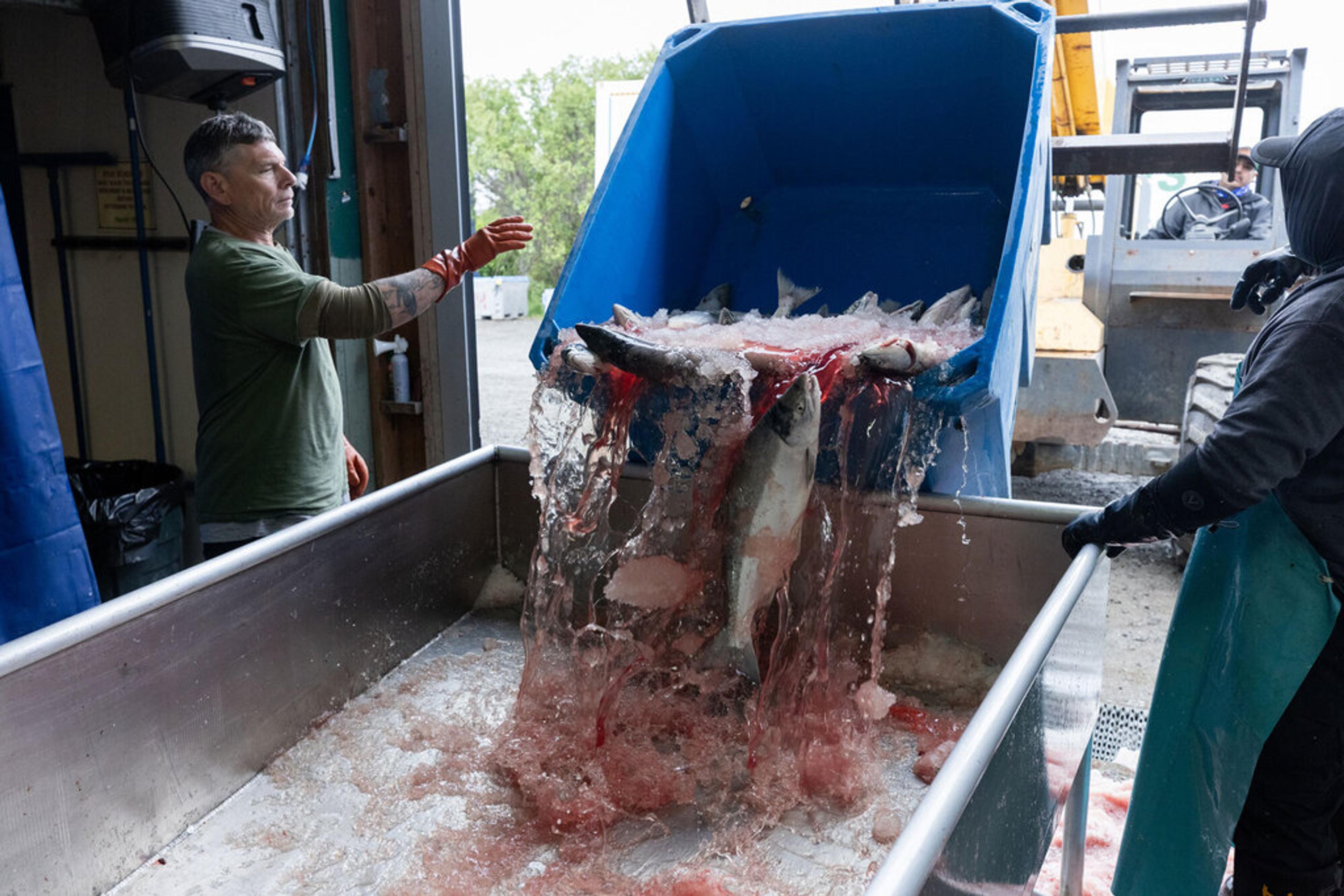
Unloading a fresh catch at Kvichak Fish Co.
In a massive fishery operating at a global scale, what Kvichak can handle is just a sliver of total volume. Even fishermen who sell salmon to Wlaysewski often sell most of their catch to the big processors.
“We process as much fish in an entire season as a cannery does before their first coffee break,” Wlaysewski says.
Travis Elison, Alaska Department of Fish & Game’s management biologist for the Naknek-Kvichak district, says that without the capacity of the major processors the Bay’s spawning beds would be overrun, sparking a boom-bust cycle that would devastate the fishery.
But consolidation has come with consequences for the quality of the fish, according to Norman Van Vactor, who entered the fishery more than 50 years ago as a deckhand and later worked in management for Peter Pan and Leader Creek. After retiring five years ago, he served as an adviser to Silver Bay for two years. “I’m embarrassed by what I saw go out the back door,” he says.
Bristol Bay’s fleet includes both set-netters, like Nathan Hill, and drift boats, larger vessels that aren’t pegged to a stationary line but instead drag their nets behind them. They harvest the majority of the fishery’s catch with nets up to 400 yards long, three or four times the size of a set-net. Given the volume of their catch, drift boats are particularly reliant on their relationships with the commodity processors; boats that bring in the most often receive a bonus to keep them coming back.
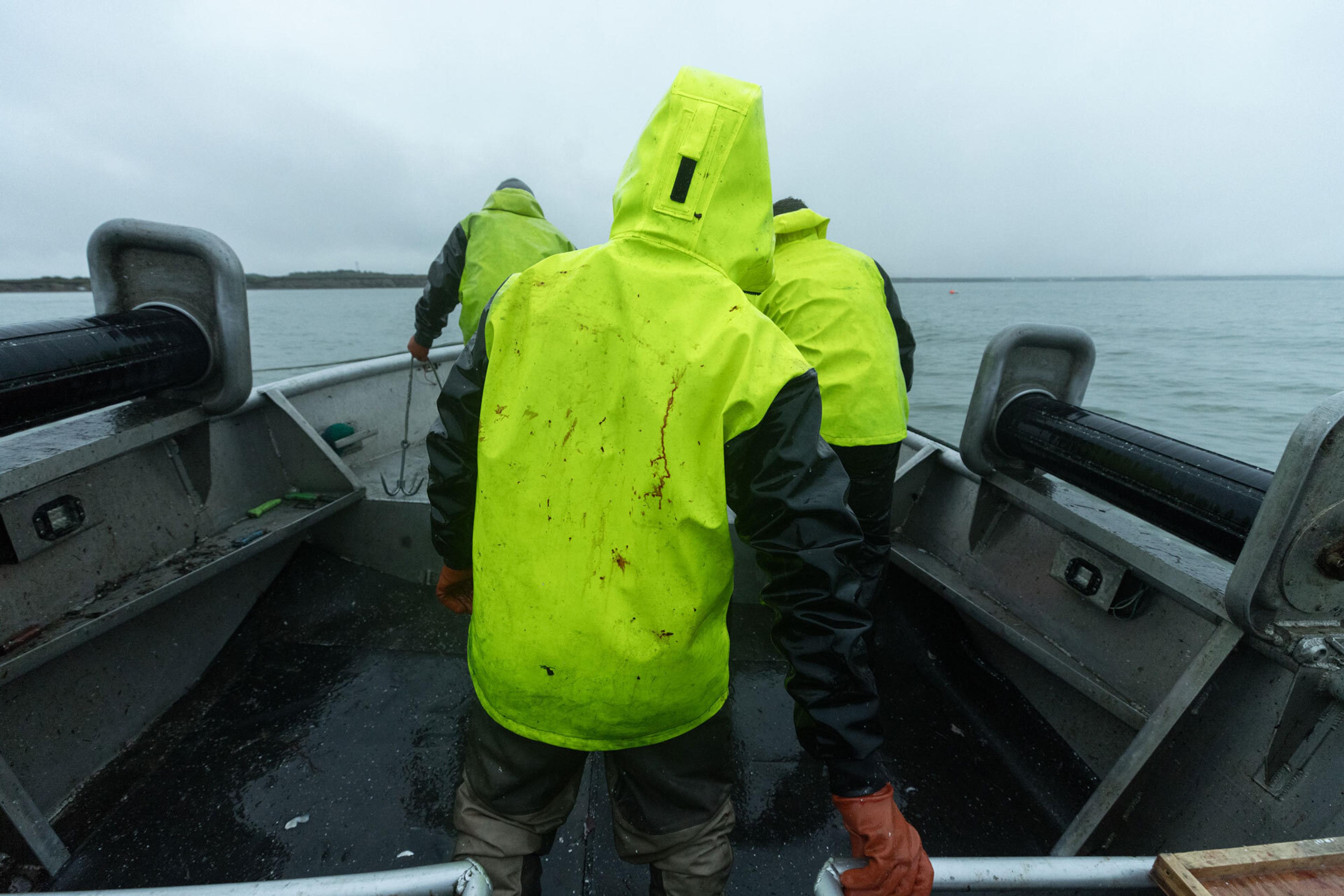
Local fisherman Nathan Hill and crew pull sockeye off their net outside Naknek.
The Bristol Bay fishery was built on canning, but in the 1980s interest in frozen fish surged as Japanese buyers sought to serve a growing market back home. Their buying power led to an uptick in fresh-frozen operations, and the fishery soon added frozen fillets and portions to its repertoire to cater to the domestic market.
With this newfound emphasis on fresh fish, processors rolled out financial incentives aimed at maintaining quality, Van Vactor says. They paid more for fish bled promptly. They encouraged rubber mats on decks to keep fish from slamming against hard aluminum and fiberglass, damaging their flesh. They limited the size of storage bags to prevent salmon from being bruised under their own weight. But after the 2022 boom reshuffled the industry, concentrating power among just three processors, some companies have walked back certain incentives, Van Vactor says. In many corners, quality has given way to efficiency.
It took the fishery 30-odd years to establish consistent quality on fresh-packed fillets, Van Vactor says, but just a few to “dramatically unwind that emphasis.” It isn’t a coincidence that it happened as consolidation accelerated, he suggests. When there was more competition, processors often one-upped each other like poker players, raising their opponents in a bid to win the fleet’s loyalty. These days, “it has felt, at times, like it’s been a race to the bottom,” Van Vactor says.
The Bristol Bay fishery has always had to navigate a simple reality: An enormous and unpredictable number of salmon arrive in a tightly compressed time period. Even with estimates from fisheries biologists, the volatility makes buying and selling wild salmon “basically the worst business model you could come up with,” says Elison, the state biologist. Extra steps to prioritize quality—an upgraded boat; a crew member paid to do nothing but bleed fish; a processor refusing anything but the best salmon—cost time and money that cut into profits.
***
Up the coast from Naknek, at the mouth of the Kvichak River, Reid Ten Kley has learned the importance of those extra steps. A former CPA from Oregon, he followed his grandfather’s path, fishing sockeye alongside a wide web of family and friends in Graveyard Point, a ghost town reimagined as a summer fishing camp. At 19, he was asked to take over as camp manager, handling the complex task of coordinating a fishing season in a place reachable only by boat or plane. Twenty-eight years later, he’s still doing it.
Ten Kley took the role at a difficult moment. With salmon farming exploding globally, prices for wild-caught fish were woeful: 63 cents per pound on average over an 11-year period beginning in 1999, according to data from the state Department of Fish & Game. Each July, he took vacation from his day job to run a fishing boat, and made more from his paid time off than from the harvest. He decided to try something different.
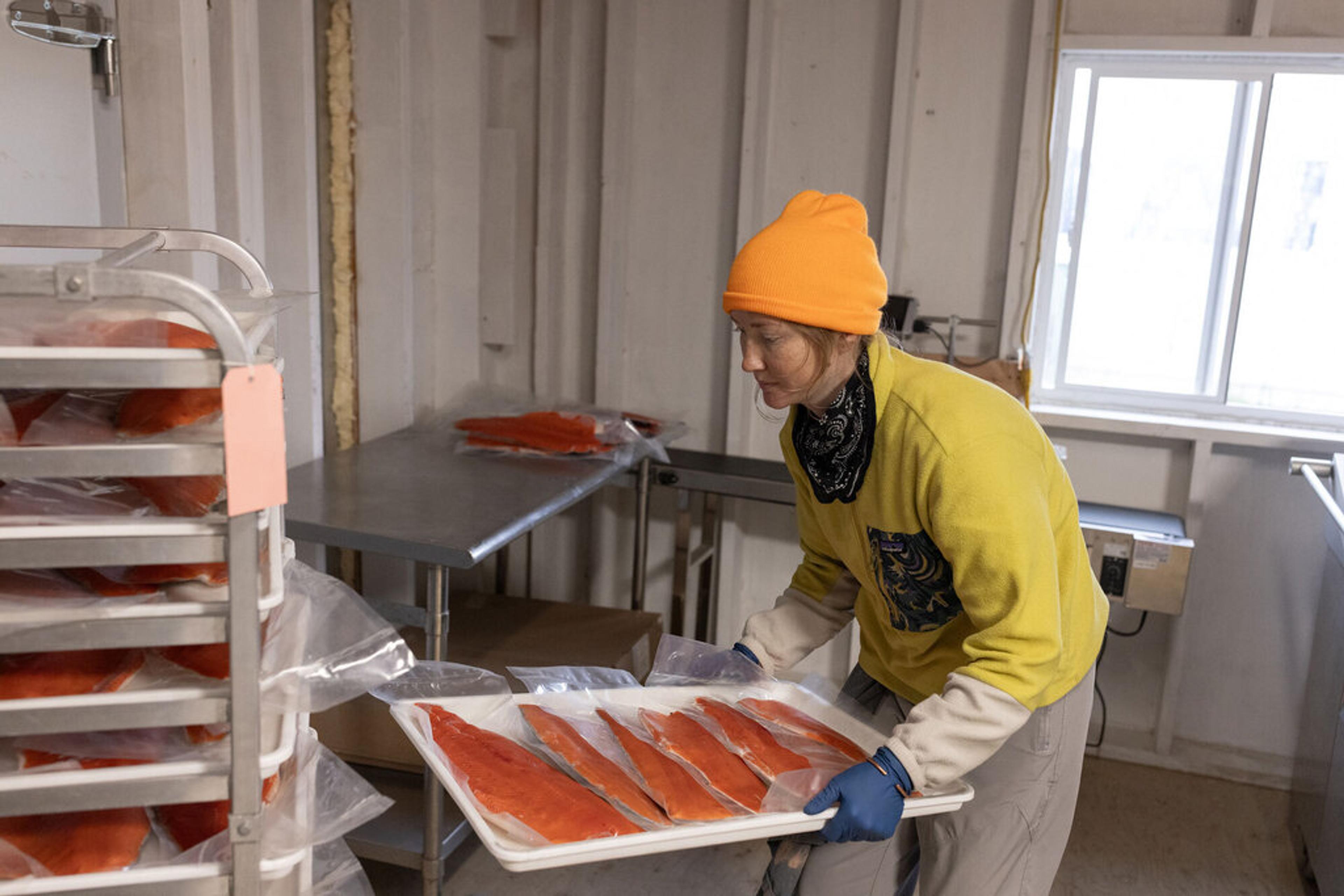
Stacking trays of fillets at Kvichak Fish Co.
At the time, direct marketing was an unproven idea, at least for fish, but he and his crew gave it a shot. They started processing their own salmon and bringing it home to sell as Iliamna Fish Company, named for the lake whose waters drain through the Kvichak. For several years, it was a losing enterprise, as he attempted to rouse interest from high-end restaurants. But a visit to a Slow Food convention in Italy inspired him to propose adding his fish to an existing vegetable CSA. In 2008, their first year selling shares, they had 35 members. After that, it just kept doubling.
After several years growing his operation, Ten Kley needed help from a processor with more capacity. Stuck in “our particular little armpit of the fishery,” he and his neighbors at Graveyard Point couldn’t convince the majors to send out the tender boats required to haul thousands of fish from harvesters to plants for processing. So he and his wife bought two tenders of their own and formed a cooperative. Because salmon are processed based on the tender that brings them in, pooling fish allowed Ten Kley and his collaborators to buy back their own catch to sell. (Many fishermen have traditionally purchased a “homepack” from processors to eat throughout the year; direct marketers often source their salmon through a similar exchange on a larger scale.)
The majors, worried about losing the harvest of an independently minded group, responded by doubling the number of tenders they sent to Graveyard Point. The whole affair lifted the lid on an area of the Bristol Bay fishery that had previously been limited by the processors themselves.
Today, Ten Kley and his family sell shares of salmon on both the West and East coasts, some of which are processed by Wlaysewski and her team and the rest by one of the majors. His experience in Graveyard Point holds an important lesson for fishermen angling for better conditions, he says: “Small threats can change big players.”
Even a small-scale processor posting a higher preseason price can create a stumbling block for a major processor that frets over the loyalty of its fleet, Ten Kley suggests. That’s why Wlaysewski sees a clear purpose for alternative processors like hers, regardless of their small stature: giving fishermen agency, and perhaps a bit of leverage.
Shannon Ford Ward is one of those fishermen, the fourth generation in her family to work the same site on the south shore of the Naknek. With her husband, she catches a humble haul to sell at farmers’ markets across Washington State and Idaho. Her catch once went to one of the heavyweights, but for the last several years she’s turned to Wlaysewski, freeing herself from the headaches she encountered during the “ugly, awful” period of the 2000s. In those lean years, low prices left her deep in debt, unable to cover the high costs of operating here.
She understands the need for large-scale operations to handle the Bay’s enormous volume, but by staying away from the majors, Ford Ward feels insulated from the broader shifts that might rattle the industry. “I can steer my own ship,” she says.
***
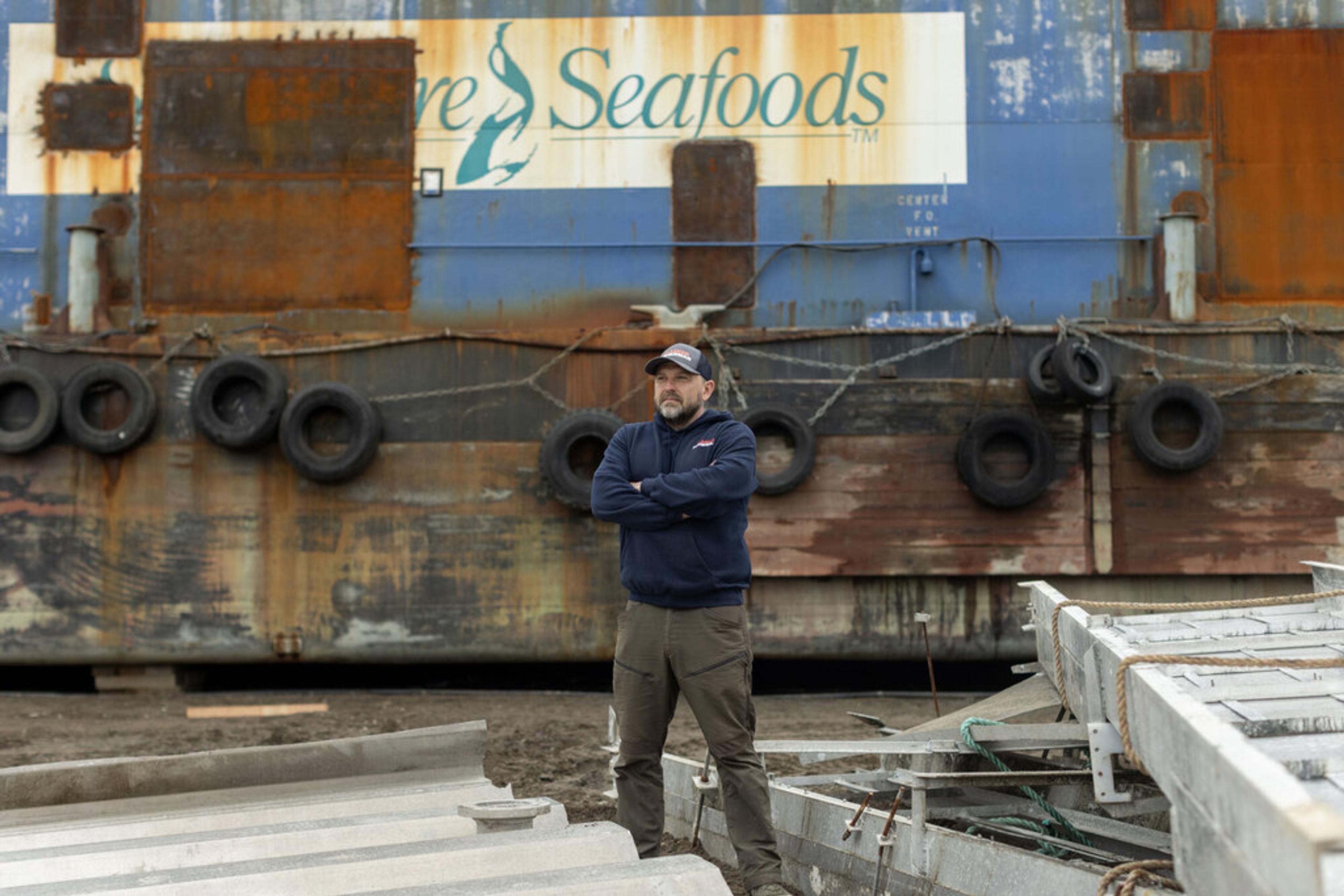
If Kvichak Fish represents a small threat to the Bay’s corporate heavyweights, a larger one looms on the north shore of the Naknek, right beside the town’s lone grocery. A landed barge rises from the sand, an absurd, rust-worn behemoth that Vojta Novak, co-founder of Alaskan Fisherman, is converting into a processing plant that he anticipates will be a factor in the fishery by next summer.
Novak, a fast-talking Czech with a salty tongue, came to Alaska in 2002 with limited English and an eye for adventure. As the seasons wore on, he worked his way up from cannery jobs to general manager of a processing plant. At the same time, he began fishing set-net sites with his four daughters and selling his catch—bought back from a processor—through a subscription model in the Czech Republic. He started small, delivering 10 or 20 boxes of salmon in his hatchback. The business grew quickly, until he was moving hundreds of thousands of pounds.
As his business expanded, he became more and more reliant on one of the majors to sell him back his fish, until a few years ago when he was rebuffed. His processor had other contracts to fulfill and no obligation to help Novak.
“You’re at their mercy,” he says. “[Fishermen] are catching the resource, but they don’t own it, because the processors own them.”
In Europe, Novak says, the Alaskan fisherman is an icon, carrying the intrigue and mystique of a cowboy in the Wild West. (His company’s name leans into the image, and he says it’s been a boon for marketing.) But the fishery isn’t set up for fishermen to capitalize on their cachet. Intent on supporting not just his own enterprise but also others selling straight to consumers, Novak leased a small processing plant from another direct seller, Wild Alaska Salmon & Seafood. He’s spent the past two summers working as his own middleman.
Novak’s operation works much like Wlaysewski’s, buying fish at prices that typically exceed the majors to help fulfill his own orders, and cutting salmon for fishermen to take home. Last season, he handled around 300,000 pounds; this year, he expects to process nearly a million. When fishing is on, he cruises the shore in an ATV, chatting with set-netters and striking deals. For Novak, there’s something energizing about competing with the majors. He wants to represent more than just better pay, though.
“It’s not only about the price,” he says. “It’s about the service. It’s about behavior, what you do for the community, how you treat people. If you have a monopoly or oligopoly, they have no reason” to prioritize such concerns.
His eyes widen as he talks about what lies ahead—for himself and for the Bay’s fishermen. The barge, which was a floating processor and a buy station in its past lives, will significantly expand his operation. He bought it in January and started renovating in March. In early July, it was still a construction site. Once it’s fully operational, though, he believes its capacity—combined with an ethos that appeals to independent fishermen—could put a dent in the big processors’ power.
For Novak, the dream has always been straightforward: “The fishermen can control their destiny.” He wants the Bay to be flush with direct marketers asserting and profiting from their own independence, a fishery full of proud Alaskan fishermen. Whenever someone asks him why they should deliver their fish to him, rather than one of the majors, he tells them:
“Don’t fish for me. Fish for yourself.”