A Pennsylvania forester’s quest to summit every state tree in America isn’t just a stunt—it’s part of his lifelong crusade to promote sustainable forestry.
Van Wagner is on a mission to climb every state tree in America.
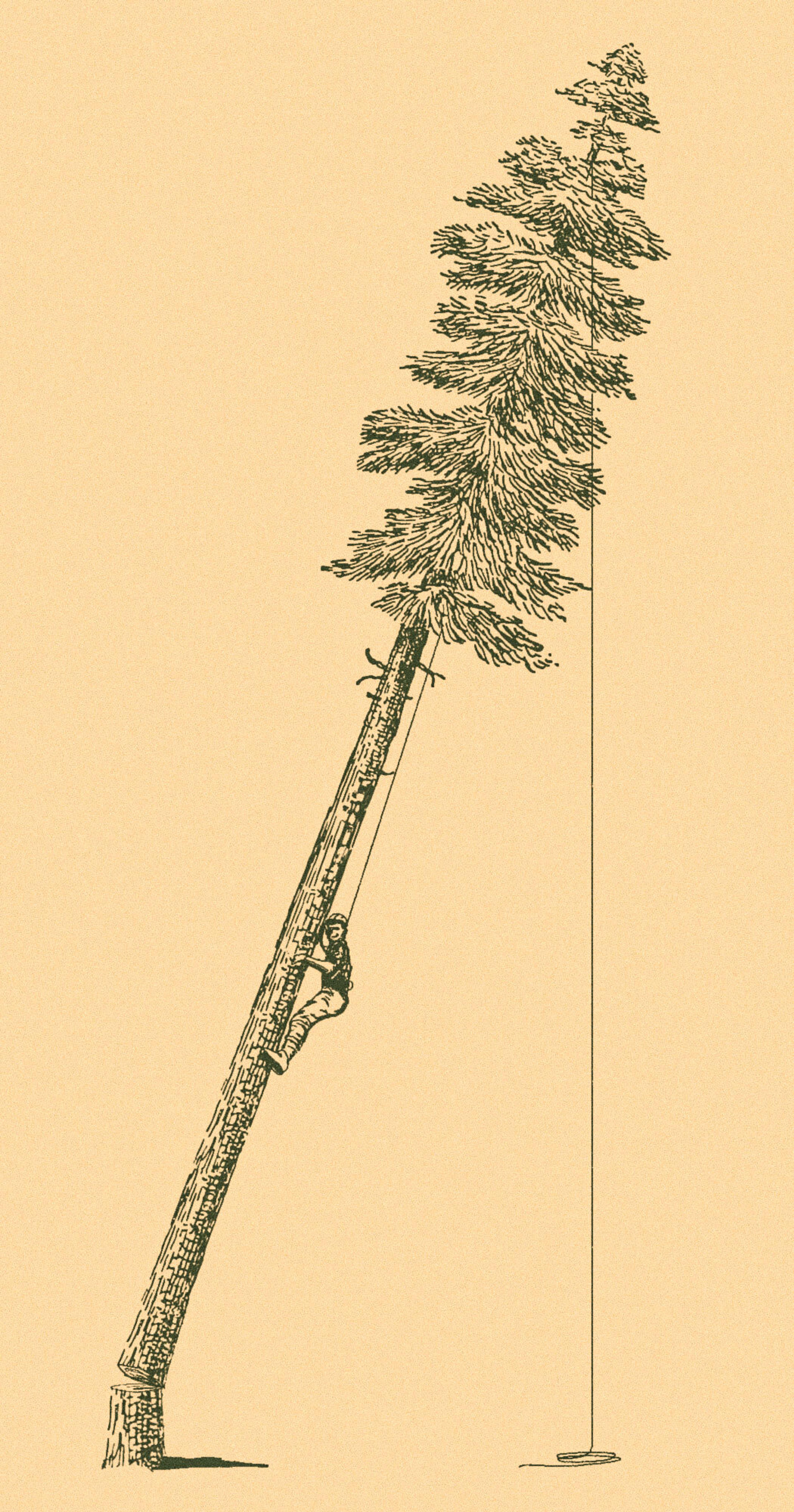
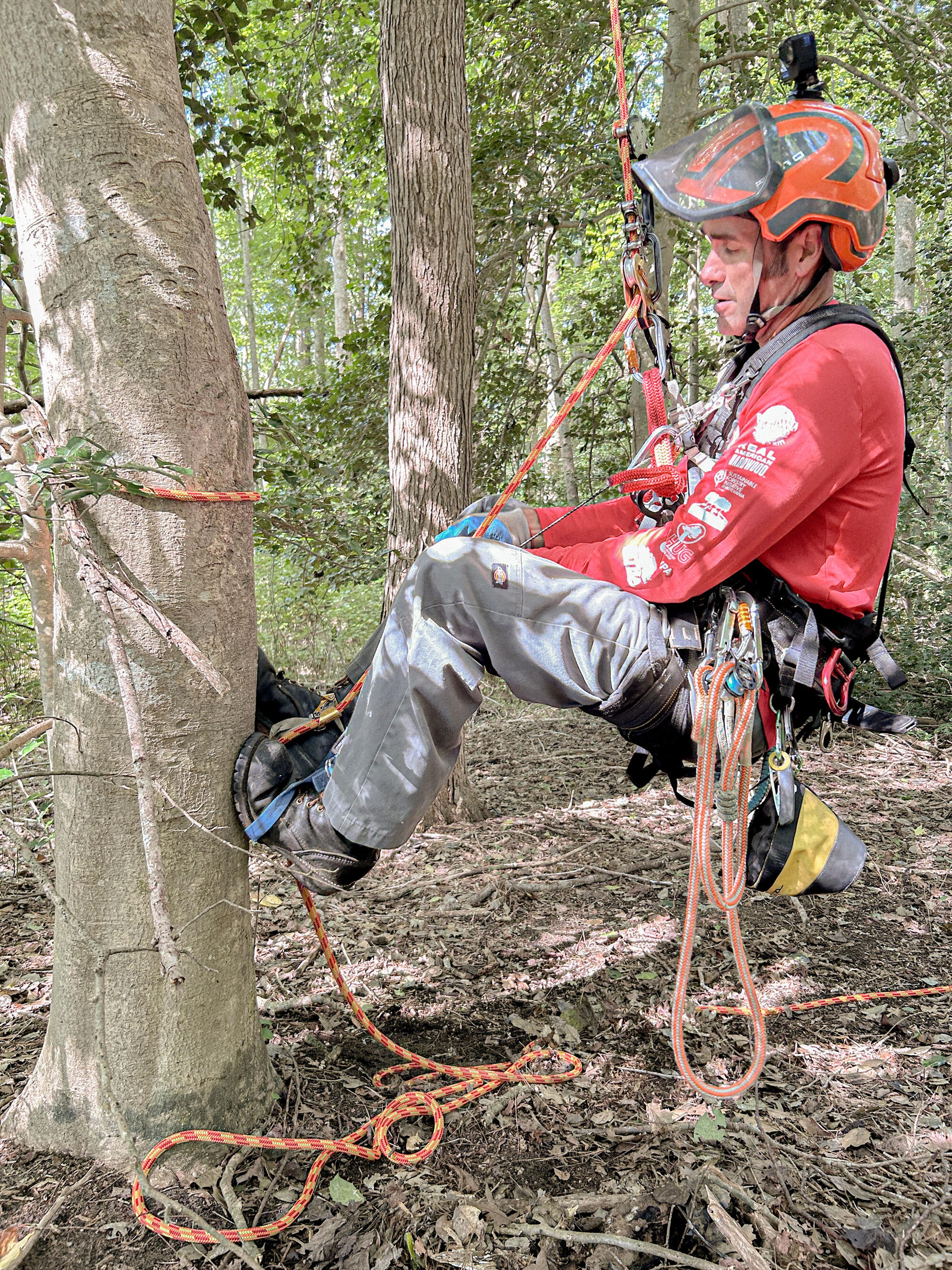
When I met him on Labor Day weekend at the Edward H. McCabe Nature Preserve outside of Milton, Delaware, he was about to knock out number 13—the American holly. All around the parking lot, parents were strapping kids into strollers and clipping leashes onto labradoodles, readying for a stroll through this placid patch of woods along the Broadkill River. Wagner, meanwhile, wearing an orange arborist’s helmet on his head and a coil of rope around his shoulder, was stuffing a heap of gear into his backpack—carabiners and harnesses and pulleys jingling like wind chimes.
It was all kind of weird, but arguably not the weirdest thing Wagner has done to promote his passion for sustainable forest management. The high school ag teacher slash forester slash folk singer once commissioned 100 skateboards (he’s a lifelong skater) to be made from ash. Part merch, part conversation-starter about the invasive beetle that has decimated the tree, Wagner sold the skateboards at concerts—right after performing his song Ash to Ash (I’m saying out loud I can’t believe / I’m gonna outlive these trees).
Last year, Wagner celebrated the completion of his quest to climb the tallest tree on the tallest mountain in each of the 67 counties in his home state of Pennsylvania. He undertook that quest to remind his neighbors of the benefits of healthy forests, things like clean water, wildlife habitat, and space to recreate—not to mention the commonwealth’s $39 billion hardwood industry and the 60,000 jobs it supports.
Still, the 50 State Trees project is Wagner’s most ambitious undertaking to date, requiring the 50-year-old to travel far from the home he shares with his wife and two sons (who are also his coworkers at Van Wagner and Sons Tree Service). He’ll climb a buckeye in Ohio, a pinon pine in New Mexico, a Sitka spruce in Alaska. He’ll also climb a palmetto in Florida—even if it is technically a monocot.
For Wagner, it’s all worth it. Not only are American forests one of the nation’s most valuable resources, they’re also among its most vulnerable, beset by invasive insects, disease, and severe weather brought on by climate change. Fifteen years ago, the leading cause of death for trees in the Northeast was a chainsaw. Today, tree loss from natural causes outpaces harvest-caused loss by almost 40 percent. During that same period, tree mortality has increased by 16 percent.
Ashley Stimpson
It’s a trend, says Wagner, that threatens not just what he loves and how he makes his living, but an agricultural tradition that—contrary to what many believe—protects American forests. When forests are sick and demand for American wood drops, he says, “that’s when the bulldozers come out.”
These days, lots of us buy local produce to support local farmers and preserve local farmland. “I’d like to see us do that with local wood,” Wagner says.
It may be hard to imagine Wagner’s pursuit effecting real change when even conscientious consumers are often stymied by cost and opaque supply chains. Then again, the farm-to-table movement was an implausibility for most Americans until vanguards like Alice Waters and Michael Pollen made it an imperative.
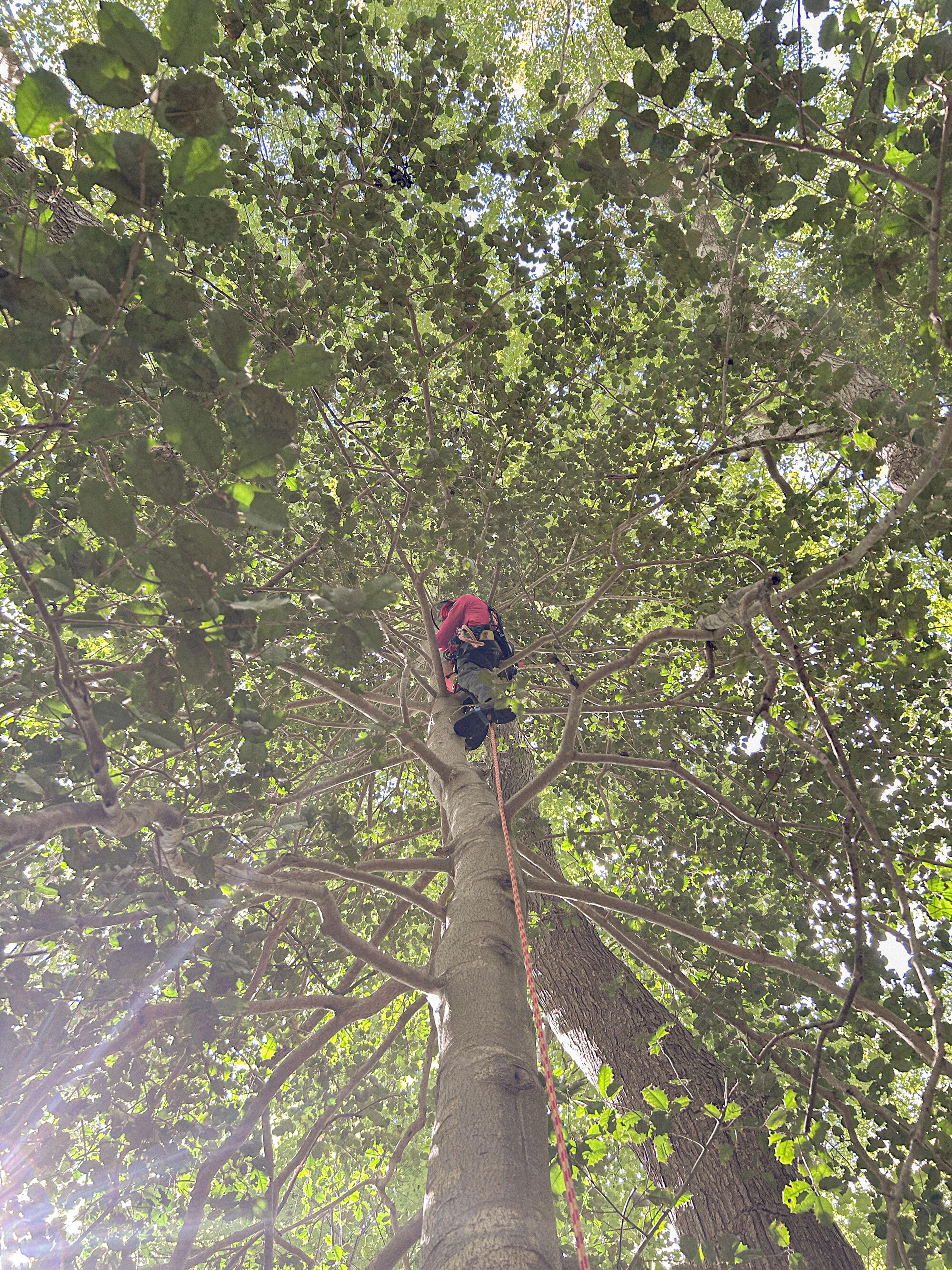
Twenty minutes after we met in the parking lot, Wagner hollered down from 40 feet up in the holly tree that he had officially made it to the top. Just then, a couple and their collie mix shuffled by. I offered a smile, but they didn’t notice. They were gazing skyward at the man in the canopy and wondering what in the world was going on in the woods today.
***
On May 1, 1939, when the Delaware General Assembly designated the American Holly, Ilex opaca, as its official state tree, there were no objections. Since the 1880s, holly had been one of the most important crops in southern Delaware’s economy, and certainly its most famous. Every year, as cornfields turned fallow and orchards fell bare, farmers began trimming branches from the evergreen tree—which grew prodigiously in the region’s loamy soil—and twisting them into fragrant, festive wreaths, glossy as lipstick and studded with berries.
Once the nation’s leading exporter of wreaths, 100 years ago the area where Wagner and I met on a sunny Sunday morning was known as “Land of Holly.”
These days, lots of us buy local produce to support local farmers and preserve local farmland. “I’d like to see us do that with local wood,” Wagner says.
But the holly heyday did not last. Farmers harvested too much or too clumsily to promote regrowth. They dealt with constant pilfering by the public, who thought it a harmless crime to pull over and snip a sprig of holiday cheer. Then came the Great Depression, the ascendent plastics industry, the widespread clear-cutting of woodlands, and globalization. Today, most wreaths in the United States are manufactured in and around Yiwu, China, a region that produces 60 percent of the world’s Christmas décor.
It’s a recurring saga that has played out across the United States, with a rotating cast of characters and settings.
Long leaf pine, Alabama’s state tree, was once the economic backbone of the Southeast, providing timber to build its cities as well as the pitch, tar, and turpentine that, quite literally, kept the U.S. Navy afloat. Then clear-cutting, land conversion, and fire suppression all but wiped out the towering pine.
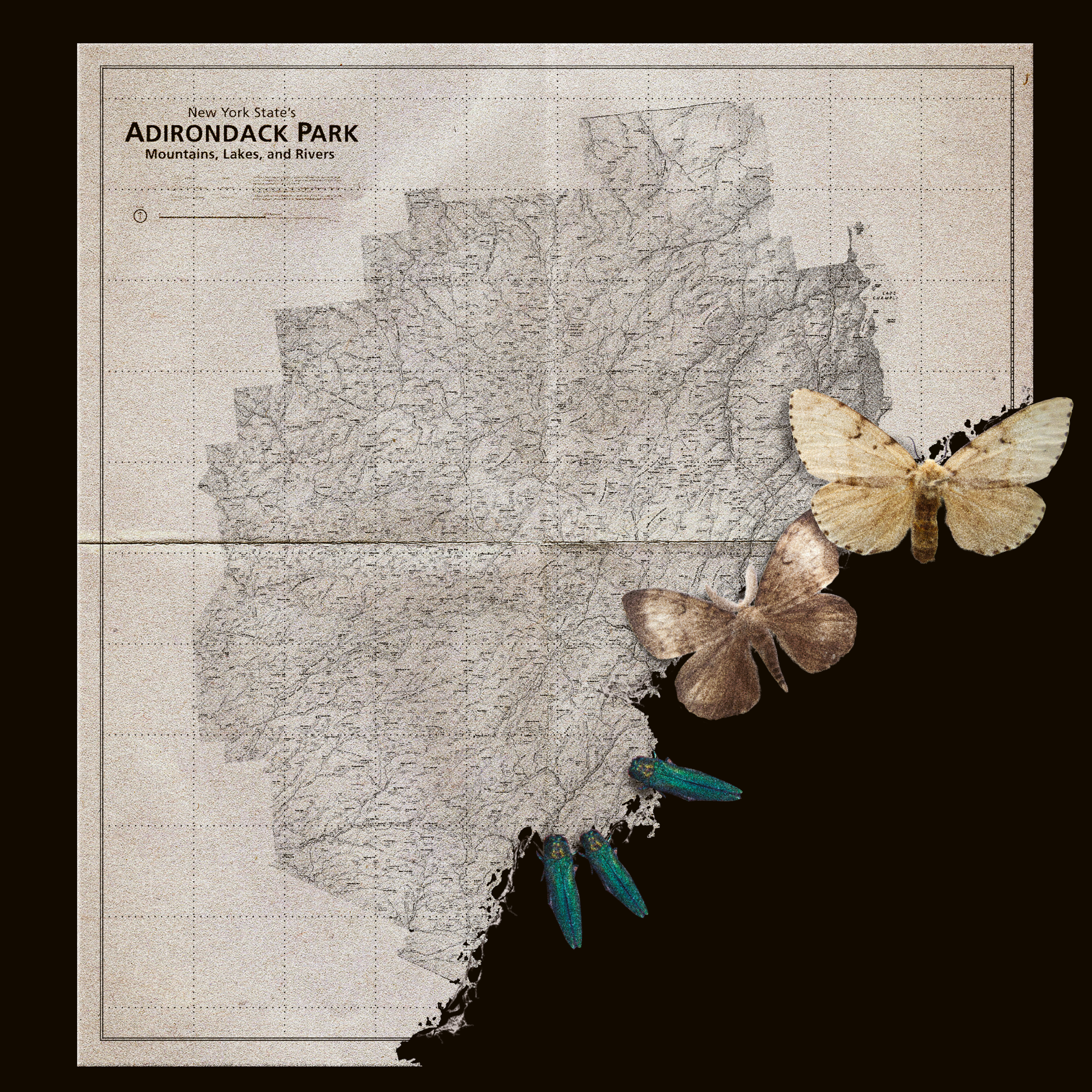
In the late 19th century, the tannin-rich bark of the Eastern hemlock powered a booming leather industry in Pennsylvania, where it was named the state tree in 1931. Scientists now predict the massive conifer will soon be functionally extinct across its range, the victim of a tiny aphid called the hemlock woolly adelgid.
California’s coast redwood, Louisiana’s bald cypress, Michigan’s white pine: All fueled local and state economies before they were logged to smithereens.
For Wagner’s purposes, these trees are emblematic of more than their home states; they represent an American forest that continues to falter, along with the workforces that depend on them. Climate change is coming for sugar maples—and maple syrup producers. A voracious fungus has killed up to 80 percent of butternut trees, a favorite of fine furniture makers. Overabundant deer are devouring the white oaks that distillers rely on for spirit-aging barrels.
In addition to environmental stressors, the domestic wood products industry is up against a number of market headwinds, says Scott Bowe, professor and wood products specialist at the University of Wisconsin-Madison. This includes the offshoring of manufacturing to China, a sharp downturn in residential construction, and competition from non-wood substitutes. Overall, U.S. hardwood lumber production has declined by more than 50 percent since the turn of the century.
This isn’t just a problem for companies and workers who make money from wood, it’s a crisis for anyone who wants to keep forests—and all their water-cleaning, air-clearing, wildlife-hosting, soul-renewing superpowers—on the American landscape. More than half of the country’s forests are now privately owned investment properties.
Scientists now predict the massive conifer will soon be functionally extinct across its range.
“You want to have demand for that product because if there’s no demand for the product coming from a forest, why have the forest at all?” says Bowe. “So, the question is how do we manage our forests in such a way where they’ll be forests forever?”
For Wagner, part of the answer is for the public to recognize the forest for the managed crop it already is. “People think you put a seed in the ground, and you plow, and that’s agriculture,” he says. “Forestry is ag. Managing a forest is generational crop management.”
In fact, when Wagner looked around from the top of that holly tree, he saw crops that were planted thousands of years ago by the Lenape and Nanticoke people. White oak and hickory, persimmon, and pawpaw—a perennial, multi-level food forest that fed humans, fattened livestock, and lured wild game.
Still, Wagner understands more than most that in our climate-informed era, talk of cutting down trees tends to make folks squeamish. As we walked back to the parking lot, he told me about a fellow musician who took issue with his pro-timber tunes.
“She just tore into me backstage,” Wagner says. “And I remember, like, as she’s yelling at me, just staring at the guitar on her shoulder. It was made of a beautiful Brazilian rosewood.” The highly prized and endangered tree has experienced drastic decline due to its “excessive and indiscriminate exploitation” according to the Convention on International Trade in Endangered Species of Wild Fauna and Flora. Today the wood is the most trafficked wildlife product in the world, more than elephant ivory, rhino horns, and pangolin scales combined.
“Forestry is ag. Managing a forest is generational crop management.”
It’s an extreme example, but plenty of us are guilty of this kind of cognitive dissonance, stocking up on grassfed beef and local honey while overlooking the plywood elephant in our living room.
“You don’t need to be a scientist to figure out when you buy that cheap coffee table from Indonesia, you just paid someone to cut down a rainforest,” says Wagner. “I’d rather pay for my neighbor to cut down a cherry tree. The odds are he’ll regrow it.”
***
Wagner’s state-tree gambit is as much about climbing as it is conversation. For each ascent, he seeks out a local guide, someone to fill him in on what’s been happening in their neck of the woods. While summiting a tulip tree poplar in Tennessee, a state forester explained the growing threat of wildfire in the East. Before Wagner climbed a blue spruce in a downtown Denver park, a fellow arborist explained the impact that development and drought are having on Colorado’s trees.
“Part of my mission is to energize us to talk about our forests and our trees,” Wagner says. “We can’t just sit back and think our state and federal employees are taking care of it. We all, as landowners and as people who share in the management of local forests, have to be a part of the dialogue.”
His efforts appear to be paying off. Wagner’s quest is now sponsored by the industry trade group Real American Hardwood. This summer, the governor of Ohio, Mike DeWine, invited Wagner to come climb a buckeye tree at the state fair. (Wagner had to decline because he was touring in England. Europeans, he told me, love to sing along to his most popular song, Crosscut Saw.)
“Ask questions, become an educated consumer, and seek out American-made hardwoods.”
When he’s not climbing or crooning about trees, Wagner is teaching kids about them at Danville Area High School. Wagner doesn’t mean to brag, but the school’s most popular class is his environmental science AP course, with about half the graduating class of 120 currently enrolled.
Rudy Kristjanson-Gural, one of Wagner’s former AP students, says that’s because Wagner lets the kids learn concepts in a decidedly hands-on manner, whether they’re releasing eels into the Susquehanna River, building a braille trail for blind students, or learning how to safely use a chainsaw.
“Any chance that I got to be with Van outside of the classroom was a great learning experience,” says Krisjanson-Gural. “We were never walking in silence, just getting from point A to point B. We’re stopping every couple steps. He’s telling stories, he’s pointing out trees. He really wants to teach his students everything he knows.”
Wagner is also in charge of Danville’s vocational program in agricultural sciences, where he mentors a new generation of foresters at the same high school he once attended. He said their passion for the environment has given him “ so much faith for the future.“
Now he just needs to get the adults on board: How can the average person care for the country’s forests in their time of need?
Ashley Stimpson
First of all, choose wood, says the University of Wisconsin’s Bowe. Compared with manufacturing products from petroleum, steel, or aluminum, “wood always has a smaller environmental footprint.” But what kind of wood matters.
“Ask questions, become an educated consumer, and seek out American-made hardwoods,” says Wagner, “your cherries, your red oak, your white oak.”
Buy a skateboard made from American maple, not Chinese bamboo. Need a new dining room table? Consider skipping the big box store, saving up, and finding a local furniture maker, Wagner says. “Every community has somebody that’s making nice quality furniture. Find that person. Support that person.”
He’d also be grateful if you followed and shared his tree-climbing campaign, a journey he’s documenting on his website and across social media. (Wagner will soon climb #20, a bonus, a scarlet oak in Washington, D.C.)
“Every community has somebody that’s making nice quality furniture. Find that person. Support that person.”
Back in Delaware, Wagner apologized for needing to leave. His wife and sons were waiting on him at the beach hotel where they had spent the holiday weekend. That afternoon, on their way back to Pennsylvania, the family would scout a New Jersey red oak for Wagner to climb. It’s a species currently under siege by leaf scorch, a bacterial infection that kills it slowly by cutting off the tree’s internal water supply.
I got the sense Wagner could have stood beneath the verdant coastal canopy talking about trees all day. Instead, we said our goodbyes at the trailhead, and the sleighbell jingle of Wagner’s gear faded into the distance.
The woods—with their gangly pitch pine, stately hickories, and lustrous holly—were lovely, dark, and deep, but Van Wagner had promises to keep.