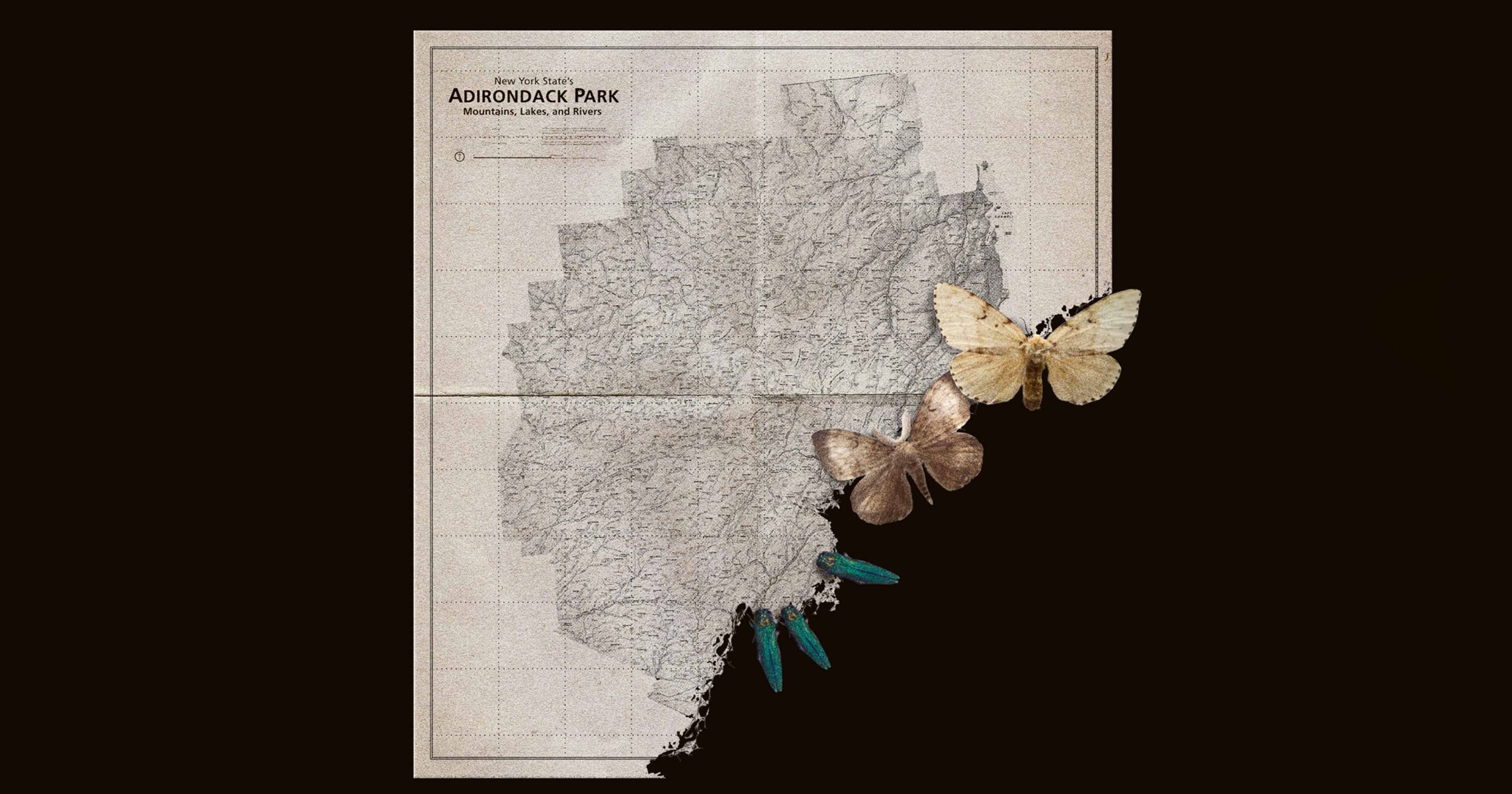
Invasive agricultural pests are known to travel in storms. Researchers worry that climate change will blow more of them to our shores.
In 2024, the Florida Department of Agriculture discovered an unwelcome new bug: the two-spot cotton leafhopper (Amrasca biguttula). It’s an invasive insect with a voracious appetite that will feast on cotton, okra, ornamentals, and other cash crops.


A native of Asia, it was first detected in the U.S. Virgin Islands and Puerto Rico in the spring of 2023. The following year it was detected in Florida, then, in 2025, on an okra farm in Honduras. By the summer of 2025, the leafhopper was found infesting okra crops in North Carolina, and cotton in Mississippi, Georgia, South Carolina, and Alabama. There are now spotting records in Texas, Tennessee, Oklahoma, Louisiana, and even as far north as Michigan.
But how did it reach the southern United States in the first place? Researchers have a theory, detailed in a study published this summer, that it hitched a ride on Hurricane Helene.
“There’s genuine concern when we have periods of high tropical storm activity about the pathogens that will be introduced into our cropping environment in the Southeast,” said Michael Toews, entomologist at the University of Georgia and study co-author. The leafhopper spread to cotton fields in every county in Georgia within months of its initial detection, he said.
By the time Helene hit Florida’s Gulf Coast in September 2024, it was a Category 4 storm with wind gusts over 100 miles per hour in some places. The invasive leafhopper’s path closely matched that of Helene’s, said Toews. “While I can’t say conclusively that it definitely was on the hurricane, it is extremely interesting that the population started following exactly where the eye of that hurricane went.”
As climate change makes bigger storms more frequent, growers might have more invaders to manage, and more often.
Growers have long known that pests can move with storms. But as climate change makes bigger storms more frequent, growers might have more invaders to manage, and more often.
Zee Ahmed, an entomologist and invasives specialist at Clemson University, spoke to Offrange while taking a break from looking for leafhoppers in a cotton field. “Last year was a huge problem,” he said. “This year up to now it wasn’t a problem. Now it’s everywhere in the cotton fields.”
Another invasive Ahmed pointed to is the pasture mealybug in Texas, which spread to 79 counties in less than 18 months. Wind is just one of several ideas as to how it got there, he said.
In the Eye of the Storm
With a tropical storm like an Atlantic hurricane, bugs aren’t pushed along so much as they’re catching a ride inside the storm’s eye. The external winds of a hurricane are ferocious and damaging, but inside is comparatively calm — a place where insects can travel in style.
“They’re not even actively flying in there because there’s a constant updraft, so they’re just kind of hanging out until they get deposited across the land,” said Toews.
He added that sailors in the 1800s reported seeing birds and insects inside storms. Modern technology confirms it: There have been instances where so many bugs are caught within a storm that they’ve shown up on weather radar.
“A hurricane that hits the southeast coast of Georgia might actually start on the coast of Africa and go over the Leeward Islands and all through the Caribbean basin,” explained Toews. “In there you’ve got these definite updrafts, and that could be spores, it could be insects, it could be birds.”
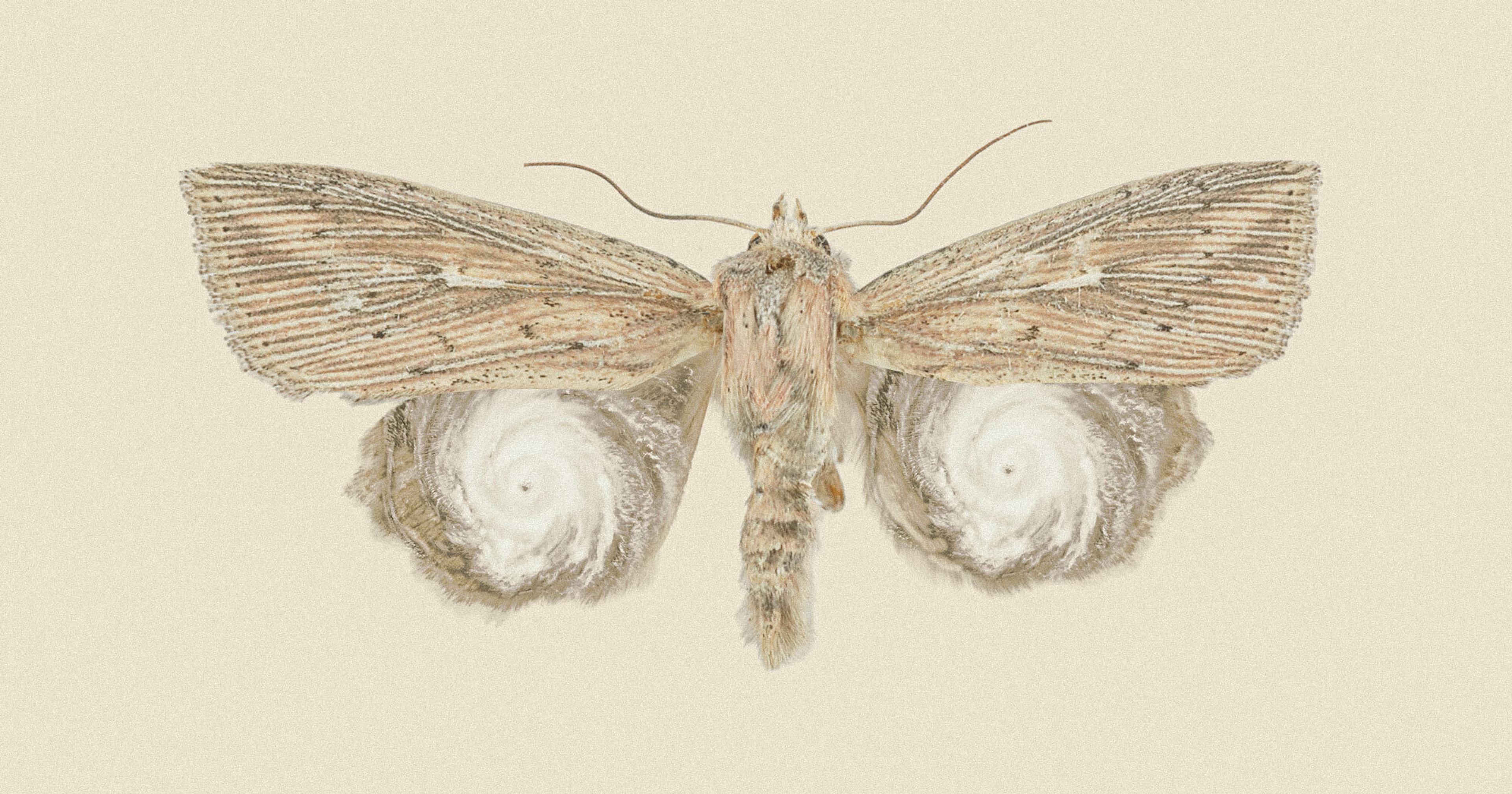
Other recent research has put some numbers on a similar pattern. In this case, researchers trapped 5,714 fall armyworm moths, a globally invasive and highly destructive pest, between 2018 and 2023 in the Florida Panhandle. Their findings showed a connection between tropical cyclones and moths: The number of moths they caught immediately after tropical cyclones with high speed winds were double the number compared to before a cyclone.
On their own, fall armyworm moths normally travel at night, but during tropical storms, which often last several days, they are also being transported during the day. The researchers noted that there were 59 significant tropical cyclones and hurricanes during the period when they were catching the pests.
How long can different insects can stay alive inside a storm without food?
“What we saw in our study was really a significant correlation, especially about the maximal wind speed,” said Silvana Paula-Moraes, research co-author and entomologist at the University of Nebraska-Lincoln.
Paula-Moraes also measured the hydrogen isotopes in the insects’ wings—a method of tracking where an organism originates—and found that most of the moths came from the Caribbean and South Florida. One of her motivations for doing this research was she felt that the existing data wasn’t sufficiently thorough to make a firm connection between infestations and storm activity.
“We were able to show how specifically the high speed of the wind can impact the increase of the catch that we got a little bit before and even a little bit after tropical cyclone events,” she said. “Using this data we are able to see this variability right in the catch, depending on the occurrence of tropical cyclones.”
It’s also possible, according to the researchers, that moths in the same family as the fall armyworm could use high-altitude winds to help them spread, as some insects, including leafhoppers, are known to do.
Wind patterns around the globe are also shifting, like Asia’s critically important monsoon winds. Such changes could upset the travel patterns of the 200-plus species, including birds, that use those weather systems to migrate large distances.
There remain many questions about the relationship between storms and invasive pests. For Toews, that includes how long different insects can stay alive inside a storm without food. This would help researchers better forecast the spread of invasives from fast-moving versus slow-moving storms, he said.
Help for Growers
Toews pointed out that dispersal doesn’t necessarily lead to infestation. Some pests won’t be able to establish populations if, for example, they can’t survive cold in a new-to-them environment. The pests with an expansive diet are the ones to worry about, he said.
“The place you get into trouble sometimes is when you have insects that eat lots of different things,” he said. “If they can eat the plants from one hemisphere to another, or from South America to North America, that tends to make them better colonizers.”
Clemson’s Ahmed said those that can survive and don’t have predators in their new homes can spread unchecked before an effective chemical or biological intervention is found. He pointed to Homestead, Florida, which is home to a high concentration of plant nurseries. It’s also close to the Caribbean, making it a potential landing zone for wind-dispersed invasives. Growers can be unaware of the arrival of a new invasive and sell their plants all over North America before it’s discovered, unwittingly exposing new areas to infestations, he said.
“Nobody wants to blame growers because they are already overwhelmed with so many other things going on,” said Ahmed. “When new pests come, they don’t know how to identify them.”
Growers can be unaware of the arrival of a new invasive and sell their plants all over North America before it’s discovered.
For Paula-Moraes, her work is focusing on better invasive detection so they can improve warnings for growers. “The idea is really to have this information and look into the past, to the trapping, as a way to improve predictions for the future, especially related to alert systems for farmers,” she said.
But this research is expensive, said Ahmed, and might be coming too late. “We are already under pressure with invasive species,” he said, given that there are “very limited insecticide options.”
And that could be a cascading problem if growers are left scrambling to adapt to new invasives setting up shop in their fields and greenhouses.
“As a result of climate change, it’s back to that frequency and intensity [of storms] conversation,” said Toews. “There’s no doubt that this is a bigger concern going forward, and we’ll continue to see new invasives as a result.”