Livestock producers generate a mountain of plastics. Resourceful ranchers are developing solutions.
In 2015, Alberta rancher Ruud was having a frustrating day. For the umpteenth time, Ruud, who is a partner in his family’s multi-generational cattle operation, had to stop what he was doing to cut away the plastic net wrap that had become tangled in his equipment.


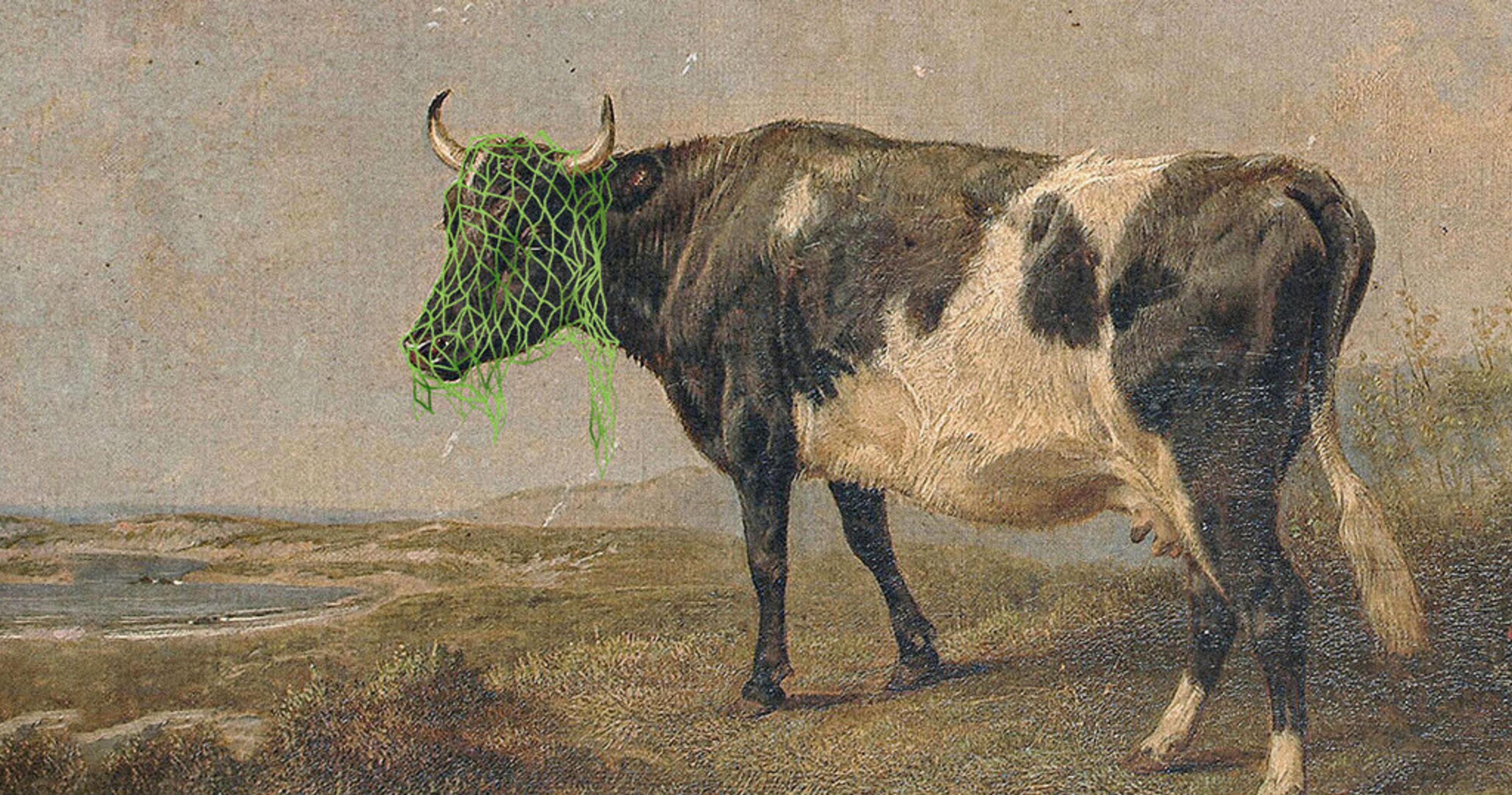
For farmers like him, wrestling with plastic twine and net wrap (used to hold together round bales) is a near-daily occurrence, Ruud said. On top of the operational delays and repair bills that come from entanglement in tractor axles, manure spreaders, and bale processors, this plastic is often eaten by cattle and other animals—which can be fatal—and creates a disposal issue.
“This is a global problem, dealing with the plastic net wrap and twine, because there’s no place to dispose of it,” Ruud said. “You don’t want to burn it, you don’t want to bury it because both are horrible for the environment, so in our case, we’re just left with a mountain of plastic building up in our bale yard year after year with nowhere to take it.”
Twine and net wrap aren’t the only problem. Agricultural plastics are a fact of life for farmers, including in livestock production, where it’s used to transport and store hay and fodder. For producers, this saves time and money, and maintains better quality stored feed.
But plastic is also a growing headache; research has shown that balls of ingested plastic can block cows’ digestion, while a 2025 study found that microplastics alter the rumen microbiome in grazing animals. Overall, twine, net wrap, grain bags and silage bunker covers make up much of the millions of tons of plastic used every year in agriculture, and livestock producers are starting to seek ways to cut back—though making a serious dent, researchers say, requires addressing the problem at the source.
***
Discussions around plastic often focus on packaging and consumer products. But agriculture uses a significant amount of plastic every year, including about 1.6 million tons in the United States, roughly 2.7 percent of domestic plastic use, according to a 2025 study.
“That was probably the first finding that was interesting, was just how integral plastic use is with our current agricultural system in the United States,” said Katie Malarkey, a PhD student at the Rochester Institute of Technology (RIT), who conducted the research by looking at the country’s agricultural system and considering the role plastic plays at every stage, ultimately focusing on 26 products. “Right now, our food system is really running on these plastics.”
Because so many crops and commodities use plastic, there’s no silver bullet to reducing agriculture’s plastic footprint, said study co-author Callie Babbitt, professor of sustainability at RIT. For livestock production, part of the solution means finding other ways for feed to be stored and transported.
Agriculture uses about 1.6 million tons of plastic in the United States each year, roughly 2.7 percent of our domestic use.
In 2015, Ruud decided there had to be an alternative to plastic net wrap. He and his father then spent the next nine years developing a compostable net wrap, which launched commercially in 2024. They wanted a plant-based product that was strong enough to perform on bales and persist through UV exposure and rain, Ruud said, while breaking down by at least 90 percent in 12 weeks in commercial composting conditions.
Rudd pointed to studies the company did with Lakeland University, showing the net wrap’s biopolymers broke down quickly in a manure pack, and in the rumen of cattle. “Plastic ingestion with cattle and other animals is a massive problem,” said Ruud. An alternative that is “compostable and able to break down very rapidly inside of cattle [when] they accidentally consume it is something that farmers and ranchers have been asking for for a long time.”
But this isn’t the only net wrap alternative farmers are investigating. In the UK—where the plastic used to wrap round bales is equivalent to 651 single-use plastic bags a year—farmers have experimented with using sisal, a cactus-like plant, to replace plastic net wrap; field trails found sisal maintained hay quality, but was more expensive, both due to material costs and because it added time.
In New Zealand, a deer and cattle farmer named Grant Lightfoot has developed a net wrap alternative made from jute, a plant often used to make burlap. Lightfoot said the product, which is called Kiwi Econet, is a “wee bit more” expensive than plastic, but saves time as producers don’t need to take it off the bale. It’s also safe for cattle to eat, he said, mitigating the risk of losing an animal to plastic.
“You cannot do anything with [plastic net wrap]. You can’t recycle it because it’s got too much grass and all mud … and when it comes to cultivating or working up paddocks, what you don’t pick up gets all hooked in the machinery,” Lightfoot said. He’s hopeful his jute net wrap, which he’s started to sell commercially, will offer an alternative.
“We’re just left with a mountain of plastic building up in our bale yard year after year with nowhere to take it.”
With some types of plastic used for livestock, such as grain and silage bags and bunker covers, recycling is an option. When Josh Steiner, a dairy, beef, and crop farmer in Green County, Wisconsin, began farming, he quickly started accumulating plastic from silage bags. “I always thought man, it would be nice if somebody would do something about this plastic instead of just burning it or piling it up in a landfill.”
Roughly a decade ago, Steiner began recycling those plastics, working with a company called Revolution. Revolution runs recycling programs across the Midwest to collect bags and tarps; farmers pack dumpsters full, and using an app, arrange to have the company pick them up.
Steiner said that compared to how it used to be, recycling of farm plastic has come a long way; still, he’s hoping there will someday be a solution for plastic bale wrap, which currently isn’t recyclable. “I think it’s important for people to keep an open mind about recycling; our landfills are filling up fast, and the more we can recycle the better, and the more we can use recycled plastic the better,” he said.
In Canada, the non-profit Cleanfarms runs a broader recycling program, collecting twine and silage plastics from farms across the country. Christine Lajeunesse, Cleanfarms’ eastern director, said silage plastic is recyclable so long as it’s clean and not mixed with other plastic, though transportation costs are high, which poses a barrier. Nonetheless, because they’re competing with an avalanche of cheap virgin plastic, “the biggest challenge is to find markets for [recycled] plastic.”
There are also some types of agricultural plastic that they don’t accept. “We can’t do anything with net wrap,” she said. Even landfills will refuse large loads of the material, she said, because it gets tangled in their equipment.
“Plastic ingestion with cattle and other animals is a massive problem.”
When it comes to expanding recycling programs, Malarkey said a hindrance is that the infrastructure in the United States is not well-developed, and farms are spread out, making collection difficult. “[Having] a few centrally located facilities to recycle that material is not exactly what’s happening.”
For now, plastics aren’t just a headache for farmers. Over time, the material breaks down, accumulating as microplastics in the soil; once in the soil, research suggests microplastics affect microbial communities, and can be absorbed by plants.
“Once in the soil, microplastics cannot be removed,” according to Marie-France Dignac, soil scientist at France’s National Research Institute for Agriculture, Food and Environment. “This is a huge problem because they are persistent, they don’t degrade—they just fragment into smaller and smaller pieces,” said Dignac.
In 2025, Dignac and a group of other scientists released a paper calling on agricultural plastics to be included in the UN global plastics treaty. The treaty was meant to be finalized by 2024, but has stalled; the next round of negotiations is scheduled for 2027.
Dignac, who is also a member of the Scientists‘ Coalition for an Effective Plastics Treaty, said the treaty will only help solve soil microplastics if it addresses upstream production. And ultimately, she said, the only viable solution may be learning to do without.
“In agriculture at the moment, there aren’t good things that act like plastics that could serve as an alternative. It is a matter of finding new ways, or maybe old ways, of performing those same functions without plastics.”