As non-native plants and insects rampage across the Northeast, researchers are trying to stanch the damage to parks like the Adirondacks before we get some very different forests—or no forests at all.
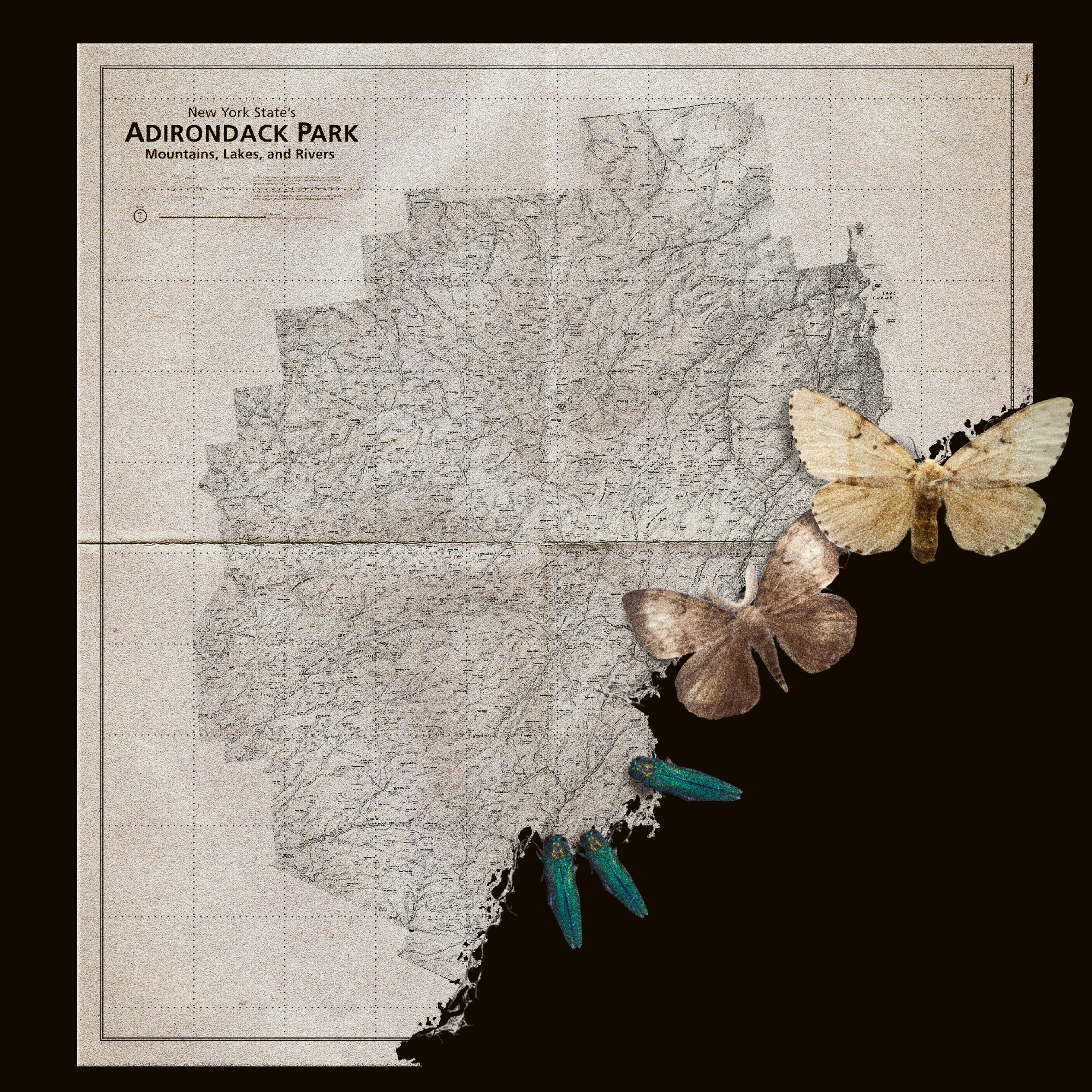
For almost 30 years, I’ve passed some of my time in a cabin in the woods near the southern tip of New York’s Adirondack Park. In various crannies of this 6-million-acre expanse—one of the largest intact temperate forests in the northern United States—I’ve heard great horned owls mournfully calling; watched fluffy loon chicks paddling on lakes between their speckled, watchful parents; encountered wetlands full of pitcher plants, blooming like so many pink pinwheels.
Such serene experiences have more recently been overshadowed by the looming specter of decay. I can’t help but notice pine trunks that are denuded of bark. Leafless beech branches that are pocked with blisters. Bittersweet vines that are strangling new small trees. In fact, similar degradations are affecting more than 1 billion acres of the world’s forests, at a time when their ability to store carbon and cool the planet is sorely needed. The causes are numerous, overlapping, and complex, but climate change is a big factor.
In the Adirondacks in particular, “We are getting warmer now and our winters are getting shorter and less severe,” said Brian Greene, program director of the Adirondack Park Invasive Plant Program (APIPP). That allows “invasive insects and plants to take hold or expand their hold and have a larger impact on our forests, and in the past year or two we’re starting to see some pretty visible effects.”
There are currently more than 450 insect and pathogen species infesting U.S. forests, leading to the deaths of many millions of trees; and 4,000 non-native plants, 750 of them invasive, causing a slew of ecosystem degradations. The question: How do you mitigate current and future damage over spaces so vast?
That’s what APIPP and teams of state and municipal agencies, university researchers, and environmental nonprofits are trying to unpack. The Adirondacks, though, present a uniquely vexing case. The area was aggressively, unsustainably logged in the 1800s, with old-growth trees razed for timber and other products. When the state constitution was amended in 1894 to protect the land (2.67 million acres are protected now, and there are an additional 847,165 acres of private lands in conservation easement), “All those forests started regenerating at the same time, or they were planted by the Civilian Conservation Corps,” explained Jessica Cancelliere, who manages the Forest Health program at New York’s Department of Environmental Conservation.
“We are getting warmer now and our winters are getting shorter and less severe. In the past year or two we’re starting to see some pretty visible effects.”
A forest ordinarily has different-aged trees interspersed with open fields where older trees have been blown down by storms. But the Adirondacks have many acres of roughly the same-aged trees, growing densely and beginning to compete for resources. Their density also allows for insect pests and the diseases they carry to more readily spread between them; these are proliferating now that bug-killing winters are no longer so frigid.
Common scourges here and across the Northeast include the hemlock woolly adelgid, spongy moth, emerald ash borer, beech leaf nematode, certain bark beetles, and conditions like white pine decline that are caused by a constellation of pathogens. Cancelliere said she’s anticipating an outbreak of native spruce bud worm, which hasn’t happened here since the 1970s. “We expect that we’re going to start seeing a lot more mortality on the landscape,” she said.
There are other challenges. The Adirondacks are comprised of both private and state- owned parcels; the state-owned ones can’t be preventively thinned to make a tree stand healthier and less prone to invasion (managers can use chemical treatments, and in some instances trees could be chopped down if they became infested with a pest like the Asian long-horned beetle). Trees are already stressed from periods of too much rain interspersed with drought, which makes them vulnerable to leaf pathogens and needle blights. A dense, closed canopy can’t admit enough light to help new trees regenerate, but this is exacerbated by too many deer snacking on any tree shoots that do crop up.
Black ash trees—an important species in the Adirondacks, along with American beech, eastern hemlock, red spruce, and white pine—usually regenerate prolifically after a stand has been killed off. Now, because of deer browse and eruptions of invasive plants spread by road maintenance and mowing crews, invasive multiflora rose, instead of ash, is often what regenerates instead.
“People might say, ‘Wow, it just looks like we cut a bunch of trees.’” But there’s both method and variation to the tactics employed at Pack.
Near Lake George, on the eastern fringe of the park, is a 2,500-acre private parcel called Pack Demonstration Forest that’s maintained by the State University of New York’s College of Environmental Science and Forestry. Unlike managers at DEC and APIPP, foresters at Pack are able to cut and thin trees at will. Explained manager Michael Federice, this allows them to experiment with practices that could serve as affordable tools for Adirondack landowners, to make their collective 2.5 million acres of private lands more resilient in the face of “so many invasive insects that we can’t really control at all,” he said.
“People might say, ‘Wow, it just looks like we cut a bunch of trees.’” But there’s both method and variation to the tactics employed at Pack. Namely silviculture, which Federice defined as the “art and science of determining which trees we would remove and which trees we would retain to make a healthier, more diverse forest for the years ahead.”
To prevent the spread of something like hemlock woolly adelgid, Cancelliere at DEC might use chemical sprays, injections, and soil treatments, which are expensive and have to be reapplied every few years. She’s also working with a program called Trees in Peril that locates what are known as “lingering trees” that have survived invasions and uses them to propagate genetically trees that could eventually be planted as part of a conservation effort; she would like to build capacity for the state’s nursery to function similarly. Pack Forest is experimenting with various thinning methods instead, which has the added bonus of allowing landowners to generate income from selling harvested trees for papermaking or wood fiber insulation.
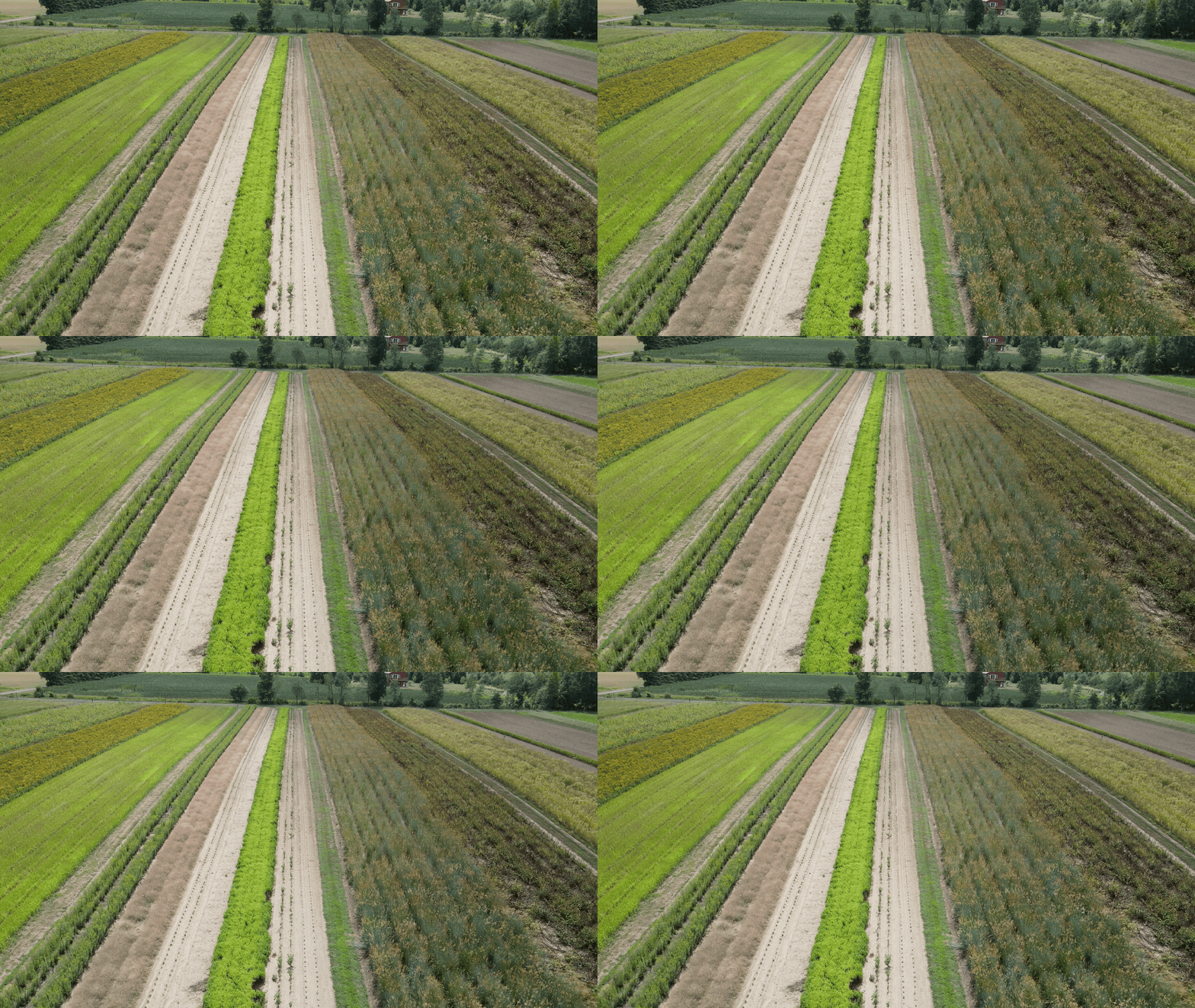
Using research conducted in southern Appalachia, where hemlock woolly adelgid has run amok, Federice and his team have divided a 150-acre parcel into four blocks for ongoing comparison. There’s a control; a block where individual trees are harvested to create more light, air and trees of uneven ages; a crown-thinning block, where groups of about 15 hemlocks per acre get their upper story trimmed on two sides; and a crown release block, which removes trees around the perimeter of certain hemlock stands.
The trick is letting in just enough light to help the trees regenerate and to make them healthier—but not too much, since that favors regeneration by white pine and yellow birch instead of hemlock, which don’t provide as much thermal cover and shade for deer and birds.
“We can’t kill everything, so where do we focus our efforts? What’s important? What can we live with?“
EDC and APIPP might have more limited recourse to fight pests and diseases on public lands, but they’re not entirely without tools of their own. An app called iMap Invasives allows community members to upload sightings of non-native plants and animals, which alerts experts like Greene to areas that need management and monitoring.
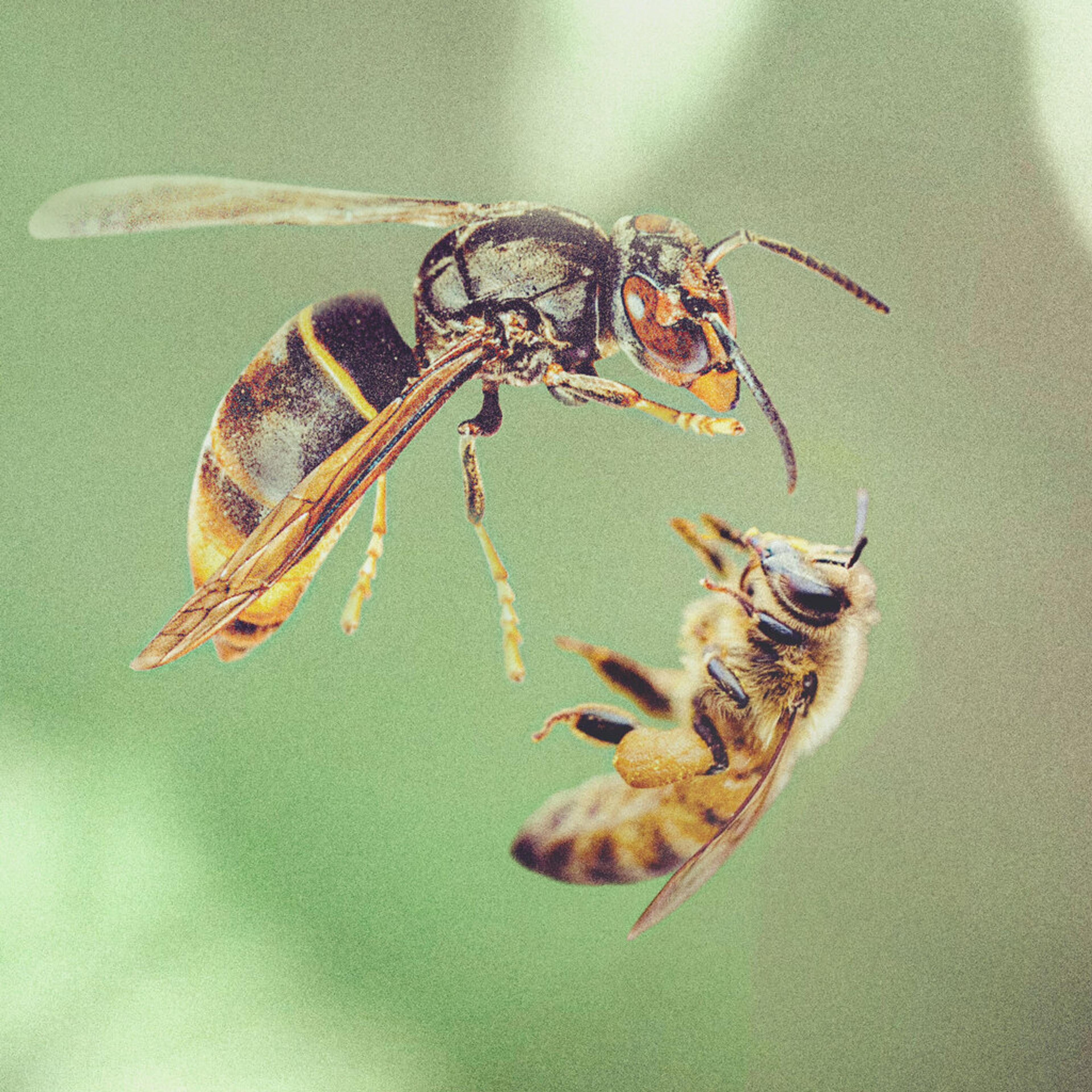
As a biocontrol tactic, APIPP has released parasitoid wasps to eat emerald ash borer larvae, silver flies to feed on hemlock woolly adelgid, and weevils to munch back an invasive marshland plant called purple loosestrife. “The sad part is, for most of these species, once they’re in our landscape they’re going to be forever,” Greene said. “It’s about learning how to live with them and to lessen their impacts.”
To that end, Cancelliere has been thinking about the positives of an invasive-ravaged forest. “In a best-case scenario, unless something really aggressive comes in, like Asian long-horned beetle, I don’t think we’re going to lose everything at the same time,” she said. “Maybe you’ll have clusters of a lot of dead trees, but there will be trees that persist, so you’re going to have a lot more openness in the tree canopy in many areas. That could be a real good opportunity for regeneration of the next generation of tree species.”
Meanwhile, she said, it’s time to start thinking beyond strict ideas of native and non-native when it comes to forest restoration. “We can’t kill everything, so where do we focus our efforts? What’s important? What can we live with? Are there certain [invasive] species we might be able to utilize in really degraded areas, where nothing else survives?” she mused. “That’s a little out there still and most people don’t want to talk about it. But it also gives me hope.”