Cultivating mushrooms in former coal mines—a path to prosperity for Appalachia?
On the far-eastern edge of Kentucky, 426 mines sit unused within a 45-minute radius of Pike County. They are inescapable reminders of a once-prosperous coal industry that steadily declined over the past century. Inside a tunnelled-out room of one of those mines stands a seemingly out-of-place storage shelf you might find in any ol’ supply closet. From a distance, the rows of white, substrate-filled bags look like inventory from an episode of Narcos. But up close they’re bulging with fruiting mushrooms, signs of emergent life in a dark, left-behind place.

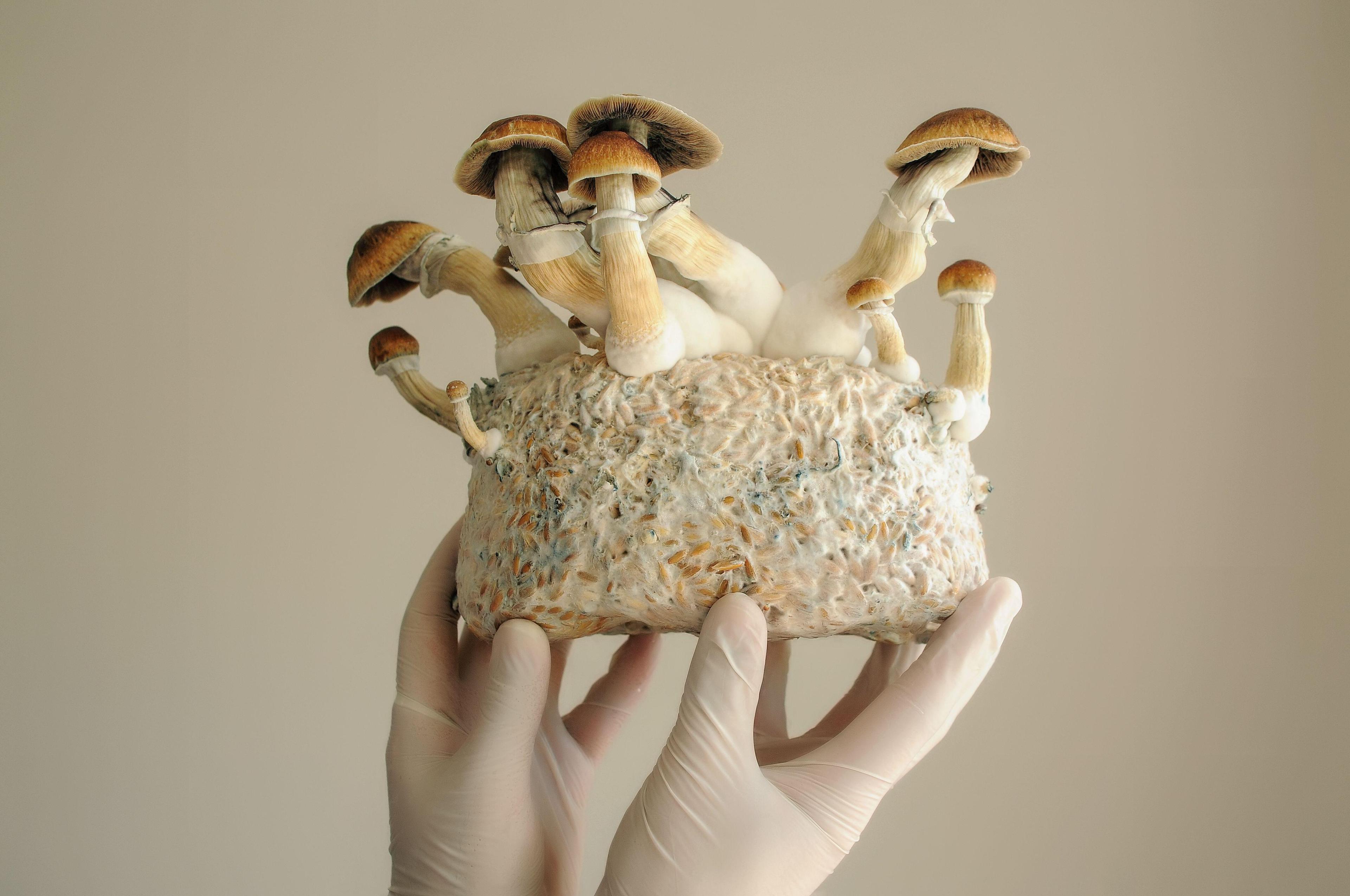
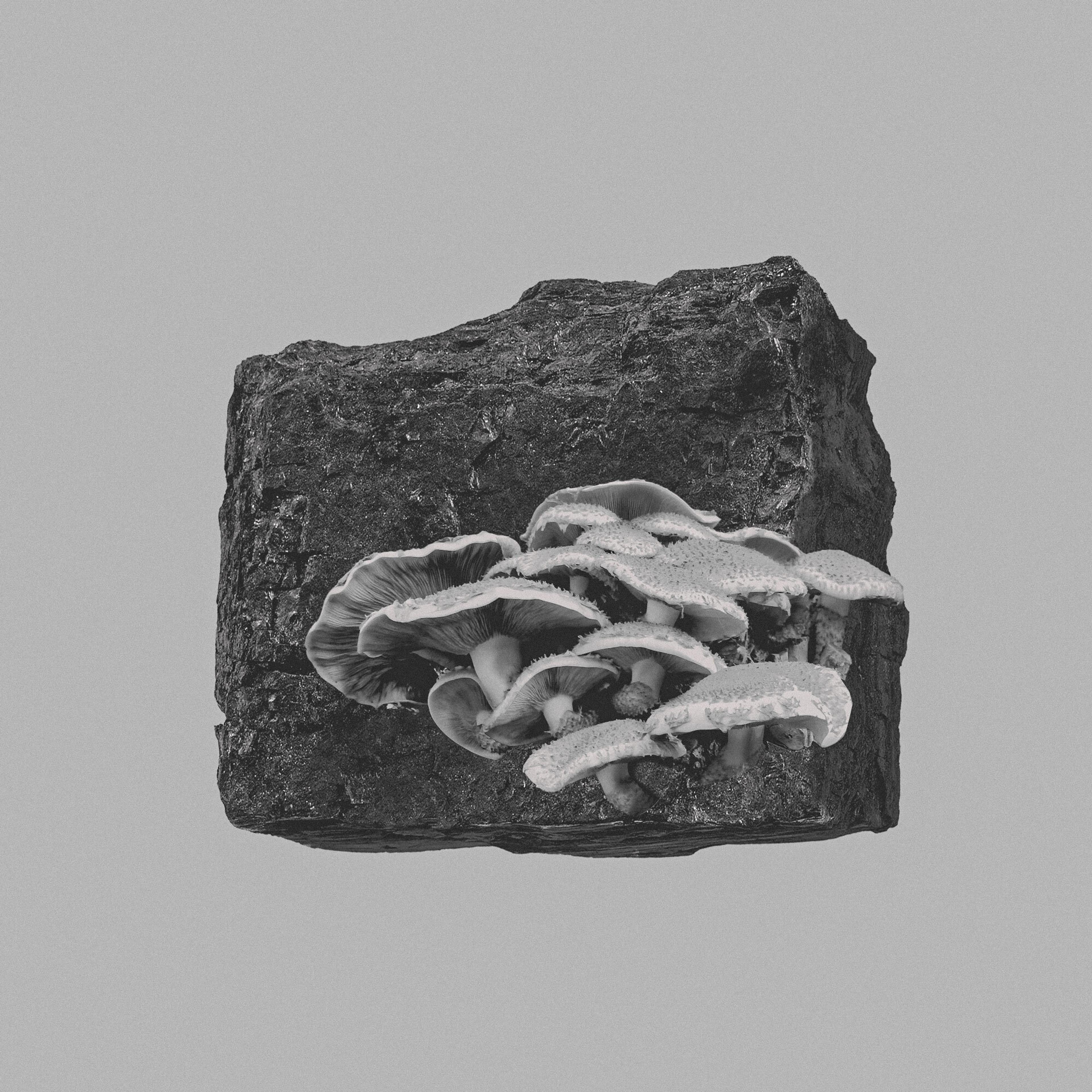
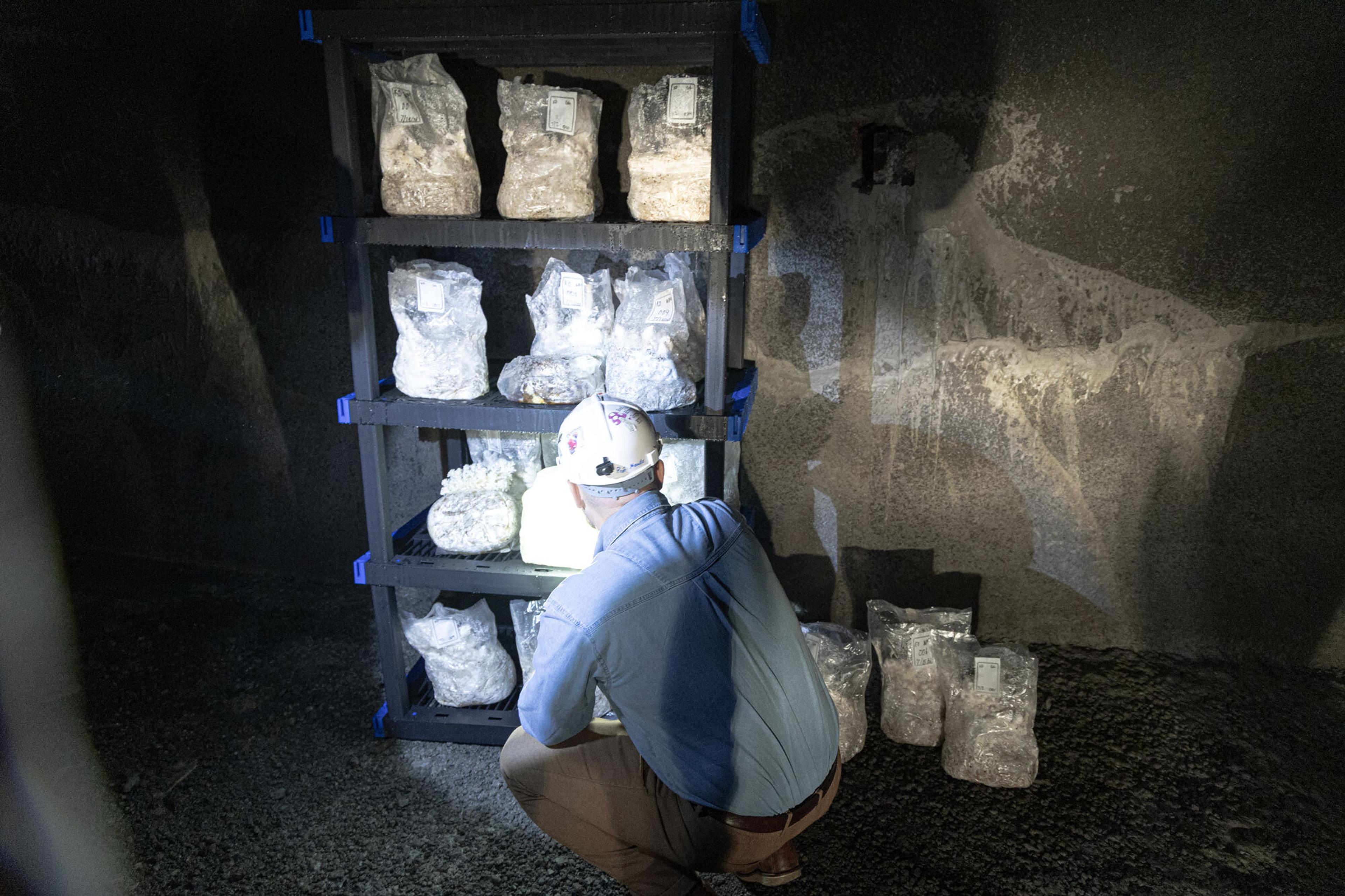
Byron Meade, mycologist and assistant professor of biology at the University of Pikeville (UPIKE), kneels in his khakis to grab a bag off the bottom shelf. The Comb Tooth mushroom, or Hericium coralloides, protrudes from the sterilized lining, resembling a piece of alabaster coral plucked straight from the ocean floor. The light from Meade’s stickered hardhat beams onto the mushroom’s icicle-like branches. “This is looking good,” he nods, spinning the bag.
Over the past few years, Meade has been repurposing the region’s mining infrastructure to breed specialty mushrooms. His research suggests that the subterranean environment bears almost-perfect conditions for mushroom production; Meade now believes Eastern Kentucky could be positioned as a hub for leading cultivation.
“In Appalachia, you can’t reinvent the wheel; you have to use what we got. And for us that’s a lot of coal mines. We’re reinventing agriculture.”
Now, farmers, researchers, and mycologists throughout the U.S. and other countries—many of whom are turning to Meade’s expertise and lab for guidance—are working to develop strains that can survive in their own region’s mines. But as the idea spawns, Meade and his team are working to assess if the model is able to meet large-scale demand, and if it’s a feasible driver for long-term profit in an economically disadvantaged area.
Underground Power
Meade, also known on UPIKE’s campus as “The Mushroom Guy,” “Professor Mushroom,” and “Mr. Fungi,” is a first-generation college graduate whose family lineage is “solely linked to coal.” The former pre-med student turned botanist and biology professor pivoted his focus toward mycology when he started noticing—particularly during COVID—that stressed supply lines left his Appalachian community vulnerable to food shortages.
“It’s literally just using the space as a big giant thermal battery.”
Pikeville is a one-day drive from two-thirds of the country’s population, making it a prime location for distributing fresh food widely. Cultivating mushrooms could also unlock more opportunities to diversify Appalachia’s economy in a region where land can be inhospitable to commercial farming efforts.
After experimenting in his lab with a tent designed to mimic the conditions of a nearby coal mine, Meade said the premise had strong promise. He received the University biology department’s first USDA grant to start expanding his operation, and now, three years later, Meade says UPIKE is home to the largest cultivation lab in the U.S. for specialty mushrooms.
In order for fungus to reproduce into a fruiting body, the environment needs to be just right: cool temperatures, minimal light, and stable humidity. To achieve these conditions, commercial mushroom farms rely on an energy-controlled, indoor climate for year-round operation. Outside of labor costs, though, expenses from cooling, heating, and ventilation are what run the highest figures. The climate of an abandoned mine, however, solves that high-cost issue.
Jessica Baltzersen
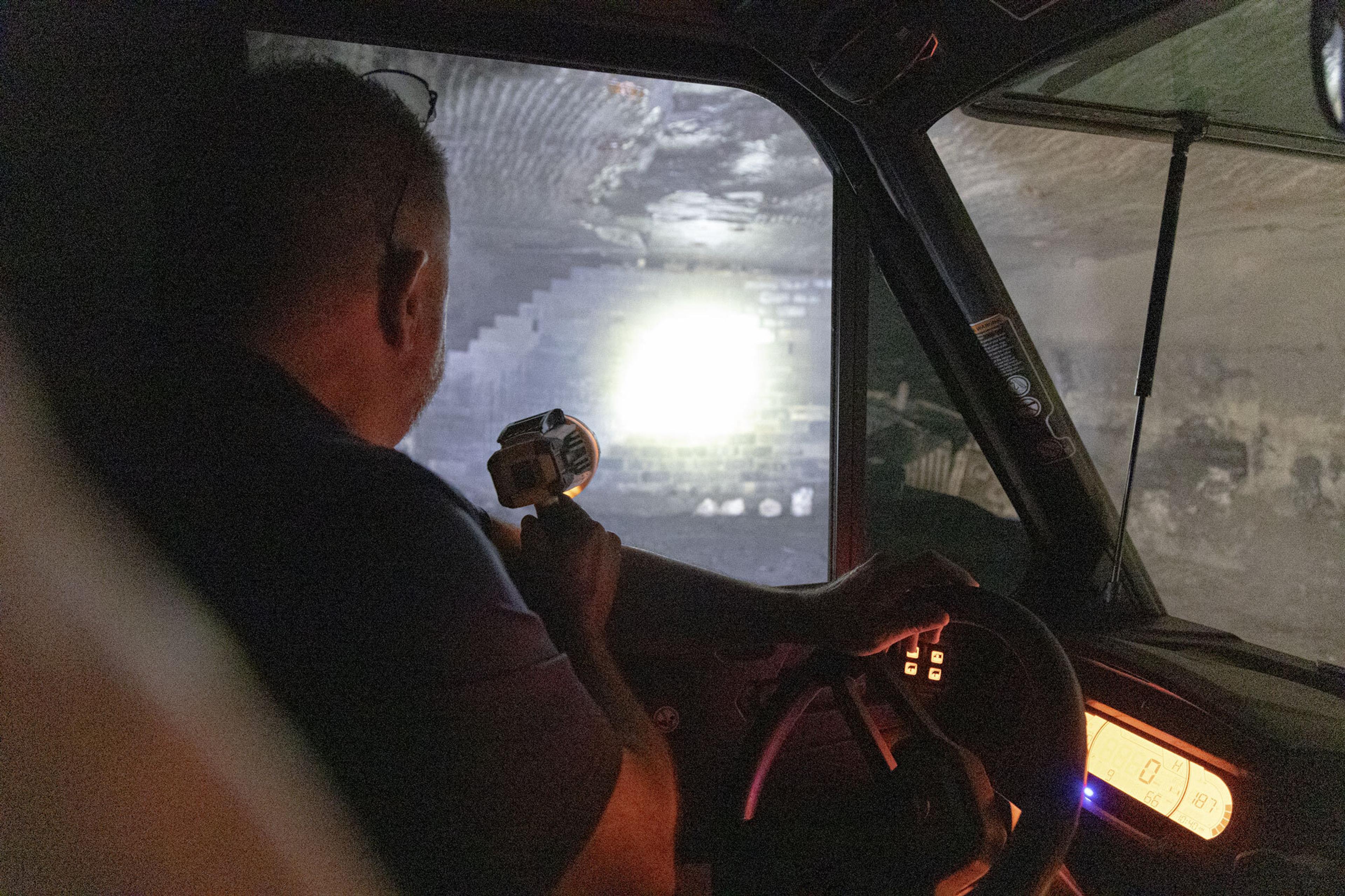
Most below-ground mines already have the ideal temperature, humidity, and airflow needed to produce mushrooms like blue oyster and lion’s mane—without the need for HVAC machinery. “It’s literally just using the space as a big giant thermal battery,” says Meade, who is also helping develop specialty strains for mines in Norway, the Netherlands, Australia, and the western U.S. “What we found since starting this project is that these agricultural constraints aren’t unique to Appalachia.”
A Universal Challenge
When seven of Ryan Chadwick’s restaurants shut down in Aspen and New York City during COVID, the Connecticut-based serial entrepreneur was trying to find a new venture to occupy his attention. So when Chadwick, who has always been drawn to “unique businesses,” learned of an opportunity to acquire partf an unused silver mine in Aspen, Colorado—one of 23,000 abandoned mine lands in the state—he went for it, not knowing where it would lead.
“If this has been growing for the past 100 years, what else could grow in here?”
Inside, he found a veiny fungal network of mycelium splattered like silly string against an old log. “It piqued my interest,” says Chadwick. “I thought, ‘Well, if this has been growing for the past 100 years, what else could grow in here?’”
A quick Google search and Chadwick found Meade’s operation at UPIKE. After using sensors to monitor CO2 and oxygen to ensure his mine was viable, Chadwick began researching with Meade on the use of fungi for reclamation projects. Together, they’re testing whether fungi can clean up contaminated waste rock within the mine. A second phase will test whether they can train the mushrooms to then pull silver out of that rock as a cleaner way to recover the metal.
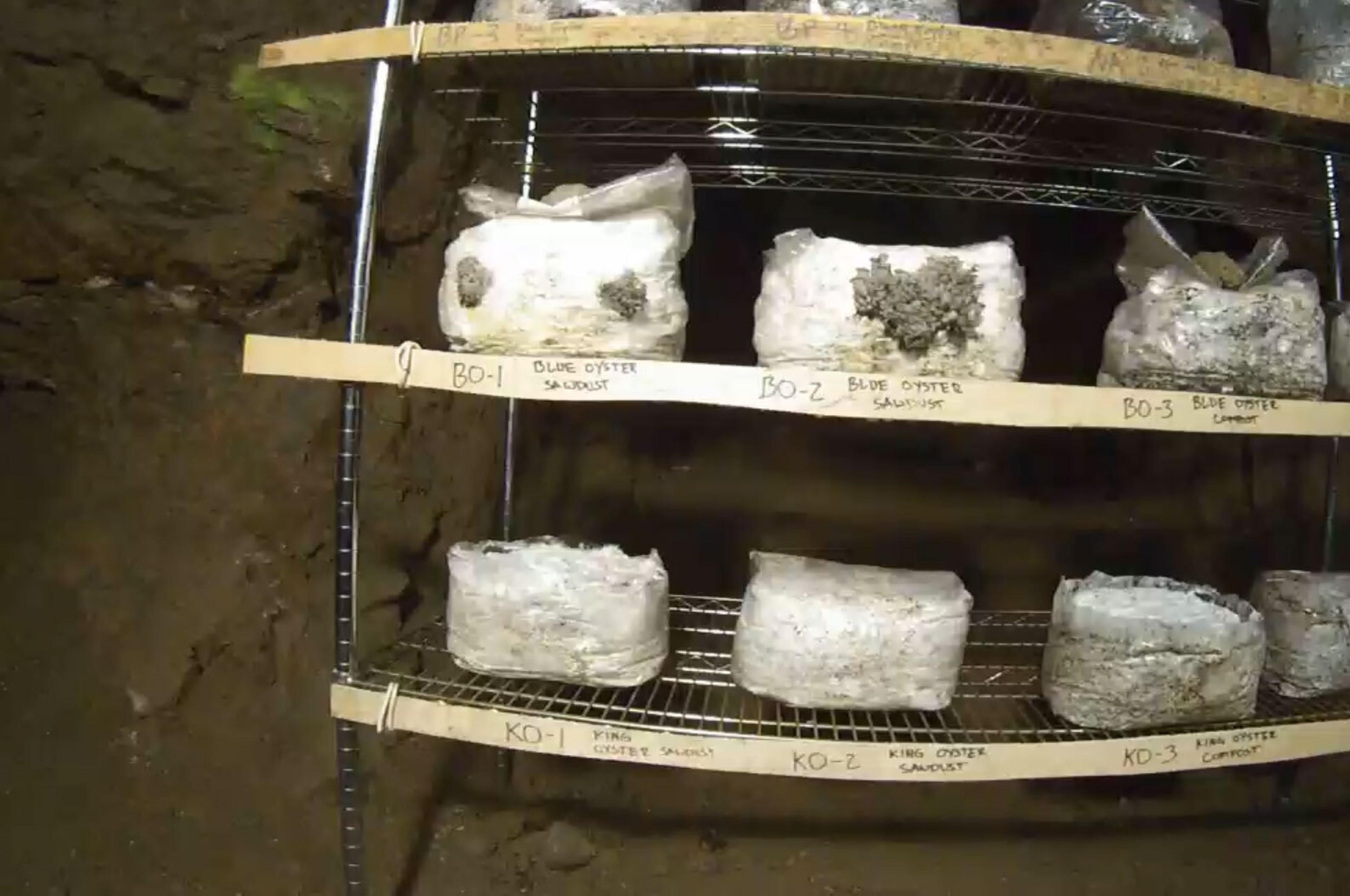
In the future, Chadwick says he may cultivate specialty mushrooms inside the mine for consumption, already having success with oyster and enoki varieties.
Jessica Baltzersen
One of the biggest limitations Chadwick foresees, however, is the operation’s scalability. “It’s actually figuring out how the business would work, if it would become a business,” he says. Before you can grow mushrooms, you need a substrate (like sawdust or straw). The substrate is packed into plastic polypropylene grow bags and then placed in an autoclave, or steam sterilizer, to kill any bacteria or mold. Without these resources of his own, Chadwick has to bag up compost from his local Colorado waste center, theship it to Meade at UPIKE, who sterilizes the material, inoculates it with mycelium, and gets it to spawn before sending it back.
But that’s exactly the pain point Meade is trying to solve. UPIKE wants to provide farmers with an end-to-end service supplying everything they need to grow specialty mushrooms in Appalachia—from custom strains to food safety, packaging, and distribution. “We want to remove as many barriers as possible for small-to-mid-sized mushroom businesses,” says Meade. “Since we are a nonprofit, we can run experiments and trials that a farm may not be able to finance.”
“When anybody hears ‘mushrooms,’ I want them to think of UPIKE. I want it to haunt them.”
In Spring 2027, the university will open the Sachdeva Research and Entrepreneurship Incubator, a $12M facility that will support advanced agricultural research and business incubation. “There are literally a million things you can do with mushrooms,” says Meade—from creating leather and cosmetics to treating wastewater and producing functional medicines and wellness products. They’re even contracted on a space biotech initiative and other under-wraps enterprise projects bound by non-disclosure agreements.
“When anybody hears ‘mushrooms’, I want them to think of UPIKE,” says Meade. “I want it to haunt them.”
Job Stability
In the U.S., over three million people live within one mile of an abandoned coal mine site that hasn’t been cleaned since the Surface Mining Control and Reclamation Act of 1977. The federal law was imposed to regulate environmental impact from active coal mining and mandate the restoration of previously mined land. All told, 84 percent of documented abandoned mine land (AML) problems are concentrated in Appalachia.
George Patterson initially set out to “turn mineland into farmland” with a two-fold mission: To create jobs in his home state of West Virginia, and to build a sustainable enterprise utilizing dirt as a waste product. After graduating from college in 2018, Patterson began growing mushrooms in shipping containers on top of a strip mine. He later moved his commercial mushroom operation, Hernshaw Farm, into the Memorial Tunnel—a former West Virginia Turnpike passageway that slices through Paint Creek Mountain. The tunnel is nearly an identical growing environment to a mine.
Ultimately, Patterson wants to take the region’s economic disparity caused by a legacy of coal-industry decline and turn it on its head—using Appalachia’s past to create a job-secured future.
Jessica Baltzersen
“Oftentimes, the coal company comes in and they’re gone,” says Patterson. “And well, it’s like, how do we figure out what to do next? And that’s kind of where we’re looking. We’re surrounded by mines and all this industrial past and infrastructure. Let’s get together and do the right thing the right way to grow, you know? So I hope we’re able to.”
Patterson is proving it’s possible. Hernshaw Farm has grown to seven employees and has supplied mushrooms not only to regional markets, but across all 50 states and Canada by shipping growing kits and exotic dried mushrooms. Half of the 2,802-foot tunnel is already filled with mushrooms, and he has his sights on filling to capacity by 2030.
When Patterson first started, he was the only commercial mushroom farmer in the state of West Virginia. As he hoped, though, that’s changed. “Luckily, I think because of me, a lot of little farmers have popped up,” he says. “But we’re now at a scale where we’re producing so much that we’re able to help other growers and provide them with stable block supply.”
Meade says that UPIKE is also investing a lot of their efforts into how they can bring businesses into the region. Research shows that counties with more AML damage have higher rates of poverty than the national average, especially in Appalachia, where it’s 15 percent. “The area just needs jobs,” says Meade. “I hate that folks have to move away from here to support their families.”
The expansion of the region’s burgeoning agricultural resources, though, is already drawing outside interest. According to Meade, four mushroom businesses want to relocate to Eastern Kentucky next year because of key partnerships with UPIKE’s lab, workforce development grants, and access to a shared-use facility.
“The area just needs jobs. I hate that folks have to move away from here to support their families.”
When Meade brought his fungi to flourish in the depths of Leckie Collieries Mine No. 1 in Pike County, he joined the mine’s owner, Kendall Wright, who uses some of the underground space for his own experiment: aging bourbon barrels for a distillery he co-owns.
For decades, people throughout Appalachia have always used what they have and turned it into something new. “I just think that we need to continue to grow, and we need to continue to be Appalachian,” says Patterson. “We need to continue to do what many call ‘Appalachian ingenuity,’ you know, doing more with less.”
Travel for this story was supported by an Alicia Patterson Fellowship through the Fund for Investigative Journalism.