The U.S. peanut industry is threatened by disease and climate change—but the main tool to help peanuts adapt is endangered.
Chase Farms in Oglethorpe, Georgia, was started by Donald Chase’s father and grandfather in 1952. The Chase’s peanut crop averaged 6,000 pounds per acre—until the early 1990s. That’s when tomato spotted wilt virus hit their peanut plants and slashed output to about 3,500 pounds per acre. The virus was first found on peanuts in 1971 in Texas and spread during the 1980s and early 1990s through the Southeast.
“It was devastating to the entire industry,” said Chase, who is chair of the Georgia Peanut Commission. “You ask yourself, is this something that we can continue to do or what are our options here?”
There did end up being an option—one option.
“People were not prepared,” said Sergio Morichetti, agronomist at Sanchez Farms in Old Town, Florida. “There were no varieties resistant to tomato spotted wilt virus, except for one that saved the industry. That was the case of Georgia Greener.”
Peanuts are vulnerable to diseases and viruses, as well as heat stress caused by warming temperatures, and it’s breeding programs like the one that developed the Georgia Greener which have protected the U.S. peanut industry. Key to breeding resistant varieties are crop wild relatives, but that method is at risk.
The main source for U.S. peanut breeders is the USDA peanut germplasm collection in Griffin, Georgia. But researchers are sounding the alarm: The collection hasn’t had wild peanut relatives added since the early 1990s. The reason? Peanuts originate from South America and it’s prohibited to remove wild relatives from their native environments. Yet wild relatives have resistance to diseases and pests that their cultivated cousins do not.
“Wilds have extremely good resistance to fungal diseases and to nematode diseases,” said Soraya Leal-Bertioli, senior research scientist at the University of Georgia. “Only wilds have resistance to those nematodes. No cultivated peanut does.”
Wild peanuts are found in Peru, Bolivia, Argentina, Paraguay, Brazil, Ecuador, and Uruguay. Wild relatives and commercial varieties aren’t compatible, Leal-Bertioli explained, so researchers need to find two wild relatives species that are and cross them until they get a viable plant—and that takes years. “That’s a lifetime of work because each combination may take 10 to 12 years,” she said.
“All the commercial varieties we have of peanuts have a very narrow genetic basis,” he said, and that makes them vulnerable to attacks.
The germplasm collection was started in the 1930s and currently has about 9,000 cultivated peanut and 600 wild relative varieties. Researchers have known for years that there’s no new wild germplasm being added to the collection, Leal-Bertioli said. She said at first U.S.-based researchers wondered why their counterparts in South America weren’t sending new species to add to the collection. But it’s illegal to take these plants out of their native countries. “They realized they could go to jail if they did that. That became really very serious,” she said. As a result, “the collection is static.”
All commercial peanut varieties come from a single cross that happened 10,000 years ago, said Guillermo Seijo, geneticist at FACENA-National University of Northeast in Argentina, and that’s the basis for all commercial peanuts now. “All the commercial varieties we have of peanuts have a very narrow genetic basis,” he said, and that makes them vulnerable to attacks.
In Argentina, the fungus peanut smut appeared in 2000 and 30% of the crop was lost. Seijo and his colleagues began testing wild species and found some had resistance to peanut smut. They bred a new commercial variety that saved the production of peanuts in Argentina. Peanut smut hasn’t yet reached the U.S., but it is a concern.
Ninety species of wild peanuts have been found and they’ve adapted to a wide range of climates, said Seijo. They are also rich in proteins, ranging from 20% to 35%—compared to cultivated plants’ 7%—and have high oil content, up to 60%. “The industry can get very interesting alleles for making new products,” said Seijo.
“It’s a huge concern that many populations are already lost and the ones that remain in nature are under great danger.”
Tomato spotted wilt is still a threat to peanut growers, but they also have other concerns: drought, heat, and new pests and viruses. In Florida, where Sanchez farms grows between 7,000 and 8,000 acres of peanuts, Sergio Morichetti said diseases are his major concern, given the climate. “We are in Florida where we have hot and wet weather which favours the diseases on peanuts,” he said.
He’d like to see more open trade of varieties. “It’s important for every country to have access to the wild relatives because you can bring new sources of resistance to the cultivated species.”
Sachin Rustgi, a biogeneticist at Clemson University, is working on projects to develop heat-tolerant peanuts and varieties that don’t trigger an allergic reaction. In both cases, the wild peanut materials he would like to use are housed at the International Crops Research Institute for the Semi-Arid Tropics in India, which he hasn’t been to access. “Even after a lot of exchange of papers and getting approvals from the US Department of Agriculture, I could not still get that material, so we were denied a grant,” he said.
Hot Roasted Nuts!
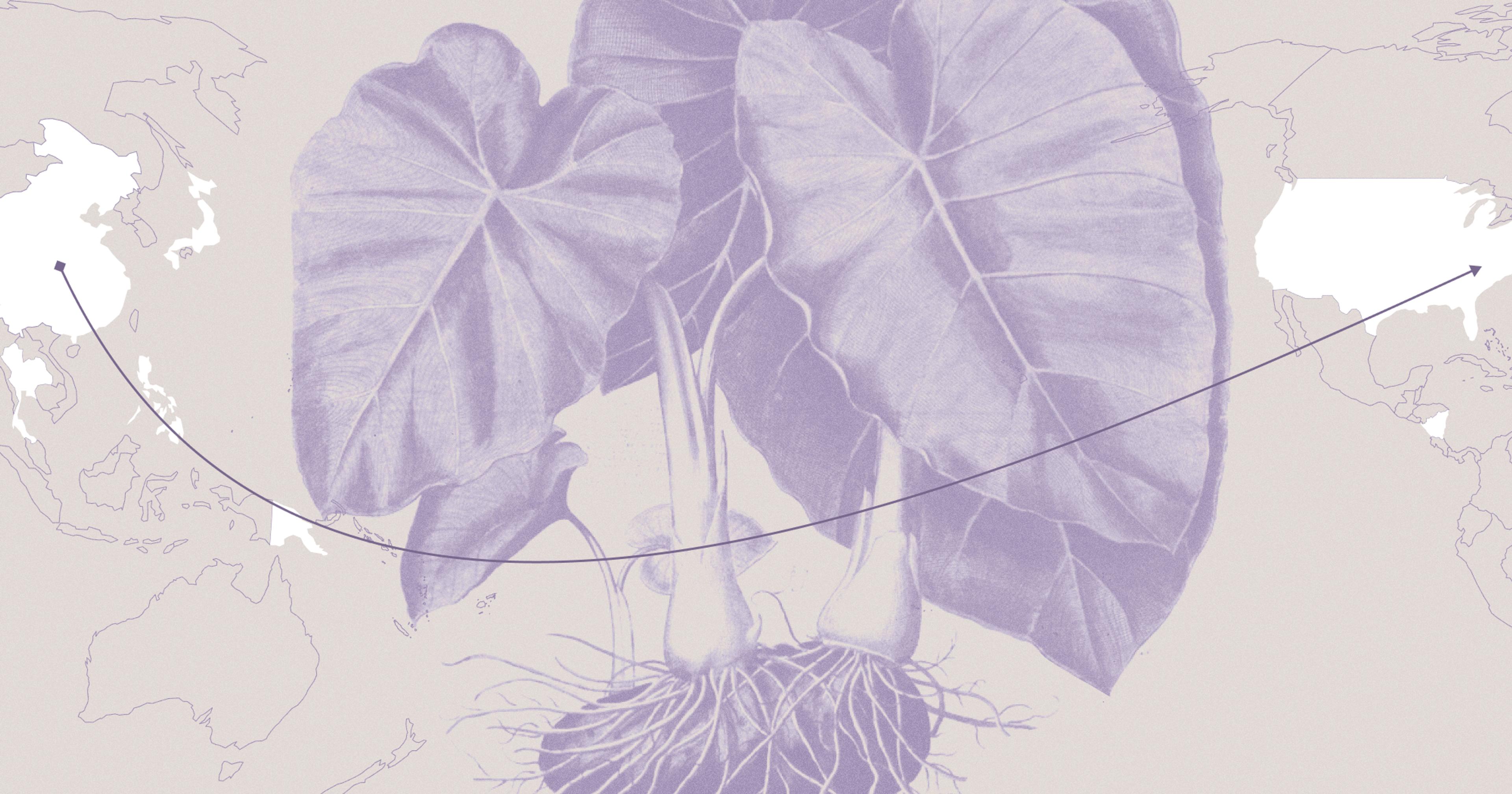
There are almost 2 million acres of peanuts planted in the U.S., and they’re a $700 million export market. But peanuts weren’t always a staple crop in the U.S. Even though they originate in South America, they came to the U.S. via Africa and were originally grown predominantly as an animal feed and oil crop, and only considered food for the poor. They became popular with Union soldiers during the Civil War, and later PT Barnum’s traveling circus where roasted peanuts were sold to audiences across the country.
But it’s thanks to George Washington Carver that the U.S. has the peanut industry that it does today. He was born into slavery in Missouri in 1865 and eventually invented over 300 peanut-based products, and given the moniker “The Peanut Man.”
Yet, in their native regions, wild relatives’ environments are being destroyed by industrial activities, cattle ranching, and development. Seijo describes collecting trips in the 2000s in the Grand Chaco region, which was a wild environment at the time that’s now been converted to large-scale industrial farming. “Most of the area in which wild peanuts used to live are now agriculture,” said Seijo. “So it’s a huge concern that many populations are already lost and the ones that remain in nature are under great danger.”
They aren’t being conserved in their home countries, either, and that’s due to lack of resources, he said. “The only way that wild peanut or any other species can be conserved ex situ is having duplicates in many places,” said Seijo. “Unfortunately, in South America we have very little infrastructure to conserve these materials.”
“With the speed of the destruction taking place these things will disappear from the face of earth.”
Rustgi thinks setting up a funding mechanism is one way to solve the problem so that these countries can preserve their wild peanuts. “Right now those countries do not have resources to maintain this,” he said. “With the speed of the destruction taking place these things will disappear from the face of earth.”
The main roadblock that stops wild relatives from being taken out of their native countries is the Convention on Biological Diversity and the Plant Treaty, which were meant to protect biodiversity and guard against biopiracy, amongst other things. They fully came into effect in 2004. One solution put forward by Leal-Bertioli and her colleagues is to list peanuts and their wild relatives on Annex 1 of the Plant Treaty, which essentially makes an exception for plants that are considered crucial for human survival. Lean-Bertioli is not worried about her own work with peanuts but for future generations, she said, “it’s a tragedy.”
Morichetti sees wild relatives as an important tool for peanut growers to adapt to growing conditions and use fewer chemical pesticides (there aren’t yet any organic methods that fully protect peanuts growing in Florida’s climate).
“I think the integration of wild species into the cultivated species is a great thing to introduce resistance because if not you have to rely only on chemical pesticides,” he said. “If you are able to put genes, making crosses and add resistance to root nematodes, leaf spot, whatever, it’s a great tool for farmers. There’s no doubt about it.