The effects of cattle on soil health are well known. But other animals can help regenerate pastureland.
Amid the rolling hills and hollers of West Virginia, about an hour’s drive from Morgantown, Liz Riffle has spent the past nine years managing a herd of large, charismatic herbivores that most people might instead expect to encounter in Yellowstone National Park. Though today they’re largely associated with the wide open spaces of the West, bison — also known as the American buffalo — used to roam all across much of North America, before being hunted almost to extinction in the 1800s. When Riffle and her husband first decided to start producing meat nearly a decade ago, they turned not to cattle, but bison.
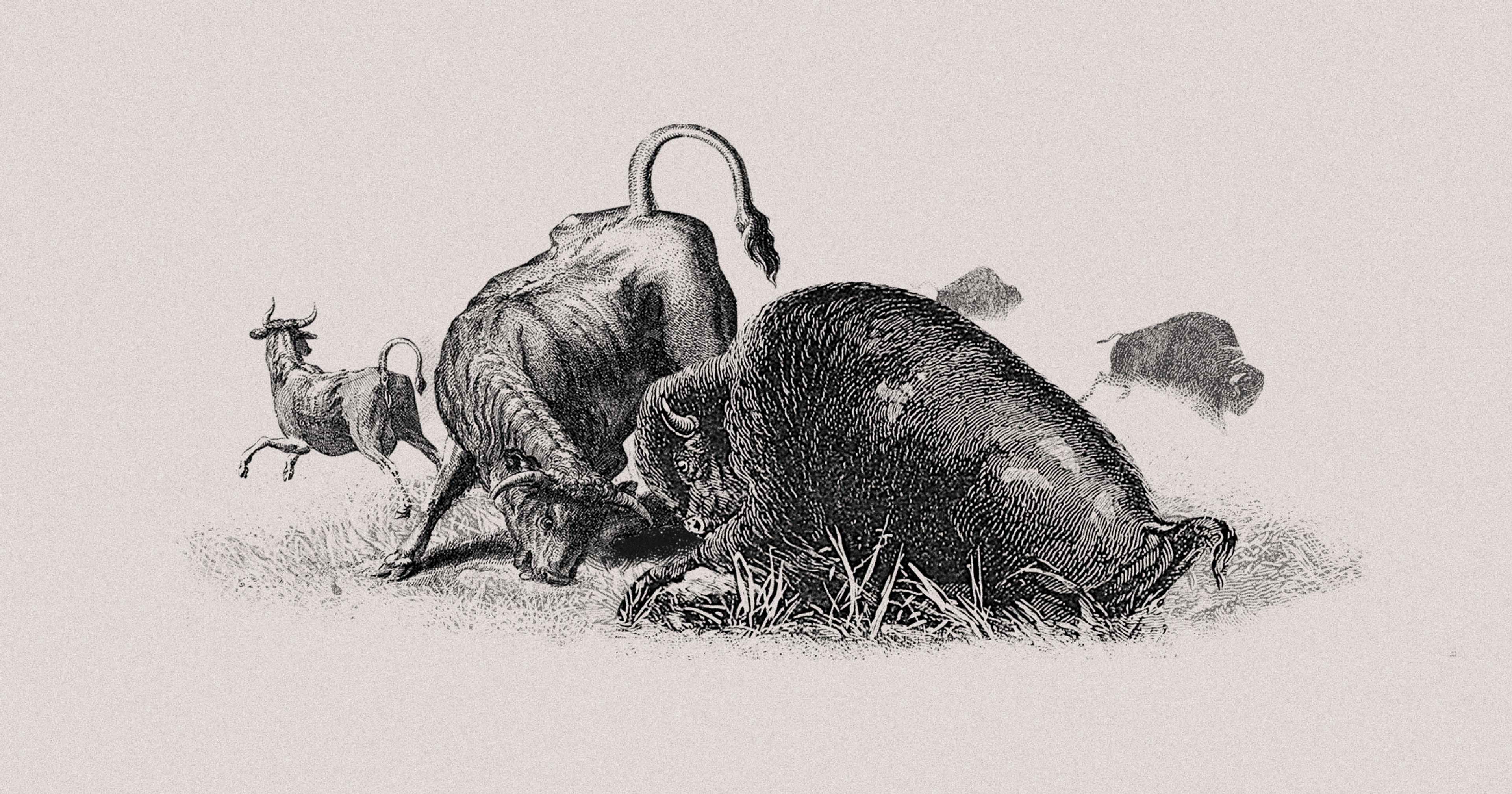
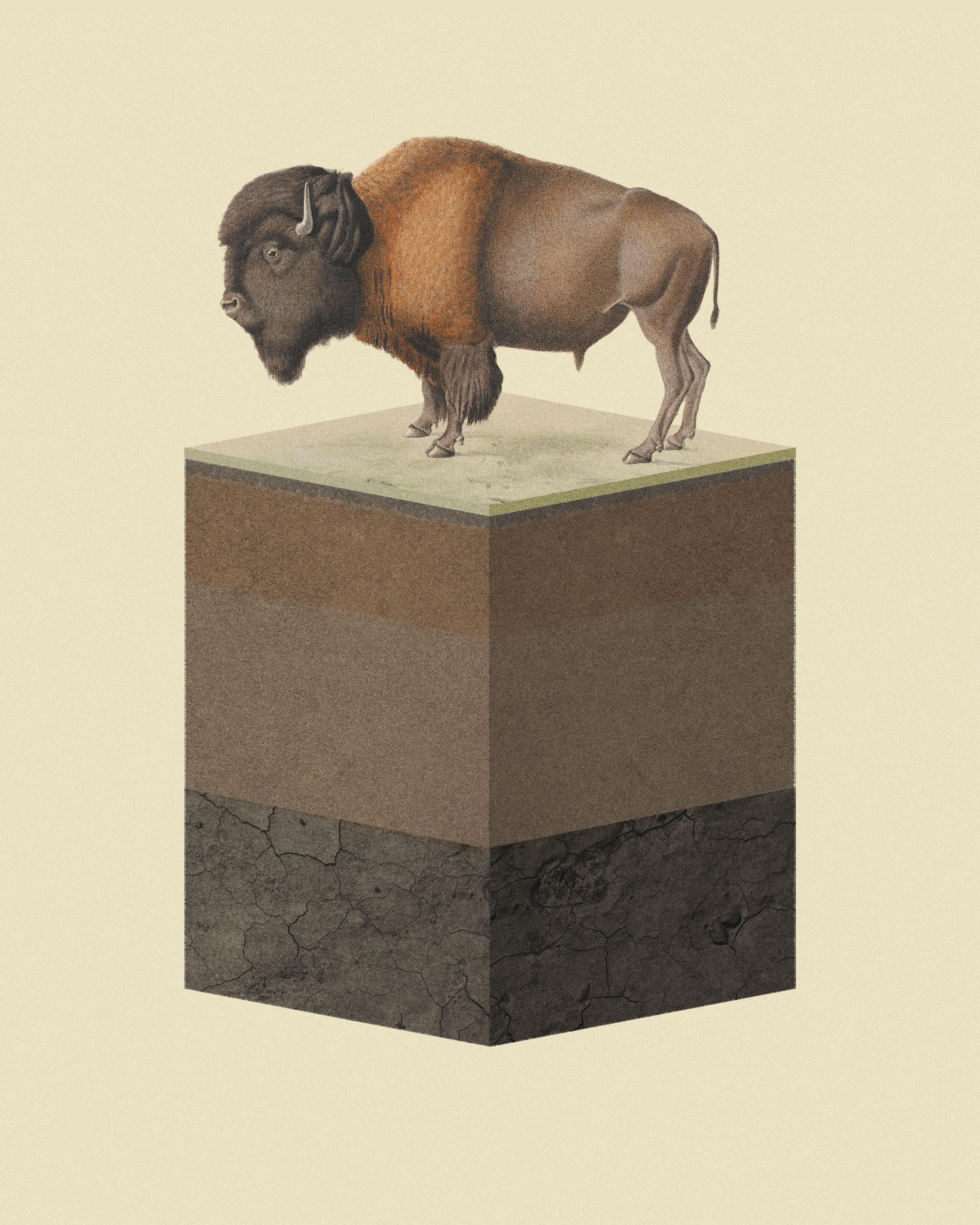
“[Bison] are a keystone species,” organisms that play a crucial role in maintaining ecosystems, Riffle told Offrange. “We wanted to put animals back on the property that could potentially make the ground and the grass better than what it was before we purchased [it].”
The idea that grazing animals can help, rather than hinder, the development of healthy soil has been gaining ground in recent years. Though industrial cattle operations have been known to trample soil and pollute waterways with their waste, more small-scale agricultural producers have begun to realize that adding cattle to their corn or vegetable or operation helps improve their soil health. A growing number of scientists and environmental advocates, meanwhile, have recognized the importance of grazers for maintaining natural landscapes, such as biocrust and grasslands.
Cows, though, aren’t the only animals that could potentially benefit the soil, whether on a farm or in an ecosystem like a prairie. Some farmers, like the Riffles, are experimenting with introducing other herbivores, such as bison, sheep, and goats — all of which can impact their environment in subtly different ways. In doing so, they’re helping to answer questions about best management practices in a field that’s so far mainly concentrated on cattle.
That’s especially necessary because the biggest difference isn’t necessarily in the animals’ natural behavior, but in how they’re managed, according to Sarah Holloway, a master’s student working with the Confederated Salish & Kootenai Tribes of the Flathead Indian Reservation in Montana. “Whether you’re using cattle or sheep or bison, grazing intensity is going to be one of the biggest things that you can do — making sure you’re not overgrazing, regardless of what species you have out there,” Holloway told Offrange. That’s especially important during drought years, when land that may have previously been able to support a certain number of animals can no longer sustainably do so.
Research comparing the specific impacts of different grazing animals on soil health is scarce, said Sasha Gennet, a science and policy advisor at The Nature Conservancy, a nonprofit conservation organization; one of its ongoing projects works with ranchers and tribes to reintroduce bison to North American grasslands. Bison and cattle are the most similar, preferring open grasslands where they can range widely, although cows might stick to more shaded areas closer to waterways, Gennet said. They impact the soil in numerous ways, both good — cycling nitrogen and other nutrients from the plants they eat back into the earth through their waste — and bad — trampling the dirt, resulting in compaction that can decrease its ability to absorb water when it rains.
Research comparing the specific impacts of different grazing animals on soil health is scarce.
Still, there’s plenty of research showing that bison — along with other native species like elk and pronghorn — can help restore grassland habitat in places like Yellowstone National Park. One paper published last year in the journal Science found that bison help to fertilize the soil and make plants more nutritious, benefiting other animals and the ecosystem as a whole. Another study found that areas grazed by bison and other wild herbivores supported 20 percent more grasses than those that weren’t. These studies have appeared alongside a flurry of stories about producers switching from cattle to bison ranching.
Holloway is currently establishing a baseline soil health study to better understand the impacts of bison on land belonging to the tribes, where the animals were first introduced more than 100 years ago. She said that so far, she’s seen a slight increase in soil carbon, which helps retain water and prevent erosion, in areas that have been grazed by bison, compared to areas that were fenced off since the 1970s. Still, she said, many other soil health indicators — such as acidity, topsoil depth and electrical conductivity — have yet to be measured before any conclusions can be drawn. “There’s a lot of hype around how bison are better” for the soil than cattle, Holloway told Offrange, “but not a lot of research to back it up.”
The Riffles say they’ve seen benefits to their West Virginia property as well. In crafting their approach to bison ranching, Riffle and her husband followed a framework known as Holistic Management, developed in the 1960s by Zimbabwean farmer and ecologist Allan Savory. The idea is to manage a herd in such a way that mimics the evolutionary grazing patterns of cattle, which Savory argued would help regenerate soils and restore damaged grasslands. In practice, that means moving the animals frequently to allow grasses to regenerate fully before being grazed again. This also prevents livestock from compacting the soil too much by trampling one area excessively.
Since purchasing their 64-acre farm in 2017, the Riffles have seen grass on the property growing higher than it was before — up to their shoulders in some cases. They’ve also noticed improvements to the topsoil, which Riffle said now absorbs water during periods of heavy rain instead of allowing it to run off and flood their driveway. At the same time, they’ve been able to support a bison herd large enough to sustain a small business, which operates mainly by selling meat at farmers’ markets and cooperative stores throughout West Virginia, Maryland, and Virginia.
Bison, Riffle said, are one answer to the question, “How do we do a better job of feeding ourselves without degrading our land base?”
While bison can be used in many of the same contexts as cattle, smaller grazers such as sheep can help return nutrients to the soil in places where large animals might be difficult to sustain. Research from the University of Montana has found that sheep can help improve microbial diversity on vegetable fields, potentially increasing yields and boosting soil health. And unlike cattle, sheep are small and portable, requiring less fencing to keep them away from delicate crops. Sheep grazing also helps sequester carbon underneath solar panels, a practice known as “solar grazing,” and sheep can help reduce herbicide use by controlling weeds. They can be especially useful in countering the spread of invasive species, as researchers at Boise State University in Idaho found when utilizing sheep to combat invasive cheatgrass.
The idea is to manage a bison herd in such a way that mimics the evolutionary grazing patterns of cattle.
Similar to sheep, goats are small and portable — but unlike bison, sheep, and cattle, grazers that primarily eat low-lying vegetation like grasses, goats are browsers. That means they target higher woody plants, such as shrubs and small trees, consuming various parts of the plant like leaves, twigs, and fruits along the way. This has given goats a bad rap in some parts of the world — such as in Mongolia, where they have been blamed for overgrazing and desertifying grasslands by pulling plants up by their roots.
In the U.S., however, goats form a tiny fraction of livestock, with only about 2.5 million in the country compared to around 94 million head of cattle. That means their effects on the environment are far more limited, and their uses more targeted. For example, goats have been used as a tool for combating wildfires by eating invasive plants such as woody shrubs. In this case, their voraciousness is a plus, creating natural firebreaks around vulnerable communities. Their hoofprints also help with seeding native plants, such as on the Pueblo of Sandia in New Mexico. And with their lighter frames, goats, as well as sheep, don’t compact the soil as much as larger animals like cattle and bison.
That doesn’t mean goats can just be let loose anywhere. In traditional grazing systems around the world, Gennet said, many pastoralist communities have mixed herds, which include some browsers and some grazers. Whether cows, bison, sheep, goats, or something else (Llamas, anyone?), choosing what animals to introduce to the land depends on your goals for that environment, she explained. For example, if there is a high degree of encroachment by woody species, goats could be part of the grazing plan that addresses this problem.
“Grazing is a part of these systems, a form of disturbance that maintains grasslands so they don’t convert to shrubs or forests,” Gennet said, adding that now, we have a pretty good understanding of how to manage these rangelands. Organizations like the Savory Institute help train producers in optimal grazing management practices, along with government bodies like the USDA. “Maybe 100 years ago it wasn’t as clear, but between the ranching community, the scientific community, and indigenous knowledge, those pieces have come together.”