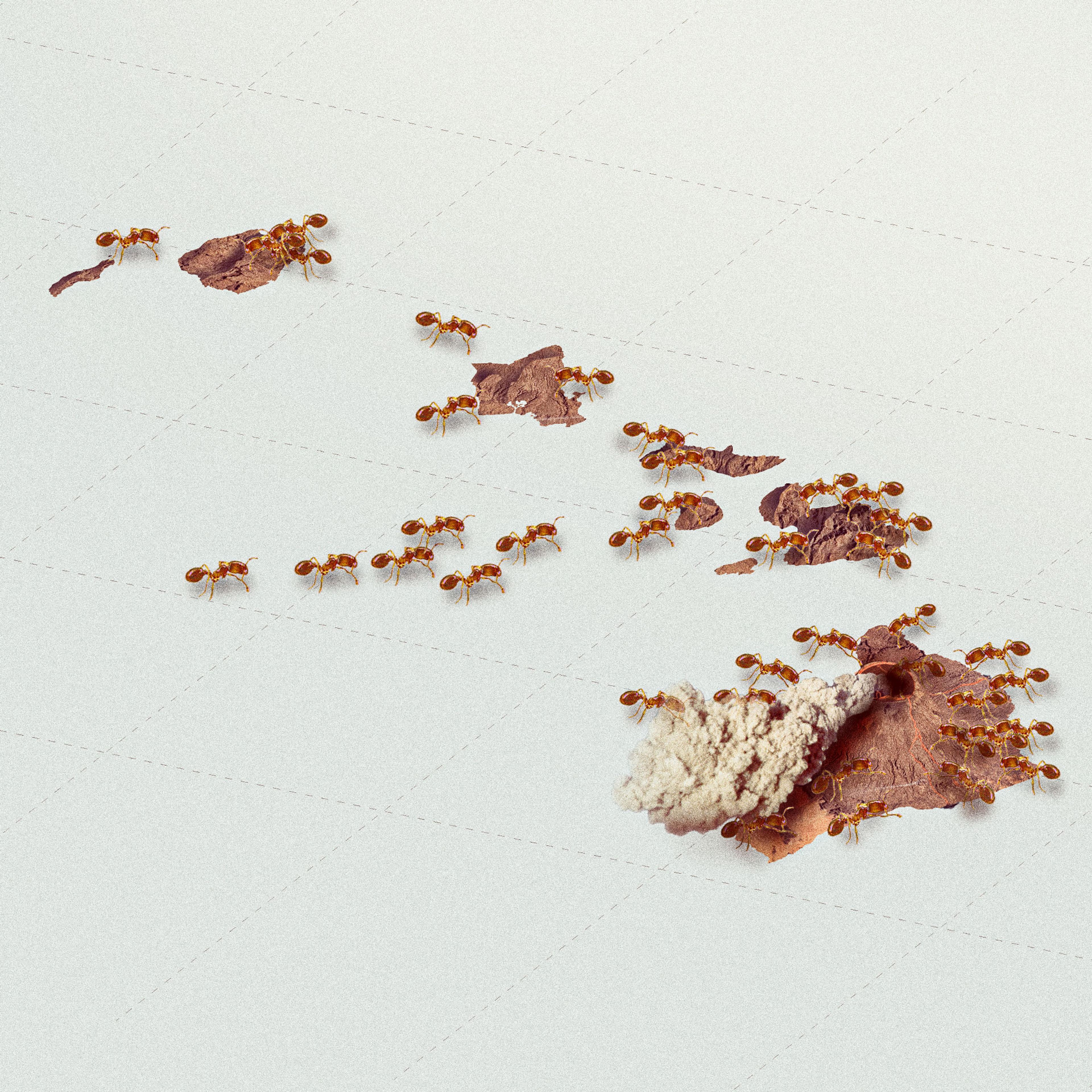
Hawai`i’s invasion of little fire ants is taking a painful toll on farmers and farmworkers.
Beginning in the early 2000s, a movement began to surge in Hawai`i to bring back breadfruit. The Big Island and the rest of the Hawaiian archipelago import something like 90 percent of the foods its residents eat. Thus, agroforestry operations featuring traditional breadfruit—‘ulu in Hawaiian—were considered a way to “make Hawai`i more self-sufficient, particularly in the staple food category,” said Dana Shapiro, co-founder of the Hawai`i ‘Ulu Cooperative. Festivals were held, featuring cooking contests and demonstrations. Thousands of ‘ulu seedlings were given away, to be planted on small acreages that might also feature outcroppings of mango and coffee and cocoa and papaya and macadamia nut and papaya and sweet potatoes and taro.
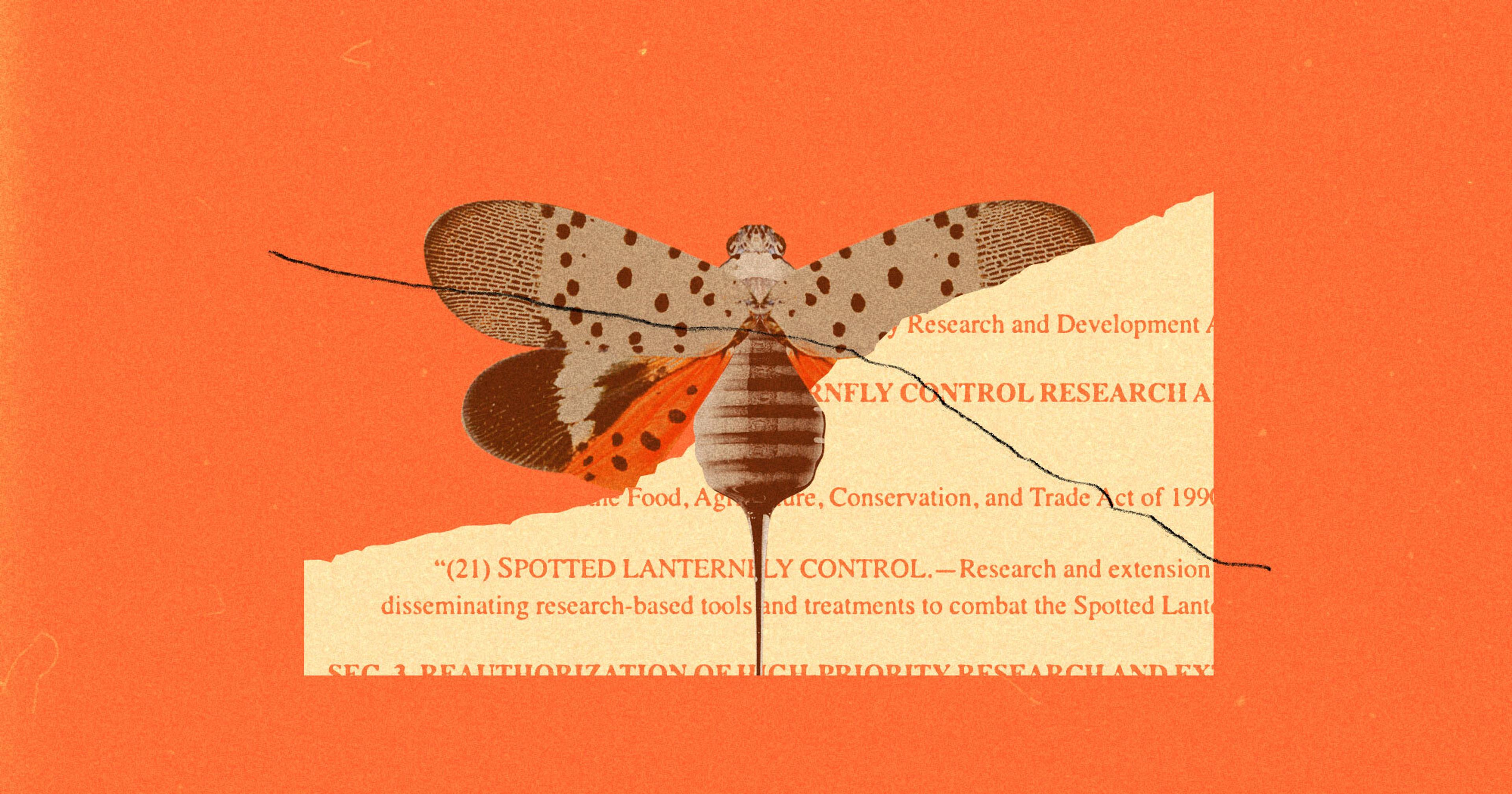
Eventually, though, that heady collective vision of a more locally food-secure Hawai`i bumped up against an uglier reality: the state’s designation as the invasive species capital of the world. The U.S. Forest Service estimates that a new pest species arrives in Hawai`i every 18 days; in 1999 it was little fire ants’ (LFA’s) turn. LFA were first detected in Puna on the Big Island, having arrived from Florida in shipments of nursery plants. By 2015 LFA were ubiquitous, spreading misery on farms across Hawai`i before making their way to Maui, O`ahu, and Kaua`i.
“Combine [LFA] with the coffee berry borer, and combine that with coffee leaf rust, and you got a trifecta of sadness right there,” said Chantal Chung, a grower of coffee and other tree crops in Kona. LFA are not deadly to trees on their own, like the invasive Queensland longhorn beetle that lays eggs under the bark of candlenut, cocoa, ‘ulu, and citrus trees, which hatch and chomp their way through to the other side. Rather, LFA have a mutualistic relationship with pests like aphids and scale, which produce sweet, sticky honeydew that ants love to eat; the ants’ attentions increase pest abundance and they also move them around from plant to plant.
Branches become so thick with these other pests that it might even interfere with pollination, “so you’re getting less flowers coming out and the tree itself is unhealthy,” Chung said. Chung prunes her trees every year to keep them in good condition, but LFA can burrow in through the resulting wound “and once they hit the core, that’s the end of that,” she said. “It’s just another barrier to having a profitable business.”
Melody Euaparadorn is outreach specialist at the Hawai`i Ant Lab, an invasive ant research, prevention, and management project of the University of Hawai`i that was founded in 2008 to get the Big Island’s LFA invasion under control. By that time, LFA had had a full decade to get established, and they thrived in the absence of natural predators and effective poisons. “We only had granular ant bait; you put it on the ground and it looks like corn grits,” Euaparadorn said. “But it was soon discovered that ground treatment is not enough, because little fire ants can nest at the tippy tops of the tall canopy. If they’re happy with the food and water up there, they’re not necessarily going to come down.”
LFA are extremely tiny; a nest of 30 or more of them can fit inside a macadamia shell.
Adding to the challenge of curtailing their spread is the fact that LFA are extremely tiny; a nest of 30 or more of them can fit inside a macadamia shell. Unlike regular-old ants, LFA form “gigantic super colonies of sprawling, uninterrupted infestation,” said Brooke Mahnken, GIS-Invasive Ant Supervisor at the Maui Invasive Species Committee (MISC).
They can have dozens of queens per square meter — that’s millions of queens in a 20-acre infestation — that all get along. They might nest in leaf litter, in rock walls, the soil around a potted plant, or in the sliver of space made by banana leaves as they spiral around the trunk of the plant. Chung has found huge concentrations of LFA under the asphalt of the road beside her farm. By the time a farmer thinks to monitor for them by putting out popsicle sticks coated in peanut butter (LFA are attracted to protein and oil), they’ve likely already got the run of the place.
In the early days of Hawai`i’s LFA nightmare, farmworkers would refuse to show up to harvest unless producers were treating for ants. The sting of an LFA can be excruciatingly painful, creating searing rashes that linger; some people have an allergic response that triggers anaphylaxis.
“Pickers would be like, it’s not worth the pain,” said Euaparadorn. “They have this unfortunate behavior where, when sensing danger, they just let go so easily, and so if you are picking fruit above your head, or you’re cutting back vegetation above your head, or even if the wind is blowing hard, they fall” en masse. In those early days, a few farms on Hawai`I were forced to shut down because they couldn’t find workers. More recently, LFA “are so widespread that I don’t know that farmworkers can have that choice anymore,” said Shapiro.
The Ant Lab has since developed a whole protocol for finding and treating LFA. It starts with walking off the property “and every 15 steps we put down a vial with peanut butter, and each vial has a QR code so we can geolocate it,” Euaparadorn said. “We produce a map and say, This is where you can focus your efforts on treatment.” The Ant Lab will also help devise a plan, as will MISC out on Maui, and it usually features several different ways to come at the ants.
The sting of an LFA can be excruciatingly painful, creating searing rashes that linger; some people have an allergic response that triggers anaphylaxis.
If Chung finds an LFA nest on her property, she’ll blast it with an insecticide called Talstar. “Immediate kill if I find the nest—not today, Satan. But I do not broadcast Talstar” across large areas “because it’s a serious ecosystem killer,” she said. On some problem areas, she’ll spread granular poisons that take time to kick in, so worker ants will take them back to their queen(s). The long-term treatment is a gel bait the consistency of pancake batter that’s deployed from a backpack sprayer or even a helicopter, so upper tree branches can get doused. The gel bait may contain toxins, for landscapes that do not feature edible crops; or it may be mixed with a growth inhibitor that sterilizes the queens and is the only product organic farmers can use. For infestations around sensitive water areas, Chung will brew up a formula made of cloves, cinnamon, oregano, and citrus oil that kills LFA outright but is gentle on the ecosystem.
Manhken said the growth inhibitor has been a success on Maui, where eradication of LFA is still the goal. A full protocol takes a year-and-a-half of consistent, every-six-weeks treatments and a considerable outlay of money and time. On overrun Hawai`i, however, “We never use the word eradicate,” Euaparadorn said. “You can get it down to super-low numbers, where it’s not an issue for the pickers, but typically neighboring properties also have LFA and oftentimes they’re not treating.”
The impacts of LFA to Hawaiian agriculture can be felt everywhere on and off the farm. Ken Love runs a tropical tree nursery in Kona, which was founded to help commodity fruit growers support local food systems with a diverse array of fruits and nuts. His land was originally infested from a load of soil he had trucked in. Every time he thinks he’s pushed the “little bastards” out “they still come back, or they come in from someplace else,” he said.
“I have to take all these extra steps and every time you take an extra step in business, that’s money and time. It’s like shit rolling down a hill, and it just picks up speed.”
His irrigation guy won’t come fix things on his farm anymore because of the ants, and it’s hard to find trained pesticide sprayers to treat his property—exacerbated by “the whole issue with ICE and people being deported, so we lost a bunch of laborers,” Love said. He’s also had to move his cuttings into a USDA certified greenhouse with special screening and double doors, surrounded by a moat. He inspects every cutting for LFA, and he now treats his custom-mixed soil with Tango before he’ll use it.
Also in Kona is a community garden that makes compost to meet its own needs as well as to distribute to gardeners and small farmers across the Big Island. Its head of research and development, Aaron Sloan, said that so far, LFA have been found in and just outside the garden. In an effort to keep the compost area ant-free, he’s set up a separate quarantine zone where an arborist can drop the county-supplied mulch he folds into municipal food scraps. Sloan tests each batch and should LFA ever be found, the mulch would stay isolated for 30 days. He also follows a strict set of anti-pathogen guidelines that include heating the compost pile to at least 131 degrees Fahrenheit for 15 days to eradicate any LFA that might be lurking within.
Chung has neighbors who’ve sworn off local produce because they’re leery of invasive species. “Like the lettuce from California that’s two weeks old is so much safer?” she scoffed. And although many farmers sell only in their communities (if anyone’s buying), those selling inter-island now have to go through an inspection process. Hawai`i’s Department of Agriculture has added Biosecurity to its name and any produce coming or going gets inspected and stamped. “But they’re terribly understaffed, with hundreds of vacancies,” said Mahnken.
“I have to take all these extra steps and every time you take an extra step in business, that’s money and time,” said Chung. “It’s like shit rolling down a hill, and it just picks up speed.”