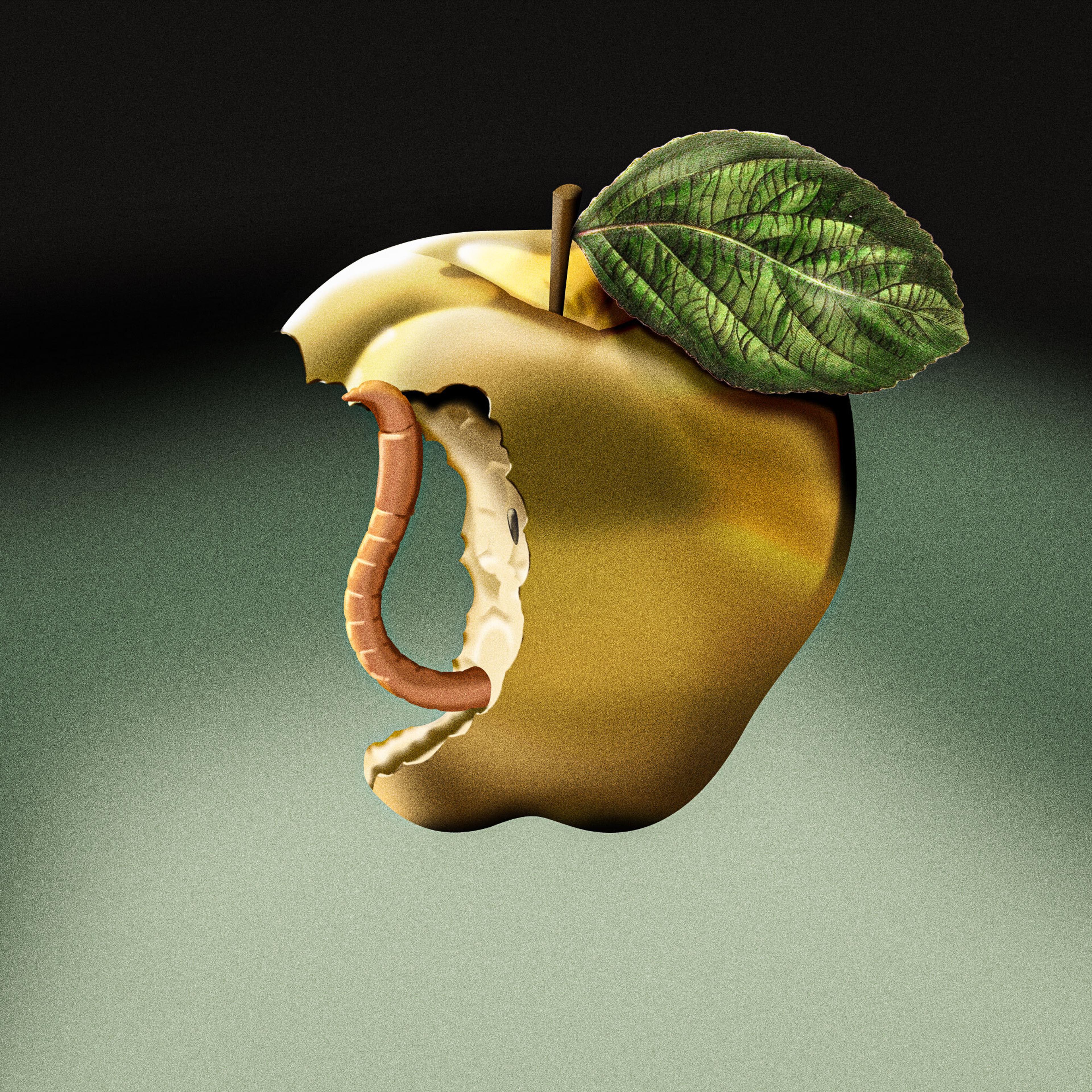
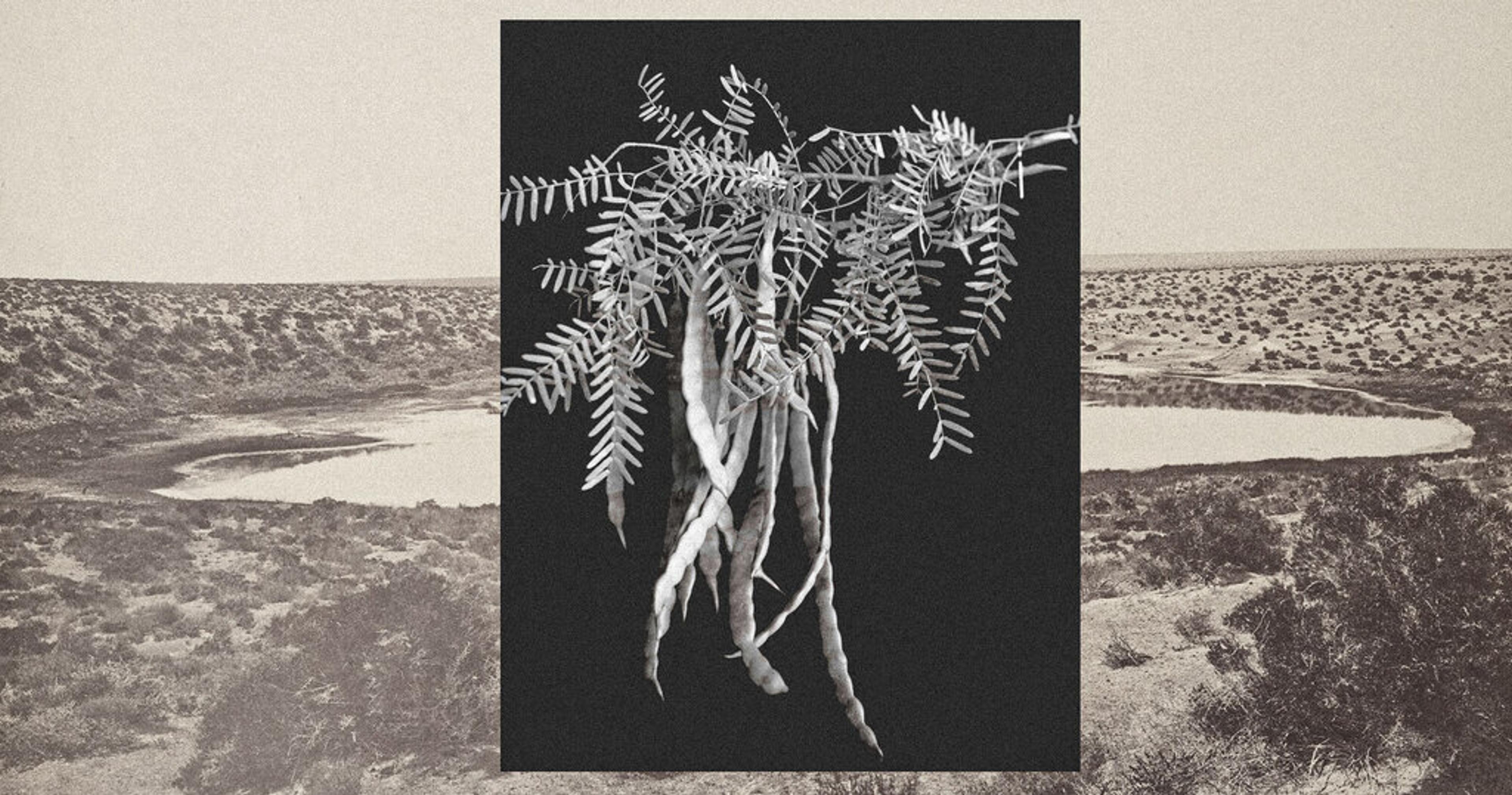
In our quest for high-fiber, high-protein foods that are sustainable and delicious, the sturdy mesquite tree is getting some attention.
The world is getting hotter, water is becoming more scarce—what will we eat when the earth is dry, hot, and depleted of fossil fuels?! According to Peter Felker, a biochemist and plant breeder at Casa de Mesquite, there is a very specific answer—a tree that fixes nitrogen with a deep root system that is very heat- and drought-tolerant.


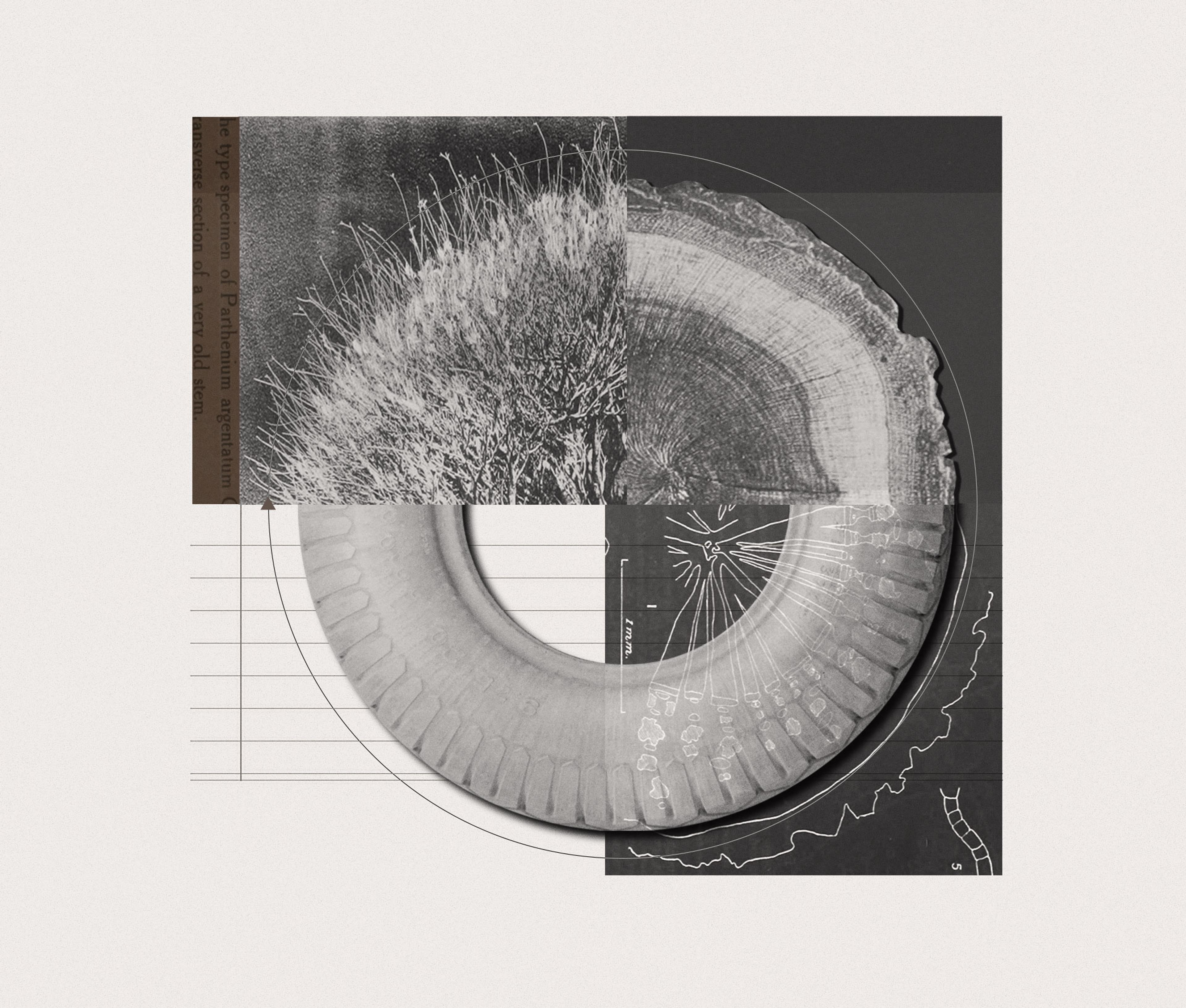
This ideal plant for low-input agriculture is commonly known as mesquite. “Worldwide it has a great range, it’s adaptable to heat and drought, it has a lot of species,” Felker said.
Mesquite is a member of the Fabacea, or pea, family, and like many other members of this family it produces bean pods that contain edible seeds, which are high in protein and fiber—two things we are currently quite invested in for their health benefits.
While high-protein and high-fiber are relatively modern food fads, mesquite has been a steady component to the diet of people in the Americas for centuries. And yet, we don’t see mesquite flour on grocery store shelves, or fresh bean pods for sale in produce sections.
“Mesquite has not even achieved orphan crop status yet,” Felker said. This means, while mesquite is grown for food locally, it has yet to reach global markets as an agricultural product.
So, if it’s the ideological goal—why aren’t we breeding, and eating, more mesquite? The answer lies somewhere between the past, present, our land management practices, mesquite breeding efforts, and the nature of this botanically powerful but unruly desert dweller.
Mesquite’s Origin Story
Mesquites can be found around the world—in North, Central, and South America, across Africa, and in parts of Europe, Asia, and the Middle East. The two most common types in the U.S. are velvet mesquite, named for the tiny hairs that cover its new growth, and honey mesquite, named for the sugar-rich pulp inside of its seed pods. Honey mesquite is what farmers Sandy Ortiz McCarty and James McCarty grow at McCartyLand Farms, just outside of San Antonio.
“We’re very proud of our product, and we don’t want to put our name on something unless we know it’s been harvested with respect for the [mesquite] trees,” Sandy said.
The McCartys hold the land that provides them with their mesquite and prickly pear, the farm’s two major products, in the highest regard. This a similar outlook to the folks who have eaten mesquite and prickly pear, amongst other desert-dwelling plants, for hundreds of years.
People Indigenous to the southwestern part of the United States, all along what is now the Mexican border from Texas to California, would use nearly every part of a mesquite tree for something, according to Gary Owens Jr., a member of the Salt River Pima-Maricopa community based in Tucson, and manager of the Huhugam Ki Museum.
“The mesquite tree was a place where we would gather the pods, but we would also utilize the mesquite tree for wood, for implements, firewood of course, and different parts of the root could be used for utilitarian tools,” Owens said. The sap from the trees was also used as a type of gum, and the bark could be used to paint pots and even to dye hair.
Historically, mesquite bean pods would be ground up into a flour, which could be turned into small cakes when combined with water.
Historically, mesquite bean pods would be ground up into a flour, which could be turned into small cakes when combined with water, which Owens said were called “turtles” and a good portable snack when they were made correctly. Growing up, Owens remembers chewing on the bean pods to taste the sweet pulp that surrounds the seeds.
In addition to mesquite, people Indigenous to the region that is now the U.S.-Mexico border depended on foraging prickly pear, saguaro fruit, and cholla buds for sustenance. For Ariana Diaz, pastry chef at Este in Austin, Texas, and freelance cake artist, foraging is still a major part of her relationship to her Indigenous roots, and to mesquite.
“Good mesquite is found in the dead middle of summer,” Diaz said. “Once I find one tree, one leads to another.”
She does most of her foraging outside of urban areas, where the mesquite is more plentiful and the quality is better. Between her background in sustainable agriculture and training as a pastry chef and baker, Diaz enjoys mesquite not only for its satisfying flavor as a fermented drink, tea, or addition to her baking, but also for the same reasons Felker sees it as the answer for low-input agriculture.
Improving on Mesquite Perfection
Felker first grew interested in low-input agriculture—farming that avoids external resources like big machinery or synthetic fertilizers—growing up on a low-income farm. His goal was always to find a way to make farming accessible, and doing that meant looking for ways to make nature efficient where manpower or machinery was limited.
Going into college with this aim in mind, one of the first things Felker determined would be important for low-input agriculture was nutrient cycling efficiency—trying to keep the nutrients on the land, whether they were in the soil, in living plants, or in decomposing matter. Forests—and the largest plants that make them up, trees—are good at doing just that. With the added criterion that Felker sought a plant that was nitrogen-fixing, his work led him to mesquite over 40 years ago.
Since then, he has worked on leveraging thousands of genes that have been identified across mesquite species, to take the wild ideological perfection and make it more suited to human taste through things like sweeter seeds, thornlessness, upright growth, and disease resistance. Most mesquites have one, maybe two of these traits, but not all—Felker’s work aims to take the best of each and combine them to make a mesquite that not only tastes as good as honey mesquite, but one that can grow as a row crop with low disease susceptibility.
“If you give mesquite an inch, it will go miles. It needs to remain in balance with other mixed-grass prairie and grassland savanna species.”
He moved to Argentina to do this work, in part because of the variety of mesquite that can be found there with many of his desired traits, and to get away from the Texan viewpoint that mesquite is a weed.
“If you go to South Texas and chew on the mesquite pods, they don’t taste good at all, because the selection has been for resistance to bulldozers,” Felker said. Mesquite is primarily thought of as a plant to manage (read: bulldoze), rather than breed and eat, on Texas rangeland. Given that their roots can take up water quicker than grass, and the canopy can create shade where grasses won’t grow, and if cattle eat too many mesquite pods it can kill them, it’s understandable that ranchers have not always welcomed mesquite on their land.
Morgan Treadwell, extension specialist and professor of rangeland ecology at Texas A&M University, uses an integrated approach to managing mesquite on her land.
“If you give mesquite an inch, it will go miles,” Treadwell said. “It can handle drought, fire, browsing, herbicides, mechanical control, basically all of our options. It is so tough and so resilient, no wonder it belongs in Texas! But it needs to remain in balance with other mixed-grass prairie and grassland savanna species.”
“They have big thorns, you got to be really careful. And the ants usually find the sugar—you get all stung with ants too.”
On the flip side to taking up water and creating shade, mesquite also improves soil health, which in turn creates grass that acts as healthy feed for livestock (just not right next to the trees themselves). “They enrich the soil with nitrogen and organic matter,” Felker said. “We’ve got a lot of benefits here.”
Felker is also focused on creating mesquite that would be amenable to modern agriculture as a row crop, rather than a rangeland nuisance—and hopefully, eventually, amenable to machine harvesting. Both Diaz and the McCartys noted the stand-offish thorns on Texas native mesquites don’t make harvesting for the faint of heart.
“They have big thorns, you got to be really careful,” Sandy said. “And the ants usually find the sugar—you get all stung with ants too.”
A Labor of Love, Not Wealth
But, for all the challenges, the McCartys see mesquite as a labor of love that continues to call them back as a way to respect their 10-acre farm. They started out growing apples, apricots, peaches, and blackberries—but the apple trees quickly withered under the pressure of disease, and when there were no more apple trees left, they noticed the abundance of mesquite and prickly pear on the property.
“What a lot of farmers face today is that they are working against nature,” James said. “We learned to start working with nature instead.”
They never meant for their production to be that of a large farm, like the 225-acre ranch where James grew up in Oklahoma, but enough for them and a few select customers. This includes Rebecca Rodgers, San Antonio-based owner of Geranium Club microbakery, who is one of the few people who have been out to visit McCartyLand Farms to see where her mesquite beans come from.
The sources for this story all describe the flavor of mesquite differently—some say it’s smoky, others earthy, and others still warm or spicy or vanilla-like.
“They just really lovingly harvest what their land is giving them,” Rodgers said. “I don’t use it all the time because I’m not interested in sourcing it from someone else.”
One of the focuses for Geranium Club is intentional sourcing of all of her ingredients, so she works with mesquite flour when the harvest is good and it’s available to her from McCartyLand Farms—when it is, she uses it in an array of cakes and cookies. One of her favorites is a mesquite thumbprint cookie with a Meyer lemon curd.
The sources for this story all describe the flavor of mesquite differently—some say it’s smoky, others earthy, and others still warm or spicy or vanilla-like. Across the board, though, they unanimously agree that trying to describe the flavor of mesquite is unfair to its unique profile (they recommend you try it for yourself). They also agreethat its potential to be a more widespread food source depends on a host of factors, from modern taste preferences, to availability of hammer mills to make flour out of beans, and maybe to necessity—as the climate warms, we might be left with only the plants that can survive heat and drought to feed us.