Alaska can raise its own livestock. Keeping the animals fed is another matter.
Before we finished unloading the winter hay, one of our goats jumped the fence to inspect it. BB had no interest in freight schedules, shipping containers, or the people it took to move 22 tons of grass from Washington state to Nikiski, Alaska. She saw hay. She wanted lunch.

I envied her simplicity. We’d spent weeks figuring out how to get the shipment to our driveway. BB figured out what to do with it in seconds.
On October 14, 348 bales of timothy and alfalfa finally reached our farm: 45,240 pounds, or 22.62 tons, of winter feed.
I run Eden’s Edge Farm, a nonprofit livestock farm on Alaska’s Kenai Peninsula. We raise animals so we can provide meat and eggs to seniors and families who need them. The hay alone can wipe out a budget.
I’ve seen 400- to 500-pound round bales advertised on the Kenai Peninsula for $160 to $320 each. At $250 for a 500-pound bale, that’s $1,000 a ton. At $320 for a 400-pound bale, it’s $1,600 a ton. For grass.
And price doesn’t guarantee quality. I’ve encountered hay that was brown, stemmy, or full of weeds. When animals refuse portions of an expensive bale, the real cost of feeding them climbs even higher.
Producing dependable forage in Alaska is difficult. Rain can delay cutting or ruin precious drying time. A stubborn winter can mean late planting. And a dry June or July can hamper growth. Fertilizer, diesel, machinery, labor, and storage cost real money. The farmer selling hay may be struggling as much as the farmer buying it.
At $320 for a 400-pound bale, it’s $1,600 a ton. For grass.
Alan Boyce, managing partner at the row crop operation AlaskaAgro near Delta Junction, told me a cold, wet spring delayed this year’s planting. By September, he wrote, “Wet September made for wet grain, slower harvest, and bottlenecks at the dryer.” He added, “Fertilizer was expensive. Diesel is expensive.” He’s talking about grain rather than hay, but those same costs and weather challenges affect Alaska’s hay producers.
According to the USDA, Alaska produced an estimated 31,000 tons of hay in 2025, at an average farm-level price of $425 per ton. That figure is a long way from the retail prices I’ve encountered, but farm-level averages don’t reflect every bale’s quality, location, handling, and availability.
I’d rather buy dependable Alaska hay. But with the prices and quality I was seeing, I started looking into hay from the mainland. It was cheaper there, though I had no idea whether shipping would eat up the savings. The animals couldn’t wait while I worked it out.
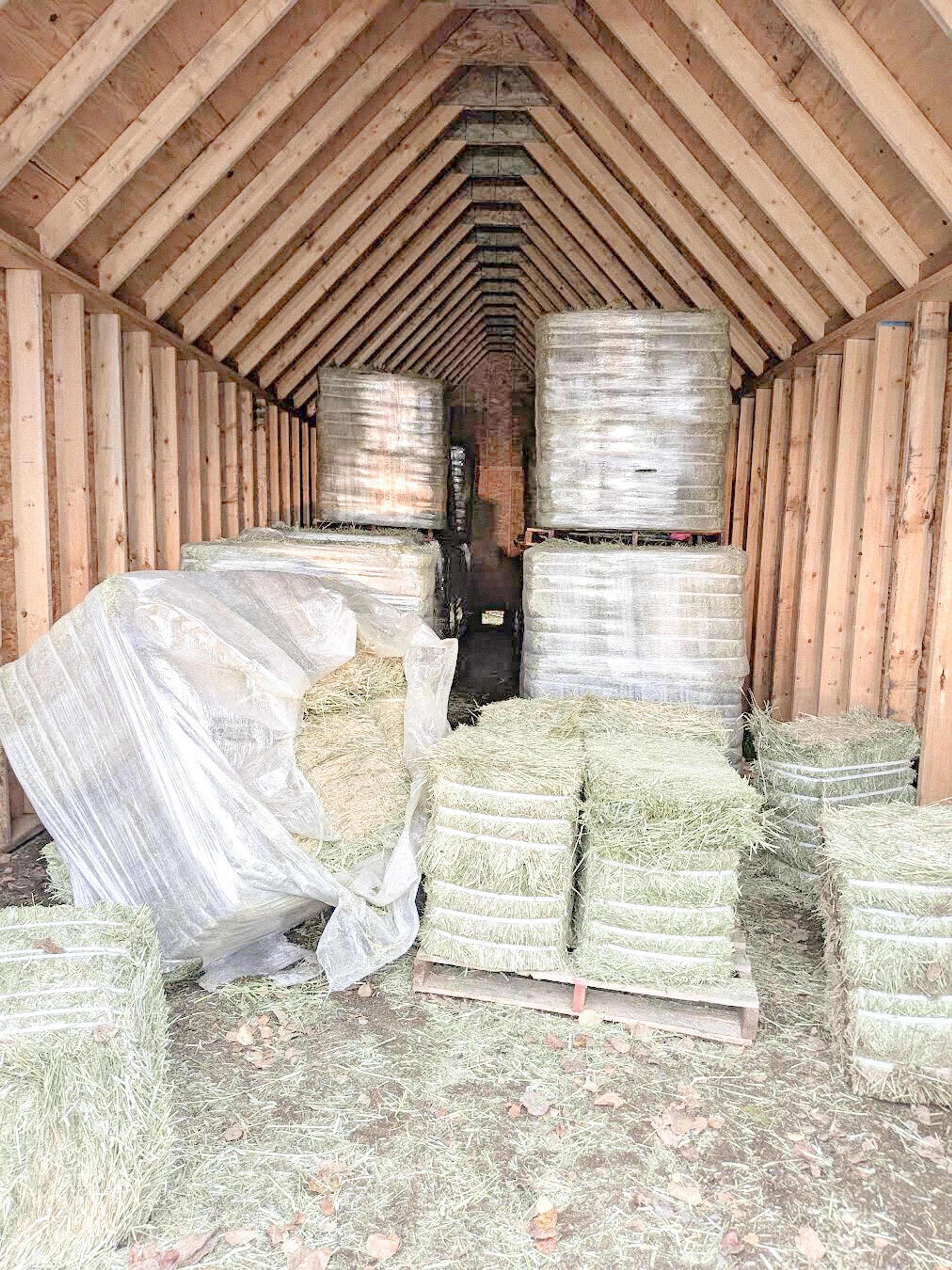
Our imported hay
·Dana Armstrong
This fall, for the first time, I tried organizing a bulk hay shipment directly from Washington state.
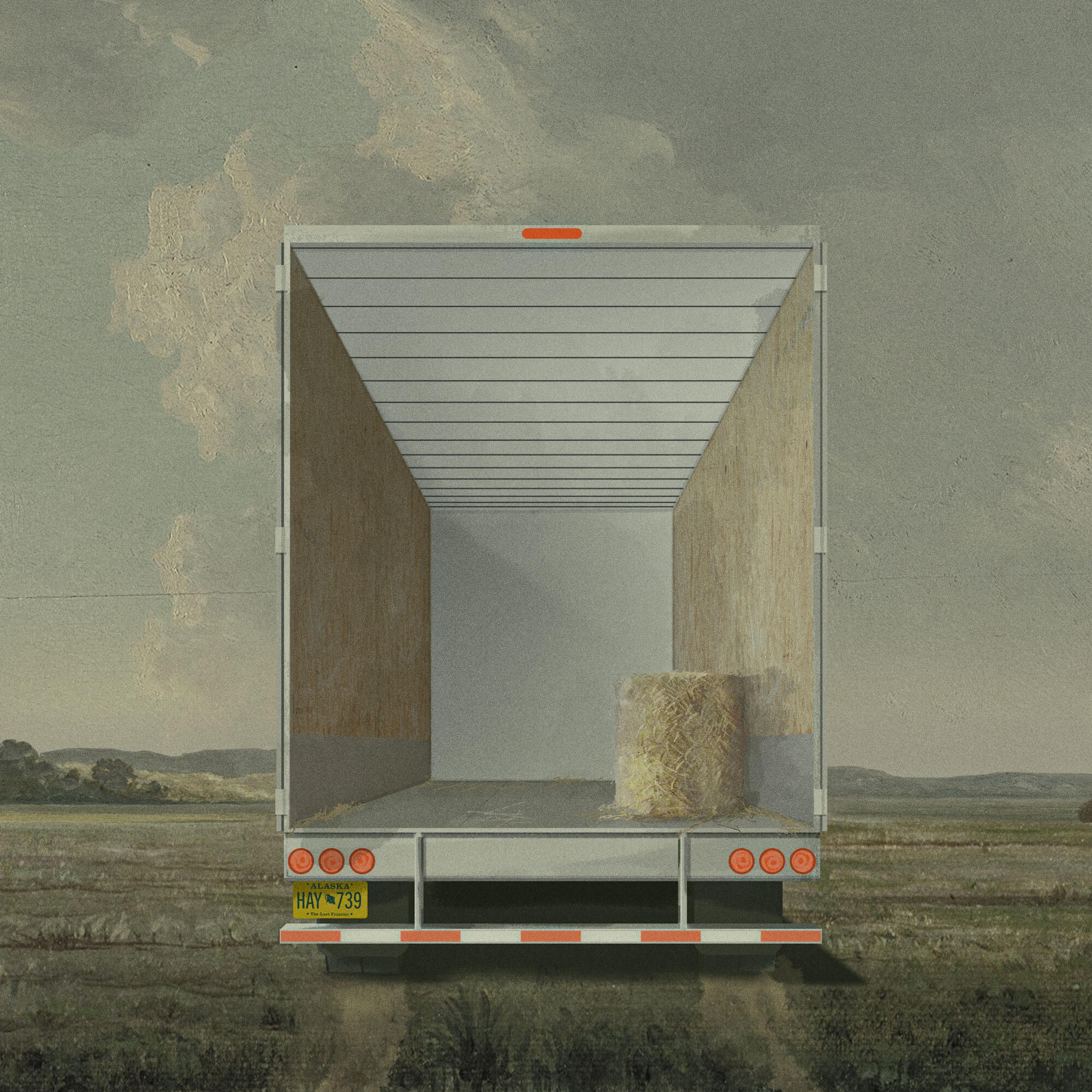
Before everything came together, Alaska Marine Lines quoted me nearly $16,000 to ship a 36,000-pound container of hay from Washington to Kenai. That was a standard commercial quote, but we needed to move more than 45,000 pounds.
Hajny Trading supplied our timothy and alfalfa. Carlile Transportation Systems handled the Washington-side transfer and delivery to the Tacoma port. TOTE Maritime Alaska, the ocean freight carrier, donated shipping to Anchorage. That leg alone was worth about $18,000. Weaver Brothers hauled it from Anchorage to our farm, donating about $1,600 in charges and leaving us with a $550 fuel bill. An anonymous donor helped make the hay purchase possible.
The hay itself cost roughly $8,200, or about $363 a ton. At one of the $1,000-per-ton prices I’d seen locally, that much hay would cost $22,620, assuming I could find the same quantity and quality. Without TOTE’s donation, though, the ocean freight alone would have been more than twice our hay bill. A cheaper price at the source doesn’t help much when you can’t afford to get the feed home.
Then came the unloading.
A cheaper price at the source doesn’t help much when you can’t afford to get the feed home.
Twenty-nine pallets, twelve bales apiece, at roughly 130 pounds each, had to be moved into storage. It took roughly 12 hours, our own equipment, rented machinery, and people willing to help in the cold rain. Eric Parnell, a longtime family friend, showed up to help unload even after putting in a full day at his own job.
There was plenty of cussing before we could laugh about it. But at least the barn was now full. Alaskans talk about food sovereignty, and with good reason. Our dependence on outside supplies leaves us vulnerable to shipping disruptions and prices set far beyond our borders.
Alaska could be doing far more to support its own agricultural producers. We have people willing to grow the food and raise the livestock, but they need a fighting chance. Opening suitable land for agricultural use, making affordable leases accessible, and helping producers invest in equipment, irrigation, and proper hay storage would go a long way. If the state genuinely wants to increase food production, it needs to start investing in the people willing to make that happen.
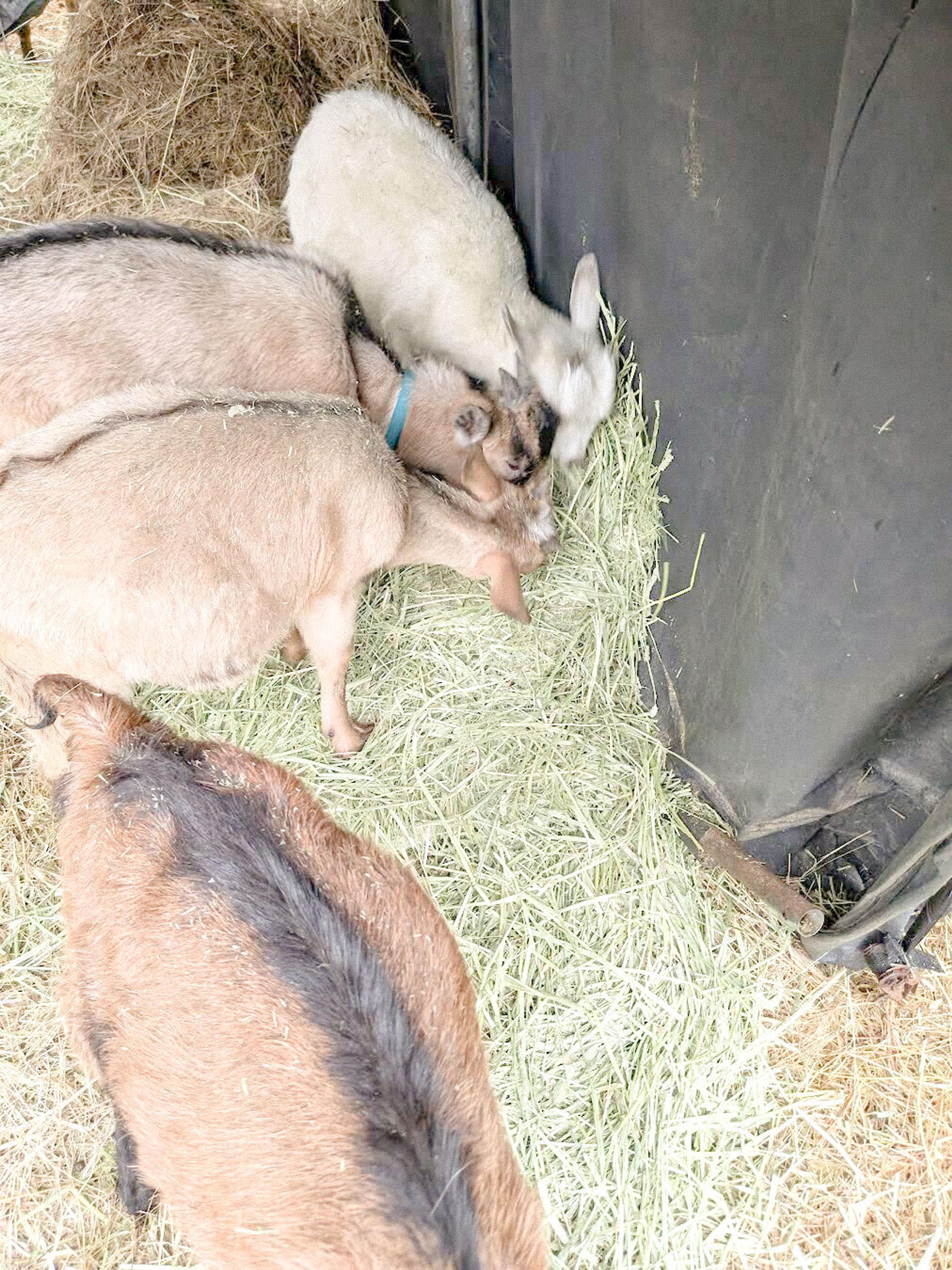
BB digs in.
·Dana Armstrong
I once tried to lease land to grow more of our own feed. Potentially available acreage was buried in outdated maps and an administrative process that made access feel more theoretical than practical. I was ready to put in the work, but couldn’t get access to the land. Our growing season is short enough without losing it in an administrative maze.
There’s an irony in all this. We’re encouraged to grow more food here in Alaska, yet a farmer willing to shoulder the expense and hard work of producing hay can struggle just to find land they’re allowed to use. How are we supposed to reduce our dependence on shipments from outside if we continue making it so difficult to produce feed right here at home?
Another farmer may not find that kind of help, and January won’t wait for an affordable delivery.
Alaska passed Senate Bill 208 this year to make agricultural leasing easier, but the wait remains a problem. The Department of Natural Resources lists nine to 12 months as the typical time to decide on a complete state-land lease application. Surveys or appraisals, when required, can make the wait even longer.
When we give away meat from our farm, the people receiving it probably aren’t thinking about how much hay went into raising that animal—they’re getting a free meal. Meanwhile, I’m looking at the feed bill and figuring out how we’re going to afford to pay the next one. Every dollar spent feeding our livestock affects how much food we can produce for our community. And when hay is selling for $1,000 a ton or more, those costs add up awfully fast.
But when you’re in the livestock business, a firm belief takes form. What they eat eventually goes into you. That drives a need that is paramount to everything else: feeding our animals the best possible food. I simply refuse to compromise on their nutrition.
When I look at the hay stacked in our barn, I know how lucky we were. Another farmer may not find that kind of help, and January won’t wait for an affordable delivery.
BB, meanwhile, will keep jumping fences for another mouthful. She has no reason to consider how much work or expense went into her all-you-can-eat buffet. I know exactly what it cost. And before the last bale is gone, I’ll be figuring out how to fill that barn again. There will always be individuals and families in need within our community depending upon the food we raise.